

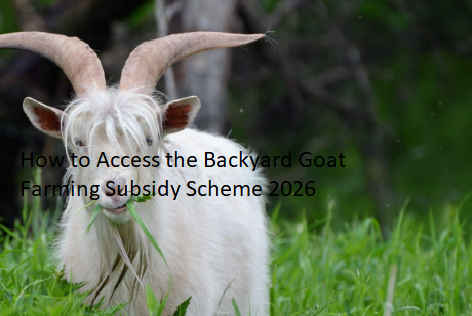
The backyard goat farming subsidy scheme 2026 provides essential financial support for small-scale producers looking to expand their livestock operations. By offering direct grants, low-interest loans, and equipment cost-sharing, these government initiatives aim to increase domestic milk and meat production while empowering rural households.
Understanding the specific eligibility criteria and application deadlines is the first step toward securing these funds for your own agricultural venture. This article breaks down the financial components and operational requirements you need to navigate the current landscape of livestock support programs effectively.
Direct Financial Support and Grant Allocations
The primary objective of the backyard goat farming subsidy scheme 2026 is to lower the barrier to entry for novice farmers. Most regional agricultural departments have earmarked specific budgets to cover up to 50% of the initial setup costs for small-scale goat pens. These funds are typically disbursed as reimbursements after the applicant provides proof of purchase for approved housing materials and basic veterinary supplies.
For established smallholders, the focus shifts toward infrastructure improvements. You can apply for grants covering the installation of automated feeding systems or high-quality fencing designed to mitigate predator risks. The maximum grant amount for individual backyard operations typically caps at $3,500 per household, though this varies significantly depending on your specific state or provincial agricultural policy.
Eligibility Criteria for Small-Scale Producers
Qualifying for the 2026 subsidy requires more than just owning a plot of land. You must demonstrate that your operation meets the legal definition of a “backyard” farm, which usually excludes commercial-scale feedlots. Most programs require you to be a resident of the jurisdiction providing the funds and to have completed a basic course in goat husbandry.
Documentation is the most critical hurdle for many applicants. You will generally need to provide a tax assessment of your property to confirm it is zoned for livestock, along with a simple business plan outlining your herd size and production goals. Authorities want to see that you have a sustainable plan for waste management and animal welfare before they release any financial support.
Breakdown of Typical Subsidy Costs
When calculating your potential benefit from the backyard goat farming subsidy scheme 2026, it is helpful to look at how these programs categorize costs. Most government agencies utilize a standardized cost-sharing model to ensure fairness across different regions. The following table illustrates how these costs are typically distributed between the farmer and the subsidy provider.
| Expense Category | Average Total Cost | Subsidy Coverage |
|---|---|---|
| Basic Housing Construction | $2,000 | 50% |
| Initial Breeding Stock | $1,500 | 30% |
| Vaccination and Health Kits | $500 | 75% |
| Fencing and Security | $1,000 | 40% |
Key Documents and Application Steps
Submitting a successful application relies on your ability to provide clear, verifiable information to the oversight committee. You should prepare a folder containing your proof of land ownership, a copy of your most recent property tax bill, and a signed statement regarding your intended herd size. Many jurisdictions now require digital submissions through an official portal managed by the United States Department of Agriculture or your local equivalent.
Once your application is submitted, a field officer may request an on-site visit to verify the suitability of your land for goat grazing. Do not be intimidated by this process, as it is designed to ensure the animals will have adequate space and shelter. Ensure your site is clean and that you have a water source readily available, as these are the most common reasons for immediate rejection.
Operational Requirements for Subsidy Recipients
Receiving government funding comes with ongoing responsibilities that you must track carefully. You are usually required to maintain a herd logbook that tracks birth rates, mortality, and any medical treatments administered to your animals. These logs are not just for the government; they serve as a vital tool for your own business records and herd health management.
Most programs also mandate that you follow specific welfare guidelines, such as providing a minimum square footage per goat in your shelter. If you fail to meet these standards during a surprise audit, you risk losing future funding eligibility or being forced to repay the initial grant. Consistency in your daily management practices is the best way to remain in good standing with the program.
Common Hurdles in the Application Process
Many applicants struggle with the technical language found in government grant documentation. Terms like “livestock unit equivalent” or “nutrient management plan” can sound daunting, but they essentially describe how much space your animals need and how you will handle their waste. Don’t be afraid to contact your local agricultural extension office for clarification on these specific requirements.
Another frequent issue is timing. Many subsidy schemes operate on a “first-come, first-served” basis until the annual budget is fully committed.
If you wait until the end of the fiscal year, you might find that the funds have already been exhausted. Submit your paperwork as early in the calendar year as possible to avoid these seasonal bottlenecks.
Strategic Benefits of Participation
Participating in the 2026 scheme offers benefits beyond the immediate cash grant. Many programs provide access to subsidized training workshops and networking events where you can meet other local producers. These connections often lead to shared equipment purchases or cooperative marketing efforts, which can significantly reduce your per-unit production costs over time.
Furthermore, being part of a government-backed program often makes it easier to secure private loans in the future. Banks view participation in a state-sanctioned agricultural program as a sign of credibility and stability. By establishing your track record through these subsidies, you build a foundation that supports long-term growth and potential expansion into larger markets.
Essential Supplies for Your Startup
To maximize the value of your subsidy, you should invest in durable, high-quality equipment that will last for several seasons. Cheap materials often lead to higher repair costs, which can quickly eat into your profit margins. Focus your initial spending on items that provide the most value for your specific breed and climate needs.
- Sturdy, chew-resistant fencing to protect your herd from local predators.
- Elevated feeding troughs to prevent waste and reduce the risk of parasitic infection.
- Basic veterinary kits containing antiseptic spray, thermometers, and hoof trimmers.
- Automated water systems to ensure constant access to fresh hydration.
- Record-keeping software or a dedicated notebook for tracking milk production and health milestones.
- Supplementary mineral blocks tailored to the nutritional needs of goats.
Frequently Asked Questions
Is there a tax benefit to participating in this scheme?
In many regions, the funds received through a government agricultural subsidy are considered non-taxable grants if used for capital improvements. However, you should consult with a tax professional, as individual tax laws can vary based on your total income and business structure.
Do I need to own my land to apply for the subsidy?
Most programs allow for long-term leaseholders to apply, provided you have a signed lease agreement of at least three to five years. You will likely need to provide written permission from the landowner confirming that they allow livestock operations on the premises.
Can I apply for multiple grants simultaneously?
Yes, you can often combine a federal grant with a local or regional program. Be careful to check the terms and conditions of each, as some grants prohibit the “stacking” of funds for the exact same piece of equipment.
What happens if my goats get sick during the subsidy period?
Your subsidy agreement likely requires you to maintain a healthy herd, but it does not usually penalize you for unavoidable illnesses. You must, however, document any veterinary care provided, as this is often required for the annual reporting process.
Are there restrictions on the breeds of goats I can keep?
Some programs favor breeds that are known for high milk or meat yields in your specific climate. Always verify if your chosen breed is approved for the subsidy before you make your initial purchase, as some exotic or ornamental breeds may not qualify.
Conclusion
Securing support through the backyard goat farming subsidy scheme 2026 is a practical way to build a sustainable livestock operation while minimizing your personal financial risk. By focusing on detailed documentation, adhering to animal welfare standards, and planning your infrastructure investments carefully, you position your farm for long-term success. The government programs available this year offer a unique opportunity to gain access to capital and professional networks that would otherwise be difficult to reach.
Take the time to review your local agricultural office’s requirements this week to ensure you are ready for the upcoming application cycle. If you keep your records tidy and your business plan aligned with regional goals, you can effectively leverage these resources to grow your herd. Reach out to local extension agents to start your application, and feel free to share your progress as you develop your backyard operation.
