

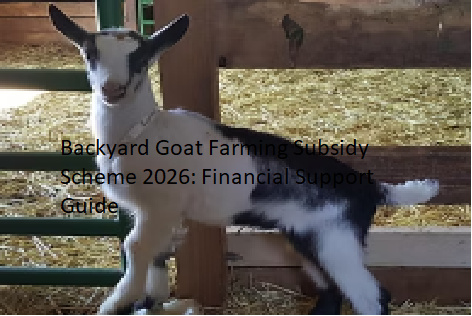
The backyard goat farming subsidy scheme 2026 provides a structured pathway for small-scale producers to offset initial capital investments through government-backed grants and low-interest loans. By focusing on sustainable animal husbandry, these initiatives aim to increase local food security while supporting rural livelihoods.
Understanding how to access these funds requires a clear grasp of eligibility criteria, regional documentation requirements, and the specific cost-sharing models implemented by local agricultural departments. This article outlines the precise mechanisms available for applicants to secure financial assistance, ensuring that you can effectively leverage the available resources to establish or expand your goat production enterprise.
Financial Eligibility and Grant Amounts
The core of the backyard goat farming subsidy scheme 2026 involves direct reimbursement for infrastructure costs and livestock procurement. Most jurisdictions offer a subsidy covering between 30% and 50% of the total project cost, capped at specific monetary limits per applicant. For example, a typical ceiling for a small backyard setup might be set at $5,000 to $8,500, depending on the local state or provincial budget allocation for the fiscal year.
To qualify, applicants must typically prove they have access to a minimum of 0.5 to 1 acre of land suitable for grazing and housing. You are required to submit a detailed business plan that outlines your projected herd size, feed management strategy, and intended market for products like milk, fiber, or meat. Government agencies prioritize applicants who demonstrate a commitment to biosecurity and humane animal welfare standards.
Required Documentation for Application
Submitting a successful application for the 2026 subsidy requires a meticulous approach to record-keeping and administrative compliance. You must provide proof of land ownership or a long-term lease agreement that explicitly permits livestock farming. Local zoning laws often mandate that your property is classified for agricultural use, so verifying your local municipal status is the first step in the process.
Your application package must include a comprehensive budget spreadsheet that breaks down anticipated expenses. You should list costs for fencing materials, shed construction, veterinary health kits, and the initial purchase of breeding stock. Providing quotes from three different local suppliers for your major equipment helps justify your funding request to the review committee.
Infrastructure and Housing Standards
Government funding is rarely provided for general operating expenses, as the focus is on permanent capital improvements. The subsidy specifically targets the construction of durable, weather-resistant housing that protects goats from extreme temperatures and predators. You must adhere to specific structural guidelines, such as minimum square footage per animal and adequate ventilation requirements.
Fencing is another major category where the subsidy provides significant relief. Because goats are notorious for escaping, the scheme often mandates the use of specific high-tensile woven wire or electrified netting. By meeting these technical standards, you demonstrate to the funding body that your farm is prepared for long-term operation, which increases your chances of approval.
Livestock Procurement and Breed Selection
Choosing the right breed is essential not only for productivity but also for qualifying for specific regional grants. Some programs incentivize the purchase of heritage breeds or animals that are naturally resistant to local pests and diseases. When you source your goats, you must ensure they have a clean bill of health verified by a licensed veterinarian.
Many states require that you purchase your foundation herd from certified breeders registered with official agricultural associations. You will need to submit health certificates and pedigree documentation for each animal as part of your post-award reporting. Maintaining these records is crucial for the second phase of funding, which is often released only after the livestock is safely on-site.
Operating Costs and Resource Management
While subsidies cover capital, you must plan for the ongoing costs of feed, minerals, and routine medical care. A common mistake is underestimating the price of high-quality hay and supplemental grain during the winter months. You can access resources on livestock management through the United States Department of Agriculture, which offers detailed guides on sustainable farming practices.
Managing your resources efficiently helps your farm remain profitable without needing constant government support. Consider implementing a rotational grazing system to maximize the nutritional value of your pasture while minimizing the need for expensive external feed. Keeping your overhead low ensures that the subsidy remains a boost to your bottom line rather than a temporary fix for poor financial planning.
Comparing Subsidy Models Across Regions
Financial support varies significantly based on your geographic location and the specific priorities of your local government. Some regions focus exclusively on dairy production, while others encourage meat or fiber-producing breeds. The table below illustrates the typical distribution of subsidy funds for a standard backyard setup.
| Expense Category | Subsidy Coverage | Estimated Cost |
|---|---|---|
| Housing/Sheds | 40% | $2,000 |
| Fencing Materials | 50% | $1,500 |
| Livestock Purchase | 25% | $1,200 |
| Veterinary/Startup | 30% | $800 |
Common Pitfalls in the Approval Process
Many applicants fail to receive funding because they neglect the importance of the site inspection. Before your funds are released, an agricultural officer will likely visit your property to verify that your setup matches the plans submitted in your application. If your fencing is incomplete or your shed lacks proper drainage, your application may be delayed or denied entirely.
Another frequent error is failing to maintain the required insurance or liability coverage for livestock. Most government programs require you to carry a basic policy to protect against unforeseen losses or damage to neighboring properties. Ensuring these administrative details are handled upfront prevents the frustration of being rejected during the final stages of the approval process.
Key Milestones for Your Farm
Success in the backyard goat farming subsidy scheme 2026 relies on hitting specific operational milestones on time. If you miss a reporting deadline, you risk losing the remainder of your grant or being disqualified from future funding cycles. Use the following checklist to track your progress throughout the year:
- Submit initial project proposal and budget estimate by the Q1 deadline.
- Secure all necessary local zoning permits and environmental clearances.
- Complete infrastructure construction and pass the initial site inspection.
- Purchase and register your herd with the regional agricultural board.
- Submit final verification reports to claim the full subsidy disbursement.
Frequently Asked Questions
Is the subsidy taxable income?
In most jurisdictions, government grants for agricultural development are considered taxable income. You should consult with a certified tax professional to understand how to report these funds correctly on your annual return. Keeping clear records of your expenses helps you offset the tax liability by deducting the costs associated with your farm’s development.
Can I get a subsidy for a commercial-sized farm?
The backyard goat farming subsidy scheme 2026 is specifically designed for small-scale or hobby-level operations. If your business model exceeds a certain number of head or generates significant revenue, you will likely be directed toward commercial agricultural loan programs instead. Check your local program guidelines to see the specific herd size limits that define a “backyard” operation.
What happens if my goats get sick?
Standard subsidy programs do not cover the loss of livestock due to illness or natural causes. You are strongly encouraged to purchase private livestock insurance to mitigate these risks. Some regional schemes may provide emergency veterinary assistance grants, but these are rare and usually tied to specific disease outbreak events.
Do I need to be a full-time farmer?
Most backyard schemes are intended for part-time farmers or individuals looking to supplement their income. You do not need to show that farming is your primary source of revenue to apply. However, you must demonstrate a serious commitment to the project, as the government wants to see that their investment leads to a functioning, productive farm.
Can I reapply for the subsidy next year?
Typically, these subsidies are one-time awards designed to help with the initial setup phase. Once you have received a grant for your basic infrastructure, you are generally not eligible for a second round of funding for the same project. If you are looking to expand significantly, you may be eligible to apply for different grant categories focused on growth or innovation.
Conclusion
Securing support through the backyard goat farming subsidy scheme 2026 requires preparation, attention to detail, and a clear vision for your small-scale operation. By understanding the specific requirements for infrastructure, livestock health, and administrative reporting, you position yourself to take full advantage of the financial relief available. Focus on building a sustainable foundation that prioritizes animal welfare and efficient land management, as these factors are highly valued by grant committees. As you move forward, keep a close eye on your local agricultural department’s announcements, as application windows often open and close rapidly. With the right approach, you can successfully leverage these government resources to establish a thriving backyard herd that serves both your personal goals and your local community.
