

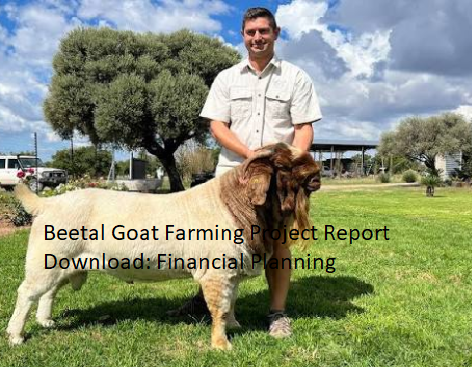
Securing a reliable beetal goat farming project report download is the first step for any aspiring entrepreneur looking to enter the livestock sector. Having a clear, data-driven plan allows you to calculate startup costs, operational overheads, and potential return on investment before purchasing your first animal. This document serves as the foundation for bank loan applications and government subsidy eligibility.
By understanding the specific financial requirements of the Beetal breed, you can avoid common pitfalls that lead to early business failure. This article provides the essential insights into creating or evaluating a professional project report to ensure your farm remains profitable and sustainable from year one.
The most critical financial fact to understand is that a standard 100-goat unit requires an initial investment ranging between $15,000 and $25,000 USD depending on your local infrastructure costs. This figure includes the construction of sheds, purchase of breeding stock, initial feed supplies, and veterinary kits. Most commercial banks require a project report that outlines a repayment schedule over a period of 5 to 7 years.
You should aim for a net profit margin of at least 20% to 30% once the farm reaches full operational capacity in the second year. If your projected report shows lower margins, you must re-evaluate your feed efficiency or mortality rate assumptions.
Infrastructure and Land Requirements
A common question for new farmers is the amount of space required for a commercial setup. For a unit of 100 goats, you generally need approximately 1,500 to 2,000 square feet of covered shed area. This ensures adequate ventilation and prevents overcrowding, which is a leading cause of respiratory diseases in Beetal goats.
You should also allocate at least 1 acre of land for grazing or fodder production to reduce feed costs. If you are leasing land, ensure the contract is for a minimum of 5 years to align with your project report’s amortization schedule.
Understanding Beetal Growth Metrics
Beetal goats are prized for their dual-purpose utility, providing both high-quality milk and rapid meat production. A healthy Beetal kid should reach a weight of 25 to 30 kilograms by the age of 6 months under a proper intensive feeding system. Your project report must account for these growth rates to accurately forecast sales revenue.
If your local market demands heavier animals, you must adjust your feed ration to include higher concentrations of protein and energy supplements. Tracking these metrics in a spreadsheet will help you identify underperforming animals that should be culled from the herd.
Operational Expense Breakdown
Running a goat farm involves daily costs that often get overlooked in initial estimates. Feed accounts for nearly 60% to 70% of your total recurring operational expenditure. You should include line items for dry fodder, green fodder, and concentrate feed in your budget.
Veterinary care, including vaccination cycles for PPR and Enterotoxemia, should be budgeted at approximately 5% of your total annual operating cost. Labor costs vary significantly by region, but plan for at least one full-time worker for every 50 to 70 goats in your herd.
Revenue Streams and Market Analysis
Diversifying your income is the hallmark of a successful livestock business. While meat sales are the primary revenue driver, milk production from Beetal does can provide a steady monthly cash flow. You should also account for the sale of manure, which is highly valued as organic fertilizer in local farming communities.
Many farmers also generate secondary income by selling high-quality breeding bucks to smaller local farms at a premium price. Include these varied income streams in your financial projections to demonstrate a robust business model to potential lenders.
| Expense Category | Percentage of Budget | Notes |
|---|---|---|
| Feed and Nutrition | 65% | Highest recurring cost |
| Veterinary & Medicine | 5% | Includes mandatory vaccines |
| Labor Wages | 20% | Dependent on local rates |
| Miscellaneous | 10% | Utilities and maintenance |
Risk Management and Mitigation
Every project report should dedicate a section to risk management, as livestock farming is inherently volatile. Mortality rates are a significant risk, and a well-managed farm should keep annual losses below 5%. You must include a contingency fund in your budget, ideally covering 3 to 6 months of operational expenses.
Insurance for the herd is another non-negotiable expense that protects your capital investment against disease outbreaks or natural disasters. For official guidelines on animal health and safety standards, consult the Food and Agriculture Organization of the United Nations for global best practices.
Scaling Your Operations
Once your initial unit is profitable, scaling up requires a different set of financial considerations. Moving from 100 to 500 goats involves significant changes in labor management and waste disposal systems. You will likely need to invest in mechanized chaff cutters and automated watering systems to maintain efficiency.
Update your project report annually to reflect these changes in economies of scale. Remember that increasing the size of your herd exponentially increases the risk of cross-contamination, so your biosecurity protocols must be upgraded simultaneously.
Marketing Your Produce
Your project report is incomplete without a clear strategy for selling your goats and milk. Relying solely on local middlemen often results in lower profit margins compared to direct-to-consumer sales. Consider building partnerships with local butcher shops, dairy cooperatives, or high-end restaurants that value organic or farm-raised meat.
Developing a brand identity for your farm can allow you to charge a premium for your products. Include an estimated marketing budget to cover transport, packaging, and basic promotional activities to reach these higher-value markets.
Frequently Asked Questions
How much land is needed for 100 goats?
You should plan for at least 1,500 to 2,000 square feet of shed space plus a minimum of 1 acre for grazing and fodder cultivation. This ensures the animals have sufficient room to move, which reduces stress and disease transmission.
Which breed of goat is most profitable?
The Beetal breed is widely considered one of the most profitable due to its dual-purpose nature, high milk yield, and excellent meat quality. However, profitability ultimately depends on your local market demand and your ability to manage feed costs efficiently.
How much does a Beetal goat weigh at 6 months?
A well-fed Beetal kid should reach between 25 and 30 kilograms by 6 months of age. Reaching this target requires a consistent, high-quality concentrate feed ration alongside grazing.
Is a government subsidy available for goat farming?
Many governments offer subsidies for small-scale livestock farming, often covering a percentage of the capital investment. You must check your local agricultural department’s website to see if you qualify and what specific documentation is required for your application.
What is the biggest mistake in goat farming?
Neglecting biosecurity and failing to manage feed costs are the two most common reasons for failure. Overcrowding and poor sanitation lead to high mortality rates, while inefficient feeding programs eat into your profit margins until the business is no longer viable.
Conclusion
Starting your enterprise with a solid beetal goat farming project report download ensures that you have a clear roadmap for financial success. By focusing on accurate cost projections, efficient herd management, and diversified revenue streams, you can build a sustainable business that thrives over the long term. Remember to treat your farm as a professional venture by keeping meticulous records of every expense and income source.
As you gain experience, use the data you collect to refine your business model and scale your operations responsibly. Taking the time to plan thoroughly now will pay dividends when you are managing a healthy, productive, and profitable herd in the future.
