

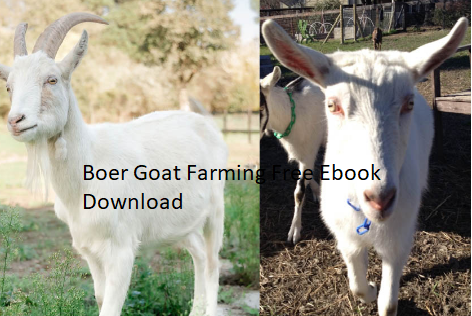
Finding a reliable boer goat farming free ebook download is often the first step for aspiring producers who want to enter the meat goat industry. These resources provide essential technical data on herd management, nutritional requirements, and health protocols without requiring an initial investment in expensive agricultural textbooks.
By accessing high-quality digital guides, you can quickly learn how to maximize your growth rates and optimize your breeding cycles. This article covers the core principles of goat husbandry, helping you apply the information found in a typical boer goat farming free ebook download to your own specific operation.
The most critical fact for any new farmer is that the Boer breed requires specific environmental conditions to thrive. You should expect a mature buck to weigh between 240 and 300 pounds, while a productive doe typically ranges from 190 to 230 pounds. These animals are prized for their fast growth rates, often gaining 0.4 to 0.6 pounds per day under optimal grazing conditions.
If you are looking for a boer goat farming free ebook download to guide your startup, prioritize documents that include detailed weight-gain charts and feed conversion ratios. Understanding these performance metrics early allows you to calculate your potential profitability before purchasing your first set of foundation stock.
Essential Infrastructure for Boer Goat Herds
Successful goat production starts with secure, well-designed housing that protects your animals from extreme weather and predators. Boer goats are particularly sensitive to cold, damp conditions, which can lead to respiratory illnesses like pneumonia.
You should build shelters with a dry, raised floor and ensure there is at least 12 to 15 square feet of space per animal. Good ventilation is vital, but you must prevent drafts from blowing directly onto the goats while they are resting.
Fencing is arguably your most important long-term investment when starting a goat farming project. Standard woven wire fences at least 48 inches high are generally recommended to prevent the goats from climbing or jumping over.
You should also consider adding a single strand of electric wire at the top and bottom to discourage predators like coyotes or stray dogs. While digital manuals often provide diagrams for these enclosures, remember that your local geography will dictate the specific materials you need to secure your perimeter.
Nutritional Requirements and Forage Management
Boer goats are browsers by nature, meaning they prefer eating shrubs, weeds, and tree leaves over standard pasture grass. Your management strategy should focus on rotational grazing to maximize the nutritional value of your land and reduce parasite loads.
By moving your herd to a fresh paddock every 3 to 7 days, you prevent the goats from grazing too close to the ground. This practice significantly lowers the risk of internal worm infestations, which are the leading cause of health issues in goat farming.
Protein intake is the primary driver of muscle development and weight gain in the Boer breed. During the dry season, you may need to supplement their diet with high-quality alfalfa hay or a balanced grain ration to maintain their body condition.
Consult a local veterinarian or agricultural extension service to test your soil and forage quality regularly. For further details on national standards for small ruminant nutrition, you can reference the United States Department of Agriculture Agricultural Research Service portal.
Health Protocols and Disease Prevention
Maintaining a healthy herd is cheaper than treating sick animals, so you must establish a strict preventative health schedule. Vaccinations against common diseases like enterotoxemia and tetanus should be administered to all kids at 8 weeks of age.
You should also perform regular FAMACHA scoring to monitor for anemia caused by barber pole worms. Keeping accurate medical records for every goat in your operation will help you identify which animals are the most resilient and productive.
Quarantine procedures are non-negotiable when introducing new stock to your existing farm. Always isolate new arrivals for at least 30 days before allowing them to mingle with your established herd.
During this time, check them for foot rot, caseous lymphadenitis, and other contagious conditions. If you find a sick animal, treat it immediately and consult with a professional to prevent an outbreak that could threaten your entire investment.
Breeding Strategies for Genetic Improvement
Genetic selection is the engine that drives your farm’s profitability over the long term. You should aim to keep replacement does that consistently produce twins or triplets with high weaning weights.
Boer goats are known for their fertility, and a well-managed doe can produce two crops of kids every 12 to 14 months. Keep detailed records of birth dates, birth weights, and dam performance to make informed culling decisions.
Selecting a high-quality buck is arguably more important than selecting your does because he influences the genetics of every kid born on the farm. Look for structural soundness, good body capacity, and a strong topline when evaluating potential herd sires.
Avoid buying animals that show signs of physical deformities, as these traits can be passed down to future generations. Focusing on genetic consistency will help you command higher prices when you sell your offspring to other breeders.
Financial Planning and Market Analysis
Before you commit to a full-scale operation, you need a clear understanding of your local market demand. Most Boer goat farmers focus on either the commercial meat market or the seedstock industry.
The commercial market usually requires animals to be sold at a specific weight, often between 60 and 90 pounds, while the seedstock market focuses on registered animals with documented pedigrees. Understanding your target market will dictate your breeding and feeding strategies from day one.
| Expense Category | Estimated Annual Cost per Head |
|---|---|
| Supplemental Feed | $45 – $65 |
| Vaccines and Dewormers | $10 – $20 |
| Mineral Supplements | $5 – $10 |
| Fencing/Infrastructure Maint. | $15 – $25 |
Common Mistakes to Avoid
Many beginners fail because they underestimate the amount of labor required to manage a productive herd. You should be prepared to spend at least one to two hours daily on basic chores like feeding, watering, and checking for injuries.
Ignoring small problems early on often leads to expensive veterinary bills or the loss of valuable livestock later. Developing a consistent routine will make your daily operations more efficient and help you spot issues before they escalate.
Another common error is overstocking your pasture beyond its carrying capacity. Overgrazing destroys the root systems of your forage, which leads to soil erosion and a long-term decline in feed quality.
If you notice your goats are losing weight despite having access to pasture, it is a sign that your stocking rate is too high. Always prioritize the health of your land to ensure your farm remains viable for many years to come.
Scaling Your Operation Safely
Growth should always be incremental and based on the actual performance of your current herd. Once you have mastered basic management and your mortality rate is consistently low, you can consider increasing your number of breeding does.
Use the profits from your initial sales to invest in better equipment, such as a portable loading chute or improved weighing scales. Scaling too quickly without a solid foundation often results in a loss of oversight, which can quickly wipe out your accumulated capital.
* Establish a relationship with a local large-animal veterinarian.
* Keep a dedicated notebook for all breeding and health records.
* Attend local livestock auctions to observe current market pricing.
* Join a regional goat producer association for networking opportunities.
* Invest in a high-quality hoof trimmer to maintain mobility.
Frequently Asked Questions
What is the ideal age to breed a Boer doe?
Most producers suggest waiting until a doe is at least 8 to 10 months old or has reached at least 65% of her mature body weight. Breeding too early can lead to stunted growth and complications during kidding.
How often should I trim my goats’ hooves?
You should inspect the hooves every 6 to 8 weeks as a general rule. The frequency may increase if your goats are kept in damp conditions or on soft ground where the hooves do not wear down naturally.
How do I identify the best meat goats?
Look for a wide, deep chest and a straight back with well-muscled hindquarters. A good meat goat should have a thick, fleshy appearance throughout its frame rather than looking thin or spindly.
Are Boer goats easy to raise for beginners?
They are considered one of the most manageable breeds due to their docile temperament and hardiness. However, they still require consistent attention to parasite control and shelter management to remain productive.
Can I keep Boer goats with other livestock?
You can, but you must be careful about shared diseases and competition for resources. Sheep and goats are particularly prone to similar parasites, which can make rotational grazing and deworming schedules more complex.
Conclusion
Starting a successful meat goat enterprise requires a blend of hands-on experience and solid theoretical knowledge. Utilizing a boer goat farming free ebook download can give you the foundational data needed to build your herd, provided you remain observant and adaptable to your specific farm conditions. Focus on consistent health protocols, high-quality nutrition, and selective breeding to ensure your operation remains profitable.
By prioritizing the well-being of your animals and the health of your land, you position yourself for long-term growth in the agricultural sector. Always continue to seek out local experts and updated research to refine your practices. Making use of a boer goat farming free ebook download is a smart starting point, but your commitment to daily management will be the ultimate factor in your success.
