

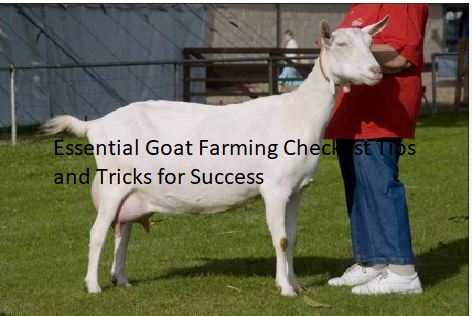
Mastering the fundamentals of goat farming checklist tips and tricks requires a focus on animal welfare, infrastructure, and financial planning. Whether you are starting a small herd for milk production or managing a larger operation for meat, the success of your venture relies on preparation long before the first kid arrives. You will find that organized documentation and a clear routine are the most effective tools for maintaining a healthy and profitable herd.
The most critical factor in your success is the initial setup of your facility. You should aim to provide at least 15 square feet of indoor space per goat and double that for outdoor exercise areas.
Proper ventilation is non-negotiable, as goats are highly susceptible to respiratory issues caused by ammonia buildup or dampness in poorly designed barns. If you prioritize these structural basics, you will solve 80% of the common health problems that plague beginners in the industry.
Selecting the Right Breed for Your Climate
Choosing a breed is the first step on your goat farming checklist tips and tricks journey. You must match the animal’s genetics to your local environmental conditions and your specific production goals. If you live in a region with high humidity, breeds like the Kiko are often more resilient against parasite loads than more fragile dairy breeds.
For those focused on milk production, the Alpine and Nubian breeds remain industry standards. Alpines are known for their high milk yield and ability to adapt to varying climates, while Nubians provide milk with a higher butterfat content. Research the average lactation cycles for these breeds before committing to a purchase.
Meat production requires a different approach, where growth rates and carcass quality take precedence. Boer goats are the gold standard for meat, but they often require more intensive management and protection from harsh winters. Always buy from reputable breeders who provide health records and parasite resistance data for their specific bloodlines.
Essential Infrastructure and Fencing Requirements
Goats are famous for their ability to escape even the most secure enclosures. Your fencing must be at least 48 inches high and constructed from high-tensile woven wire to prevent climbing or squeezing through gaps. Avoid using cattle panels for smaller breeds, as kids can easily get their heads stuck in the squares.
Interior barn design should prioritize ease of cleaning and individual animal management. You should install locking stanchions to make milking, hoof trimming, and medical treatments safer for both you and the animal. A well-designed barn layout reduces the time spent on daily chores by at least 30%.
Water access is another pillar of your infrastructure plan. Goats require clean, fresh water at all times to maintain milk production and overall health. Use heated water troughs in colder climates to prevent freezing, as goats will significantly decrease their water intake if the supply is ice-cold.
Daily Management and Feeding Strategies
Daily routines are the backbone of effective livestock management. Your morning and evening schedule should include a visual health check for every goat, focusing on appetite, gait, and alertness. A healthy goat is curious and active; any sign of lethargy is a red flag that requires immediate investigation.
Feeding strategies vary depending on whether you are using pasture-based systems or dry-lot feeding. You must supplement forage with high-quality hay during the winter months to ensure they meet their daily protein requirements. Goats are browsers, not grazers, meaning they prefer shrubs and leaves over short grass.
Mineral supplementation is a frequently overlooked aspect of a goat farming checklist. Goats require a specific balance of copper, selenium, and zinc that is rarely found in standard forage. You can find comprehensive nutritional requirements through the eXtension Foundation, which provides science-based resources for livestock producers.
Healthcare and Parasite Control
Parasite management is the single biggest challenge for most goat farmers. You should implement a FAMACHA scoring system to monitor for anemia, which is a primary indicator of heavy worm loads. This method involves checking the color of the inner eyelid to determine if an animal needs deworming medication.
Vaccination protocols should be established in consultation with a local veterinarian. Most herds require annual boosters for Enterotoxemia and Tetanus, commonly known as the CD&T vaccine. Keeping accurate medical logs for every animal is essential for tracking treatment history and withdrawal periods before slaughter or milk consumption.
Hoof care is another repetitive task that keeps your herd productive. Plan to trim hooves every 6 to 8 weeks depending on the terrain and growth rate. Overgrown hooves lead to lameness, which directly impacts the animal’s ability to forage and its overall milk production.
Financial Planning and Profitability
Calculating your startup costs is necessary to determine the long-term viability of your farm. You should account for initial livestock purchases, fencing materials, shelter construction, and emergency veterinary funds. Many beginners underestimate the cost of high-quality hay and specialized grain mixes.
Profitability depends on your ability to diversify your income streams. Selling milk, meat, fiber, or breeding stock provides different revenue cycles that can stabilize your cash flow. Use the table below to compare the relative intensity and income potential of different goat farming models.
| Model Type | Management Intensity | Primary Revenue Source | Market Stability |
|---|---|---|---|
| Dairy Production | High | Milk, Cheese, Yogurt | Stable (Local demand) |
| Meat Production | Medium | Live Animals, Carcass | High (Seasonal spikes) |
| Fiber Production | Low | Raw Wool, Yarn | Niche (Long-term growth) |
| Breeding Stock | High | Registered Kids | Variable (Genetic trends) |
Breeding and Herd Expansion
Successful breeding programs require careful selection of genetics to improve your herd over time. You should keep records of birth weights, growth rates, and milk production to identify your most efficient producers. Never keep offspring from your poorest performing does, as this will lower the overall productivity of your farm.
Managing a buck requires separate housing to prevent unwanted breeding and to protect the quality of your milk. Bucks can be aggressive, so ensure your handling facilities are robust and designed for safety. You might consider leasing a buck for the season instead of owning one if your herd size is small.
Kidding season is the most demanding time of year for any farmer. You should prepare a kidding kit containing iodine for umbilical cords, clean towels, colostrum replacer, and a kid puller. Being present during birth can prevent losses and ensure that every kid receives adequate colostrum within the first few hours of life.
Record Keeping and Administrative Tasks
Maintaining a detailed ledger is the best way to track your progress. Your records should include dates of vaccination, breeding cycles, kidding dates, and feed expenses. Digital tools or simple physical notebooks are effective, provided you update them consistently every single day.
Compliance with local regulations is a critical part of your administrative duties. Check your zoning laws regarding livestock density and manure management. Many municipalities require specific setbacks from property lines for barns and compost piles, so research these before breaking ground.
Networking with other local producers can provide you with insights that aren’t available in books. Join a local 4-H club or a regional livestock association to share knowledge about local market conditions. These connections often lead to bulk buying opportunities for feed and shared equipment costs.
Common Mistakes to Avoid
Many beginners fail because they start with too many animals at once. It is better to begin with a small herd of 3 to 5 does and learn how to manage them effectively before scaling up. This allows you to fine-tune your systems without the financial pressure of a large, unmanageable herd.
Neglecting biosecurity is another major error that can devastate a farm. Always quarantine new arrivals for at least 30 days before introducing them to your established herd. This simple step prevents the introduction of contagious diseases like Caseous Lymphadenitis or Caprine Arthritis Encephalitis.
Do not assume that all goats can thrive on the same diet. Different life stages—such as dry does, lactating does, and growing kids—have vastly different nutritional needs. Use the following list to prioritize your daily management focus:
- Maintain a strict parasite monitoring schedule using FAMACHA scores.
- Ensure all fencing is checked for structural integrity every week.
- Keep a 30-day supply of emergency medical and nutritional supplements on hand.
- Establish a relationship with a large-animal veterinarian before an emergency occurs.
- Record all feed costs and veterinary expenses to maintain accurate tax documentation.
- Rotate pastures frequently to prevent overgrazing and reduce parasite exposure.
Frequently Asked Questions
How much does it cost to start a small goat farm?
Startup costs vary significantly based on your existing infrastructure, but a modest setup for 5 goats generally requires an initial investment between $2,000 and $5,000. This covers basic fencing, shelter materials, initial feed stock, and the purchase price of the animals themselves.
What is the most common health issue in goats?
Internal parasites, specifically the barber pole worm, are the most common health challenge for goat farmers. Maintaining a clean environment and using rotational grazing are the most effective ways to mitigate this risk.
Do goats need a companion?
Yes, goats are herd animals and suffer from significant stress if kept alone. You should always aim to keep at least two goats together to ensure their psychological well-being and overall health.
How often should I milk my goats?
Lactating does should be milked twice a day, typically 12 hours apart, to maintain production levels and comfort. If you are not milking them, you must ensure they are properly dried off to avoid mastitis.
Can I raise goats in a suburban backyard?
It is possible in some areas, but you must strictly adhere to local zoning ordinances regarding livestock. Most suburbs have specific restrictions on noise, odor, and the number of animals allowed, so check with your city council first.
Building Your Future in Agriculture
Implementing a structured approach to your daily operations ensures that your farm remains sustainable and rewarding. By focusing on the specific animal needs and financial metrics outlined in this guide, you can avoid the common pitfalls that cause many new producers to quit. The key to long-term success is consistency in your daily routines and a willingness to adapt your management style based on the data you collect.
As you continue your journey, keep refining your goat farming checklist tips and tricks to better suit the unique conditions of your land. Whether you are aiming for high-volume production or a small-scale sustainable lifestyle, the fundamentals of good animal husbandry remain the same.
Start small, stay organized, and prioritize the health of your herd above all else. Your dedication to these details will pay off in the productivity and longevity of your operation.
