

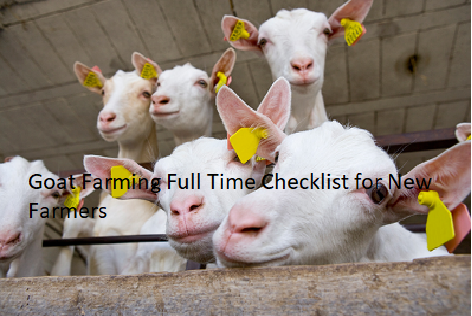
Starting a successful career in agriculture requires careful planning, and a goat farming full time checklist for new farmers acts as the essential roadmap for long-term viability. Transitioning into professional livestock management demands more than just passion for animals; it requires an objective assessment of infrastructure, capital, and market demand. By securing the right foundation, you minimize early-stage risks and position your operation for sustainable growth.
This breakdown provides the technical and operational requirements necessary to move from hobbyist to full-time producer. Understanding these pillars will help you determine if your current resources can support a commercial goat enterprise or if you need to scale back to gain experience first.
Financial and Operational Reality
Before investing a single dollar, you must understand that full-time goat farming is a thin-margin business. Most beginners find that a herd of at least 50 to 100 breeding does is required to generate a livable household income, depending on your niche. This scale requires significant upfront investment in fencing, housing, and veterinary supplies. You must prepare a detailed business plan that accounts for at least 18 months of operating expenses before your first major harvest or milk cycle. Relying on short-term cash flow often leads to premature liquidation of assets during market dips.
Infrastructure Requirements
The most critical component of your goat farming full time checklist for new farmers is the perimeter security. Goats are notorious escape artists that require woven wire fencing, ideally at least 48 inches high with high-tensile strength. Electric strands placed on the interior can prevent them from rubbing against and stretching the wire. You will also need a three-sided shelter that provides at least 15 square feet of space per animal. This shelter must be oriented away from prevailing winds to protect the herd during harsh winter months or heavy storms.
Herd Management and Selection
Selecting the right breed defines your income stream, whether you focus on meat, dairy, or fiber production. Meat breeds like Kiko or Boer are generally heartier and require less intensive daily labor than dairy breeds. If you choose dairy, you must commit to a twice-daily milking schedule that cannot be skipped, regardless of holidays or illness. Start with healthy, registered stock from reputable breeders who can provide records of vaccinations and health testing. Avoid purchasing “bargain” goats from local sale barns, as these animals often carry hidden parasites or chronic diseases like Caseous Lymphadenitis.
Nutrition and Pasture Strategy
Goats are browsers, not grazers, meaning they prefer brush, shrubs, and weeds over lush grass. A rotational grazing system is essential to manage parasite loads, as internal worms thrive in stagnant, overgrazed pastures. You should divide your land into at least four to six paddocks to move the herd every 7 to 14 days. This practice allows the vegetation to recover while breaking the life cycle of common gastrointestinal parasites. Providing free-choice minerals specifically formulated for goats is non-negotiable to prevent deficiencies in copper, selenium, and zinc.
Health and Veterinary Care
You must develop a proactive health program rather than a reactive one. Establish a relationship with a large-animal veterinarian before you even purchase your first goat, as finding a vet who treats small ruminants can be difficult in many regions. Your routine health kit should include syringes, needles, antiseptic, hoof trimmers, and a FAMACHA card for monitoring anemia levels. Keep a detailed log of every treatment, vaccination, and deworming event for every individual animal. This documentation is vital for managing herd genetics and meeting regulatory requirements for food safety.
Market Research and Profitability
Profitability in goat farming rarely comes from selling generic animals at auction. You must identify local demand, such as ethnic markets that prefer specific weights or local creameries that need high-quality goat milk. Direct-to-consumer sales, such as selling meat shares or artisanal cheese, typically yield higher margins than wholesale markets. Research the USDA Natural Resources Conservation Service guidelines for your specific region to see if you qualify for cost-share programs on high tunnels or fencing. Always calculate your “cost per pound” to ensure your pricing reflects the actual labor and feed input costs.
- Secure at least 2 acres of well-drained, predator-proof land.
- Establish a relationship with a local veterinarian for emergency calls.
- Obtain a premise identification number from your state agricultural department.
- Create a marketing plan for your specific product (milk, meat, or fiber).
- Set up a record-keeping system for breeding, birth, and medical history.
- Build a quarantine pen to isolate new arrivals for at least 30 days.
Comparing Production Models
The financial and labor requirements shift significantly depending on your chosen sector. Dairy operations require significantly more infrastructure and daily labor, while meat operations are more cyclical and seasonal.
| Factor | Meat Goat Operation | Dairy Goat Operation |
|---|---|---|
| Daily Labor | Low (Checking fences/water) | High (Twice-daily milking) |
| Infrastructure | Pasture-focused | Milking parlor/sanitation |
| Revenue Cycle | Seasonal (Auction/Private) | Daily/Weekly (Milk/Cheese) |
| Skill Requirement | General husbandry | Sanitation/Food processing |
Risk Management and Legalities
Full-time farming carries inherent liabilities, particularly if you sell food products to the public. You must carry adequate farm liability insurance to protect against injuries to visitors or potential product contamination claims. Check your local zoning ordinances to ensure that livestock is permitted on your property before signing any land leases or purchasing equipment. Many municipalities have strict rules regarding manure management, noise, and odor control. Failure to comply with these regulations can lead to fines or forced closure of your farm.
Common Questions for New Farmers
How many goats should a beginner start with?
A beginner should start with no more than five to ten goats. This allows you to learn the nuances of herd behavior, parasite management, and medical care without being overwhelmed by the physical labor of a large herd.
What is the most important skill for a new goat farmer?
Observation is the most important skill. You must be able to spot subtle changes in an animal’s posture, appetite, or eye color, which are often the first signs of illness in a prey species like a goat.
How long does it take for 10 goats to clear an acre?
This depends entirely on the density of the brush. In moderately overgrown land, 10 adult goats can clear an acre of light brush in approximately two to three weeks, but they will require supplemental hay if the vegetation is sparse.
What is the biggest mistake new farmers make?
The most common mistake is failing to invest in adequate fencing. Goats will test every weak point in your perimeter, and once they learn how to escape, they will continue to do so, leading to crop loss and neighborhood conflict.
Do I need a livestock guardian dog?
If you are in an area with coyotes, stray dogs, or other predators, a livestock guardian dog is highly recommended. These dogs live with the herd and are essential for preventing losses that could otherwise bankrupt a small, full-time operation.
Conclusion
A goat farming full time checklist for new farmers is a tool for discipline, not just a list of chores. By focusing on infrastructure, animal health, and clear market goals, you mitigate the high failure rates common in the first three years of operation. Remember that this industry rewards those who treat it as a business rather than a lifestyle. Success requires constant refinement of your grazing techniques, veterinary protocols, and financial tracking. If you are prepared to invest the time in planning, the potential for a sustainable, full-time career in agriculture is within reach. Take the time to visit established producers in your area to see these principles in action before committing your capital to your own herd.
