

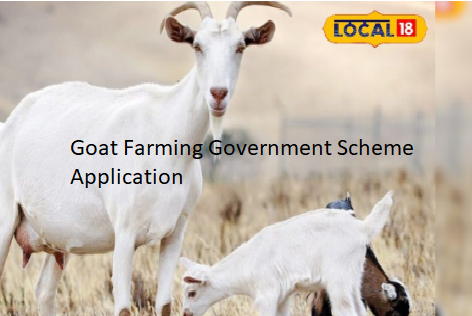
Successfully completing a goat farming government scheme application requires attention to detail, proper documentation, and a clear understanding of the specific requirements set by agricultural departments. These financial support programs are designed to increase small-ruminant production, improve breed quality, and provide sustainable livelihoods for rural entrepreneurs.
By understanding the eligibility criteria and the necessary paperwork, you can significantly improve your chances of securing a subsidy or low-interest loan for your livestock business. This article provides a breakdown of how to prepare your materials, what authorities look for in a proposal, and how to maintain compliance once you receive support for your agricultural venture.
The core requirement for most applicants is to prove that they possess the basic infrastructure and land capacity to support the number of goats requested in their proposal. Most state-level and national programs, such as the Department of Animal Husbandry and Dairying, mandate that you provide a detailed project report including your total land area, shed specifications, and a projected three-year financial statement. You must submit your application through the official portal or the local district veterinary office, ensuring all identification documents—such as your national identity card, bank passbook, and land ownership records—are attached in the correct format.
Understanding Subsidy Eligibility and Financial Support
Government subsidies for goat farming are rarely flat-rate handouts; they are usually structured as a percentage of the total project cost. For instance, many schemes offer a 25% to 50% subsidy depending on your social category, such as whether you belong to a scheduled caste, tribe, or general category. You must verify if your specific region has an active window for applications, as many of these programs operate on a fiscal-year cycle.
Financial assistance often targets specific breeds or herd sizes to ensure that the investment yields a high return on meat or milk production. Small-scale farmers might find support for units of 10 to 20 goats, while larger commercial operations can apply for expansion grants if they have a proven track record. You should research whether your state provides additional incentives for processing facilities, such as milk-chilling units or slaughterhouse upgrades, which can add value to your business model.
Essential Documentation for Your Application
A successful goat farming government scheme application hinges on the completeness of your documentation package. Authorities require proof of identity, residency, and land tenure to ensure the funds are being directed to legitimate, site-specific agricultural projects. Missing even a single document can lead to your file being moved to the bottom of the pile or rejected entirely during the initial screening phase.
Commonly required documents include:
-
- A valid government-issued photo ID (e.g., Aadhaar, PAN card, or Voter ID).
-
- Certified land ownership documents or a long-term lease agreement.
-
- A detailed project report prepared by a registered veterinarian or agricultural consultant.
-
- A bank statement showing sufficient capital for your share of the investment.
-
- A certificate of training in goat rearing from an authorized agriculture university or training center.
Developing a Profitable Business Plan
Your business plan is the most critical document in your application, as it demonstrates to officials that you are a serious entrepreneur rather than a hobbyist. It must include a comprehensive budget that covers the purchase of foundation stock, feed costs, veterinary care, and labor expenses for the first two years of operation. You should clearly define your market strategy, such as whether you plan to sell live animals to local markets, supply meat to urban retailers, or produce milk-based products.
Concrete numbers are essential here; avoid vague estimates. For example, specify your mortality rate expectations, your expected kidding percentage, and the average weight gain of your kids per month. If you can show that you have already secured a buyer or have a contract with a local cooperative, your project will be viewed as significantly lower risk by the loan committee.
Infrastructure and Land Capacity Requirements
Regulators want to see that you have enough space to prevent overcrowding and disease outbreaks. For a herd of 100 goats, you generally need at least 1,500 to 2,000 square feet of covered shed space, plus additional acreage for grazing or fodder cultivation. Your application must include a site map that shows the layout of the sheds, the source of water, and the waste management system you intend to use.
If you are applying for a larger operation, you will likely need to provide an environmental impact assessment or a plan for handling manure. Modern schemes often prioritize farmers who implement sustainable practices, such as vermicomposting or using solar power for shed lighting. Demonstrating that you have considered these operational efficiencies can make your application stand out from others that lack a long-term sustainability focus.
Navigating the Application Submission Process
Once your documents are ready, you must decide whether to apply online through the centralized portal or visit your district office in person. Many states have moved toward digital-only submissions to increase transparency and reduce processing times. If you choose the online route, ensure you keep a digital copy of every document uploaded and save your application reference number for tracking purposes.
If you choose to visit an office, bring a physical file with original documents and multiple photocopies. You should ask for a formal receipt or an acknowledgement slip when you hand over your application. Maintaining a professional relationship with the local veterinary officer is also beneficial, as they are often the ones tasked with verifying your site and signing off on the feasibility of your project.
Common Reasons for Application Rejection
Understanding why applications are rejected can help you avoid common pitfalls that delay funding. The most frequent issue is a discrepancy between the project report and the actual land ownership documents. If your project report claims you have 5 acres of land but your title deed only shows 2, the application will be flagged immediately for clarification or denial.
Another common issue is an unrealistic budget that ignores regional market prices for feed and veterinary supplies. If your projections for income are overly optimistic or your cost estimates are suspiciously low, the review committee may view your plan as unviable. Ensure your numbers align with the current market rates published by local agricultural boards or universities to maintain credibility.
Comparison of Common Funding Models
Different schemes offer varying levels of financial support depending on the nature of the project. The following table illustrates how different tiers of support typically look for a standard goat farming enterprise.
| Project Type | Average Subsidy % | Loan Component | Self-Contribution |
|---|---|---|---|
| Small Holder (10-20 goats) | 33% | 50% | 17% |
| Commercial (50-100 goats) | 25% | 60% | 15% |
| Breeding Unit (200+ goats) | 20% | 65% | 15% |
Managing the Post-Approval Phase
Receiving approval for your goat farming government scheme application is only the beginning of your responsibilities. You will typically be required to maintain insurance for your livestock and provide periodic progress reports to the funding agency. Failure to maintain the herd size as promised or neglecting the veterinary health of the animals can lead to the clawback of the subsidy funds.
Keep a detailed ledger of all expenditures, including receipts for feed, medicine, and new animal purchases. Having a clean audit trail is essential if you ever need to apply for a second round of funding or an expansion loan. Always notify the relevant department if there are significant changes to your operation, such as a change in site location or a shift in the primary breed you are raising.
Frequently Asked Questions
How much land is required for 100 goats?
For 100 goats, you generally need about 1,500 to 2,000 square feet of covered shed area. If you intend to provide grazing, you should calculate at least one acre of pasture per 10 to 15 goats, depending on the forage quality of your region.
What is the typical processing time for an application?
Processing times vary by state and funding cycle, but you should generally expect a wait of three to six months. Complex projects that require site inspections or multiple levels of approval may take longer to process before funds are released.
Can I apply for a subsidy if I have already started the farm?
Most government schemes are designed for new projects or new expansions, so they may not cover existing investments. You should check the specific guidelines of your chosen scheme, as some allow for “back-ended” subsidies if you meet all the criteria at the time of application.
Do I need a specific breed of goat to qualify?
While most schemes are breed-neutral, some programs prioritize high-yield dairy breeds or fast-growing meat breeds specific to your region. Using local, government-approved breeds can sometimes increase your priority score during the selection process.
Is there a tax benefit for goat farming?
In many jurisdictions, income from agricultural activities, including livestock farming, is tax-exempt or subject to specific deductions. You should consult with a local tax professional to understand how your specific business structure affects your tax liability.
Building a Sustainable Future
Investing in livestock requires patience, technical knowledge, and a commitment to animal welfare. By following the structured process of a goat farming government scheme application, you align your business with the standards set by national agricultural bodies. This not only provides you with necessary financial support but also grants you access to training, veterinary networks, and market connections that are vital for long-term viability.
Focus on building a robust project report that reflects realistic market conditions and sound management practices. As you move forward, keep your documentation organized and maintain proactive communication with your local district office to stay informed about upcoming support windows. Engaging with these programs effectively can turn a small operation into a profitable, sustainable enterprise that supports your community and contributes to the broader agricultural economy.
