

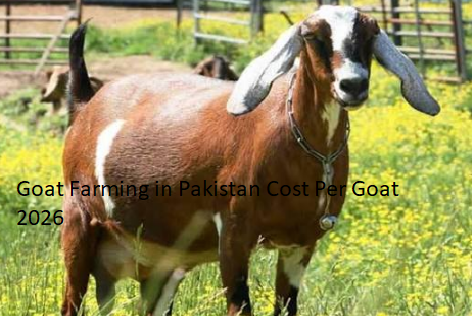
Understanding the goat farming in pakistan cost per goat 2026 requires looking at a mix of livestock market volatility, feed inflation, and regional demand. For an aspiring producer, the initial purchase price of a healthy, breeding-age animal typically ranges between PKR 35,000 and PKR 65,000, depending on the breed and weight. These figures fluctuate based on the proximity to major livestock hubs like Lahore, Faisalabad, or Karachi.
By analyzing these expenses alongside operational overhead, you can build a sustainable business model in the agricultural sector. This article provides the financial clarity needed to plan your investment and manage your herd’s profitability effectively over the coming year.
Calculating the baseline goat farming in pakistan cost per goat 2026 starts with the purchase price of the animal. If you are looking at popular meat breeds like the Beetal or the crossbred Teddy, prices are currently trending upward. A quality yearling buck or doe meant for commercial breeding usually costs around PKR 45,000.
Premium show-quality animals or high-yield dairy goats often command prices exceeding PKR 80,000. These figures are not static and often spike significantly during the two months leading up to Eid-ul-Adha. Investors should avoid purchasing during peak festival windows if they aim to keep their initial capital expenditure low.
Maintenance costs represent the second pillar of your financial planning. On average, you should budget between PKR 4,000 and PKR 6,000 per month for the care of a single adult goat. This estimate covers high-quality green fodder, dry concentrate, mineral mixtures, and basic veterinary oversight.
If you are sourcing feed from large-scale commercial suppliers, your costs per unit will be lower than buying from local retailers. However, the price of wheat straw and alfalfa often rises during the winter months, which can squeeze your margins if you haven’t secured bulk supply contracts.
Land and infrastructure requirements add a layer of complexity to your cost analysis. You do not necessarily need to purchase massive tracts of land if you utilize intensive stall-feeding methods. A shed designed for 50 goats requires roughly 600 to 800 square feet of covered space to prevent overcrowding and stress.
Construction costs for a simple, ventilated structure using local materials like bricks and corrugated iron sheets typically fall between PKR 300,000 and PKR 500,000. This fixed cost should be amortized over the lifespan of the facility to understand the true impact on your per-goat operational expense.
Veterinary and health management is a non-negotiable expense that keeps your business viable. Routine deworming, vaccination against Peste des Petits Ruminants (PPR), and foot-and-mouth disease prevention are essential. You should set aside approximately PKR 1,500 to PKR 2,000 per animal annually for these medical necessities.
Neglecting these preventative measures often leads to higher mortality rates, which is the fastest way to erode your capital. You can find detailed animal health guidelines via the Food and Agriculture Organization of the United Nations to ensure your farm meets international biosecurity standards.
Labor costs vary significantly depending on whether you operate as a family-run unit or hire professional help. A skilled farmhand capable of managing a herd of 100 goats typically earns a monthly salary ranging from PKR 30,000 to PKR 45,000. If you divide this by the number of animals, the labor cost per goat is relatively low, provided you scale your operation efficiently.
Many farmers find that a ratio of one worker for every 50 to 75 goats is the “sweet spot” for maintaining quality care without overspending on payroll. If you are managing the herd yourself, you must still account for the “opportunity cost” of your time in your financial projections.
Marketing and logistics play a major role in your final profit margin. Transporting goats from rural breeding centers to urban markets can add PKR 1,000 to PKR 3,000 per animal in fuel and handling charges. If you sell directly from your farm to local butchers or individual buyers, you bypass these middleman costs entirely.
Developing a strong local network is the best strategy for maintaining profitability. Many successful farmers in Punjab and Sindh have moved toward digital marketing, using social media to sell their livestock directly to urban consumers during peak demand seasons.
The following table breaks down the estimated annual expenditure for a single goat in a commercial stall-feeding setup. These figures are averages and will vary based on your specific location and management style.
| Expense Category | Estimated Annual Cost (PKR) |
|---|---|
| Feed (Green and Dry) | 48,000 – 60,000 |
| Veterinary & Medicine | 2,000 – 3,000 |
| Labor Allocation | 6,000 – 9,000 |
| Utilities & Misc | 2,000 – 4,000 |
| Total Per Goat | 58,000 – 76,000 |
Efficiency in goat farming is often determined by your ability to manage feed conversion ratios. Goats are browsers, not just grazers, and their ability to convert roughage into high-quality meat is a massive advantage. You can lower your costs by growing your own alfalfa or sorghum on small plots of land adjacent to the shed.
Utilizing hydroponic fodder is another emerging trend in Pakistan that saves water and reduces the total land footprint needed for the farm. Farmers who master these production techniques often see their operational costs drop by 15-20% compared to those relying solely on market-purchased feed.
Understanding mortality risk is crucial when calculating your long-term return on investment. Even with the best care, a loss rate of 3% to 5% per year is common in commercial operations due to unforeseen illnesses or environmental stress. You must factor this loss into your price-per-goat calculations to ensure your business remains solvent.
Successful farmers typically keep a “contingency fund” equivalent to 10% of their annual operating budget to cover these inevitable losses. When your business is buffered against these risks, you are far less likely to be forced into a distress sale when market prices fluctuate.
How much space is needed for 100 goats?
For a herd of 100 goats, you generally need about 1,200 to 1,500 square feet of indoor area. This allows for proper ventilation and movement, which is critical for preventing respiratory diseases. You should also include an outdoor paddock or grazing area of at least 3,000 square feet for exercise.
Is it better to buy kids or adults?
Buying kids is cheaper, but it requires a longer wait time before you see a return on investment. Adults are more expensive to purchase, but they provide faster cash flow through breeding or immediate resale. Most commercial farmers prefer buying healthy yearlings as a middle-ground strategy.
What are the most profitable breeds in Pakistan?
The Beetal and Nachi breeds are widely considered the most profitable due to their high growth rates and adaptability. The Teddy breed is also popular among small-scale farmers because of its ability to thrive on minimal feed. Your choice should depend on whether you are prioritizing meat production or dairy output.
How often should I vaccinate my herd?
Vaccination schedules should be strictly followed according to the advice of your local veterinarian. Generally, PPR vaccinations are given once a year, while other boosters might be required every six months. Keeping a logbook of every vaccination is essential for maintaining the health history of your herd.
Can I sell goats online?
Yes, selling goats online via platforms like Facebook groups, WhatsApp, and dedicated livestock marketplaces has become very common. This method allows you to reach buyers in major cities who are willing to pay a premium for healthy, well-fed animals. It significantly reduces your reliance on local animal market middlemen.
The financial landscape of the livestock industry is evolving rapidly, making the goat farming in pakistan cost per goat 2026 a vital metric for any serious entrepreneur. By focusing on efficient feed management, proper veterinary care, and direct-to-consumer sales, you can mitigate the impact of rising inflation. While the initial investment might seem substantial, the demand for goat meat and dairy products remains consistently high across the country.
Start by conducting a thorough audit of your local market prices and feed availability before committing your capital. With disciplined management and a focus on animal health, you can build a stable, profitable operation that thrives in the coming year.
