

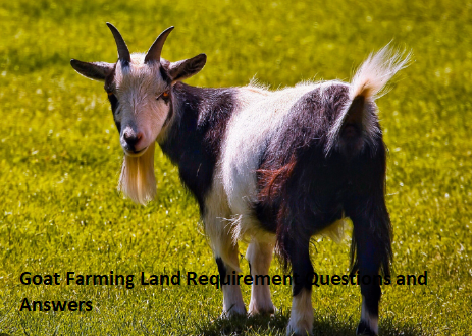
Understanding goat farming land requirement questions and answers is essential for anyone planning to launch a sustainable livestock operation. Many beginners assume goats require vast acreage, yet these hardy animals are remarkably efficient in confined spaces. By balancing stocking rates with proper management techniques, you can successfully raise a healthy herd on a modest plot of land.
This article provides the specific data points and operational strategies needed to determine your spatial needs accurately. Whether you are aiming for a small homestead or a commercial venture, knowing the exact metrics helps prevent overgrazing and ensures long-term viability. Mastering these spatial calculations is the first step toward building a productive and profitable farm.
Determining Your Herd Size and Density
The core of goat farming land requirement questions and answers revolves around the concept of animal units per acre. A general rule of thumb for goats is that you can comfortably house 6 to 10 adult goats per acre on high-quality pasture. If your land quality is lower or if you are not using supplemental feeding, this number drops significantly to 2 to 4 goats per acre.
You must first assess the quality of your forage to determine where your land falls within that range. Lush, irrigated clover or alfalfa pastures support higher densities than dry, rocky, or scrub-heavy terrain.
If you intend to supplement their diet with hay or grain, you can push the density higher without damaging the soil. Always account for the growth cycle of your goats, as a herd of nursing does requires more space and nutrients than a group of dry wethers.
Impact of Grazing Management Systems
Implementing a rotational grazing system significantly alters the total land requirement for your herd. Instead of allowing goats free roam over a large area, you divide the property into smaller paddocks using temporary electric fencing. This prevents the animals from grazing the same patches repeatedly, which kills grass and encourages parasite buildup.
By moving your herd every 2 to 3 days, you allow the previously grazed area to recover fully. This practice can increase your stocking capacity by 30% to 50% compared to continuous grazing.
The goats benefit from fresh, nutrient-dense forage, and the land remains productive for much longer throughout the season. Proper rotation effectively turns a small parcel into a high-yield feeding ground.
Space Needs for Housing and Infrastructure
Beyond the grazing area, you must allocate space for structures, handling facilities, and feed storage. A healthy goat requires approximately 15 to 20 square feet of indoor shelter space per animal. This space must be dry, well-ventilated, and protected from drafts to prevent respiratory issues.
You also need to incorporate a handling chute or a small working area for medical treatments and hoof trimming. A standard 10-by-10-foot area is often sufficient for a small herd’s medical needs.
If you are operating a commercial dairy or meat farm, you will require additional square footage for milking parlors or processing rooms. Always leave extra space for expansion, as herds tend to grow once you establish your routine.
Comparing Stocking Densities
The following table provides a quick reference for estimating how many animals your specific land type can support. These figures assume a balance of natural forage and basic supplemental feeding.
| Land Quality | Goats per Acre (Continuous) | Goats per Acre (Rotational) |
|---|---|---|
| Excellent (Irrigated/Lush) | 8-10 | 12-15 |
| Average (Standard Pasture) | 4-6 | 7-9 |
| Poor (Dry/Scrub) | 1-2 | 3-4 |
Accounting for Topography and Soil Health
Topography plays a massive role in how much land you actually need for your goat operation. Goats are natural browsers, meaning they enjoy steep hillsides and brushy areas that cows or sheep might ignore. While flat, grassy fields are ideal for easy management, hilly terrain can actually support a higher number of goats per acre if the vegetation is woody.
Steep slopes require careful management to prevent soil erosion caused by over-grazing. You should limit the time spent on sensitive slopes to ensure root systems remain intact.
If your land is extremely rocky or prone to flooding, those sections should be excluded from your pasture calculations entirely. Focus your infrastructure on the most stable, well-draining parts of your property to ensure a long-lasting facility.
Essential Infrastructure Checklist
When planning your layout, you need to account for more than just the field. A successful farm requires specific zones to keep the operation running smoothly. Consider these essential components when calculating your total land usage:
- Sturdy perimeter fencing, at least 48 inches high, to prevent escapes and keep predators out.
- A central dry-lot area for winter feeding when pastures are dormant.
- Covered storage for hay and bedding to prevent moisture-related spoilage.
- A secure mineral station to prevent wastage and ensure goats have constant access.
- Water access points in every paddock to minimize energy expenditure during grazing.
- A quarantine pen for new arrivals or sick animals to protect the main herd.
The Role of Supplemental Feeding
Supplemental feeding is the most effective way to reduce the amount of land needed for your goats. If you have a small plot, you can rely on hay and high-quality grain to provide the bulk of the herd’s nutrition. This approach effectively decouples your herd size from your land’s natural carrying capacity.
You can maintain a larger herd on a smaller footprint, provided you have a reliable supply of hay and storage space. However, this increases your daily labor and operational costs significantly.
Most successful farmers use a hybrid model, allowing goats to browse for part of the day while providing hay in the evening. For more detailed information on livestock feeding standards, visit the USDA Natural Resources Conservation Service for regional pasture management guidelines.
Climate and Seasonal Considerations
Your geographical location dictates the length of the growing season, which directly impacts land requirements. In regions with long, harsh winters, your goats will spend several months off the pasture entirely. During these months, your land usage shifts from grazing to storage and indoor housing.
You must calculate your land needs based on the “worst-case” season rather than the peak of summer. If you have 5 acres but it is covered in snow for four months, your land is effectively unavailable for forage during that time.
You will need to store enough hay to last the entire winter, which requires significant square footage for a barn or a shed. Plan your infrastructure for the longest winter you expect to encounter in your specific region.
FAQ: Addressing Common Concerns
Can I raise goats in a suburban backyard?
Yes, it is possible to keep a few goats in a suburban setting if your local ordinances allow it. You will need to rely heavily on stall feeding and provide a small exercise yard, as a typical backyard will not provide enough forage to sustain them.
Do goats destroy the land?
Goats only destroy land if they are overstocked or restricted to a single area for too long. If you use rotational grazing and move them frequently, they can actually improve soil health by clearing brush and depositing natural fertilizer.
How tall does my fencing need to be?
For most goat breeds, a fence height of at least 48 inches is recommended. If you are raising high-jumping breeds or want to ensure maximum security against predators, 52 to 60 inches is safer.
Is it better to buy or lease land for goats?
Leasing is an excellent way to start if you want to test your management skills without a massive capital investment. Ensure the lease agreement clearly states whether you are allowed to install fencing and temporary structures.
Do goats require a barn for shelter?
Goats do not need a climate-controlled building, but they do require a three-sided, roofed structure to escape rain, snow, and wind. They are very sensitive to dampness, so a dry, elevated bedding area is critical for their health.
Establishing Your Farm
Navigating goat farming land requirement questions and answers requires a realistic assessment of your specific goals and local environment. You do not need hundreds of acres to build a successful herd, but you do need a disciplined approach to grazing and infrastructure. Start by measuring your available space and calculating your expected herd density based on the quality of your forage.
Invest in high-quality fencing and a reliable shelter system before bringing your first animals home. By focusing on efficient land utilization and consistent animal husbandry, you can create a productive operation on even a modest plot. Take the time to observe how your herd interacts with the landscape, and remain flexible as you adjust your management style over the coming seasons.
