

Understanding the financial reality behind goat farming profit questions and answers is the first step toward building a sustainable agricultural enterprise. Many beginners enter the industry with high hopes but lack a concrete grasp of the margins involved in meat, dairy, or fiber production. You need to distinguish between revenue and net income while accounting for the significant time investment required to manage a herd effectively.
This analysis provides the data-driven clarity you need to determine if your land and resources can support a lucrative operation. By examining real-world costs and revenue streams, you can move past guesswork and build a business model based on verifiable agricultural economics.
Direct Financial Expectations for Goat Farmers
When addressing goat farming profit questions and answers, the most common inquiry concerns the actual net earnings per animal. A well-managed meat goat operation can generate a net profit of $50 to $150 per head annually, depending on your local market access and production efficiency.
These figures assume you are minimizing overhead by utilizing rotational grazing and home-grown hay rather than relying exclusively on expensive commercial feeds. If you are selling high-quality breeding stock or registered dairy goats, these margins can increase significantly, though the initial investment costs are much higher.
You must remember that these numbers represent the surplus after all direct expenses, including veterinary care, feed, mineral supplements, and infrastructure maintenance. Many small-scale farmers fail to account for the depreciation of their equipment or the value of their own labor, which artificially inflates their perceived profit.
To achieve the upper end of the profit spectrum, you must optimize your kidding percentage, typically aiming for 1.5 to 1.8 kids per doe each year. Consistency in these metrics is what separates a hobbyist from a professional agricultural business owner.
The Most Profitable Goat Breeds to Raise
Profitability often hinges on choosing a breed that matches your specific regional demand and environmental conditions. If your goal is meat production, the Boer goat remains the industry standard due to its rapid growth rate and superior muscle conformation.
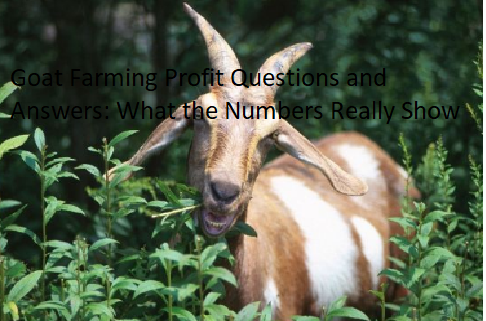
Boer crosses are frequently used in commercial herds to introduce these traits while maintaining the hardiness of local, native breeds. The market for goat meat, often referred to as chevon or cabrito, is growing steadily in many urban centers across the United States.
For dairy operations, the Nubian and Alpine breeds are widely considered the most profitable choices due to their high milk yield and butterfat content. Nubian milk is particularly prized for cheese production, which allows you to sell value-added products like artisanal goat cheese or soap at a significant markup.
Fiber producers often focus on Angora goats, which provide mohair, or Cashmere goats for their luxury undercoat. Each of these categories requires a different set of skills and a distinct marketing strategy to ensure you aren’t just producing a commodity, but a premium product.
Scale and Herd Size Requirements
Determining how many goats you need to make a profit involves a careful calculation of fixed costs versus variable output. While you can technically turn a profit with a small herd of 10 to 20 head if you sell direct-to-consumer, true commercial scale usually begins at 50 to 100 breeding does.
At this scale, you can justify the investment in specialized equipment like squeeze chutes, automated milking parlors, or high-tensile fencing. You also gain the ability to supply larger buyers or local retailers who require consistent volume throughout the year.
Smaller operations often struggle because the overhead costs—such as veterinary call-out fees or fixed machinery costs—are spread across too few animals. If you have only five goats, a single medical emergency can wipe out your entire annual profit.
Scaling up allows you to absorb these risks more effectively and negotiate better prices on bulk feed and supplies. Always match your herd size to your available land; overstocking leads to parasite issues and degraded pastures, which quickly destroy your profit margins.
Land Management and Carrying Capacity
Land is your most significant asset, and its management directly dictates your bottom line. Experts generally recommend a stocking rate of four to six meat goats per acre on well-managed, high-quality pasture.
If your soil quality is poor or you live in an arid climate, this number may drop to one or two goats per acre to avoid overgrazing. You can consult the USDA Natural Resources Conservation Service for soil maps and grazing management plans tailored to your specific region.
Investing in a robust rotational grazing system is one of the most effective ways to boost profitability. By moving goats between small paddocks, you break the life cycle of internal parasites and ensure that the animals are always grazing fresh, high-protein forage.
This reduces your reliance on expensive grain and hay, which are often the largest expenses in a goat farming budget. Well-managed pastures also improve the health and fertility of your herd, leading to fewer vet bills and higher weaning weights.
Revenue Sources and Market Channels
Diversifying your income streams is essential to maintaining stability in the volatile livestock market. While selling market kids is the primary revenue source for meat producers, you should also consider secondary markets to maximize the value of every animal.
This might include selling manure as high-quality compost, offering farm tours, or selling breeding stock to other local producers. Selling directly to the end consumer, such as through farmers’ markets or private sales, generally yields a 20% to 30% higher price than selling at a livestock auction barn.
| Revenue Category | Typical Margin/Potential | Primary Market |
|---|---|---|
| Market Kids (Meat) | Moderate | Auctions, Ethnic Markets |
| Dairy Products (Cheese/Milk) | High | Local Retailers, Direct Sales |
| Breeding Stock | Very High | Other Farmers, 4-H Clubs |
| Fiber (Mohair/Cashmere) | Variable | Artisans, Specialized Mills |
Managing Operational Expenses
Controlling your input costs is just as important as maximizing your sales price when analyzing goat farming profit questions and answers. Feed costs typically represent 50% to 70% of total operating expenses for a commercial operation.
If you can produce your own high-quality hay or forage, you can significantly reduce these costs and improve your margins. You must also implement a strict herd health program that focuses on prevention rather than treatment to avoid expensive veterinary interventions.
- Implement a strict vaccination schedule to prevent common diseases like enterotoxemia.
- Use fecal egg counts to monitor parasite loads and target deworming treatments.
- Invest in predator-proof fencing to prevent stock losses from coyotes or domestic dogs.
- Keep detailed records of every animal’s birth date, weight gain, and health history.
- Buy mineral supplements and feed additives in bulk to lower the per-unit cost.
The Role of Value-Added Products
Transitioning from a raw commodity producer to a processor can drastically change your financial outlook. Instead of selling raw milk, processing it into aged goat cheese or yogurt adds significant value and extends the shelf life of your product.
This strategy requires additional investment in food-grade facilities and adherence to local health department regulations, but the profit margins are far higher. You are essentially capturing the margin that would otherwise go to the middleman or the retail grocer.
Many successful farmers start small by selling at community events and gradually build a reputation for quality. If you are focusing on meat, consider offering custom processing options for customers who want to purchase a whole or half animal.
This reduces your marketing effort and ensures you get paid for the animal at a weight determined at the time of sale. Always ensure your business model complies with your state’s “cottage food” or farm-processing laws before you start selling value-added products.
Addressing Common Risks and Challenges
No discussion of goat farming profit questions and answers is complete without acknowledging the risks inherent in livestock production. Parasite resistance is perhaps the greatest threat to profitability in many regions, as standard dewormers are becoming less effective over time.
You must integrate genetic selection for parasite resistance into your breeding program, culling animals that require frequent treatment. This long-term approach saves you money on medication and labor while improving the overall hardiness of your herd.
Predation and weather-related losses can also cause sudden, devastating financial hits. A single night of poor predator management can result in the loss of your most productive breeding stock, which is an investment you cannot easily replace.
Always factor insurance costs into your budget and consider the long-term impact of climate volatility on your feed production. By maintaining a financial buffer and avoiding excessive debt, you can weather the inevitable downturns that every agricultural producer faces throughout their career.
Frequently Asked Questions
How much does it cost to start a small goat farm?
Initial costs vary wildly based on existing infrastructure, but a modest start with five to ten goats usually requires an investment of $5,000 to $15,000. This covers the purchase of healthy, vaccinated stock, basic fencing, a simple shelter, and initial feed supplies.
Is it possible to make a full-time living from goat farming?
Yes, it is possible, but it requires a large-scale operation or a highly specialized niche, such as high-end dairy processing or registered seedstock production. Most full-time farmers diversify their income by offering value-added products and managing large herds of 200+ animals.
What is the most common reason goat farms fail?
The most common cause of failure is poor parasite management and lack of financial planning. Many farmers underestimate the cost of feed and veterinary care, leading to a cash flow crisis when unexpected expenses arise.
How often should I market my goats?
If you are raising meat goats, you should market them when they reach their target weight, which is typically between 60 and 90 pounds. For dairy or fiber, your marketing cycle will be tied to the production season of milk or the annual shearing schedule.
Do I need specialized equipment to get started?
You do not need expensive equipment in the beginning, but quality fencing is non-negotiable. A basic squeeze chute for handling and a reliable scale for monitoring growth are the two most important investments for a serious producer.
The financial success of your agricultural venture depends on your ability to treat the farm as a business rather than a hobby. By focusing on low-input management, careful selection of breeds, and strategic marketing, you can navigate the complexities of goat farming profit questions and answers. Start by building a small, manageable herd and focus on mastering the basics of health and nutrition before attempting to scale up.
Keep meticulous records to track your expenses and revenue, as this data will be the most valuable tool in your decision-making process. If you remain disciplined and prioritize the long-term health of your animals and land, you can build a stable and rewarding operation that provides a consistent return on your investment. Reach out to your local agricultural extension office for region-specific advice to get started on the right foot.
