

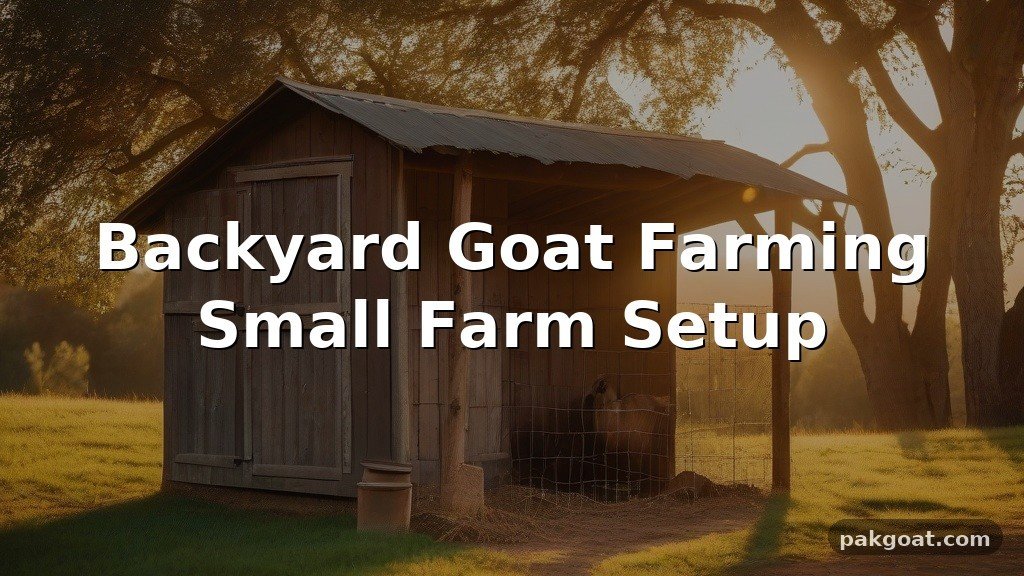
Establishing a backyard goat farming small farm setup requires careful planning to balance limited space with the needs of your animals. Most beginners start with two to four goats, as these social creatures suffer from stress and health issues when kept in isolation. You can reasonably manage a small herd on as little as one-quarter to one-half acre of land, provided you implement rotational grazing to prevent overgrazing and parasite buildup.
Core Requirements for Your Setup
To launch your backyard goat farming small farm setup successfully, you must prioritize infrastructure that keeps your animals safe from local predators and weather extremes. A sturdy, dry shelter is non-negotiable; goats are highly susceptible to respiratory issues if their living space is damp or drafty.
Shelter and Fencing
Your barn doesn’t need to be elaborate, but it must be functional. A three-sided structure facing away from prevailing winds is often sufficient for temperate climates. For fencing, standard poultry wire or residential picket fences will not suffice. You need woven wire “no-climb” fencing at least 48 inches high to keep your goats contained and predators out.
Feeding and Nutrition
Goats are browsers, not grazers like sheep. They prefer shrubs, weeds, and tree leaves over standard grass pasture. While they enjoy grazing, you must provide supplemental high-quality hay, especially during winter months when forage is unavailable.
- Fresh Water: Goats require constant access to clean, potable water.
- Mineral Supplements: Loose goat-specific minerals are essential to prevent deficiencies.
- Hay Storage: Keep hay off the ground on pallets to prevent mold and waste.
- Shelter Bedding: Use wood shavings or straw to keep the barn floor dry.
Comparing Goat Breeds for Small Spaces
Choosing the right breed depends on whether your primary goal is milk production, meat, or simply brush management. Smaller breeds are generally easier to handle and require less feed than their larger counterparts.
| Breed | Primary Purpose | Size Category |
|---|---|---|
| Nigerian Dwarf | Milk Production | Small |
| Kinder | Dual-Purpose | Medium |
| Boer | Meat Production | Large |
| Pygmy | Pet/Brush Control | Small |
Common Questions About Goat Farming
Is a small goat farm profitable?
Profitability depends on your local market and the value-added products you create. Selling raw milk is restricted in many jurisdictions, but turning that milk into soap or cheese can significantly increase your margins. Most backyard setups are hobby-focused rather than high-profit ventures.
What is the best goat breed for a small farm?
For most backyard owners, the Nigerian Dwarf is the top choice. They are compact, produce high-butterfat milk, and are generally docile, making them easier to manage in limited space than full-sized dairy breeds.
How many acres do you need for a small herd?
While experts often suggest one acre per goat for long-term sustainability, you can maintain a small herd on much less space. If you utilize cut-and-carry feeding methods or high-intensity rotational grazing, you can keep four goats on roughly one-quarter acre.
How long does it take goats to clear an acre?
The time it takes to clear brush depends on the density of the vegetation and the number of goats. A herd of ten hungry goats can typically clear a heavily overgrown, one-acre plot of invasive weeds and brambles in two to four weeks.
Final Considerations
Starting a backyard goat farming small farm setup is a rewarding way to gain self-sufficiency and learn animal husbandry. Focus on securing your perimeter fencing first, as goats are notorious escape artists that will quickly find any weakness in your defenses. Always research local zoning laws, as some municipalities have strict ordinances regarding livestock within residential areas.
Prioritizing the health of your herd through routine hoof trimming and parasite management will ensure your farm remains a positive experience. As you gain confidence, you can explore breeding or expanding your herd size to suit your available resources. If you have questions about specific breeds or local regulations, reaching out to a local agricultural extension office is a great next step.
