

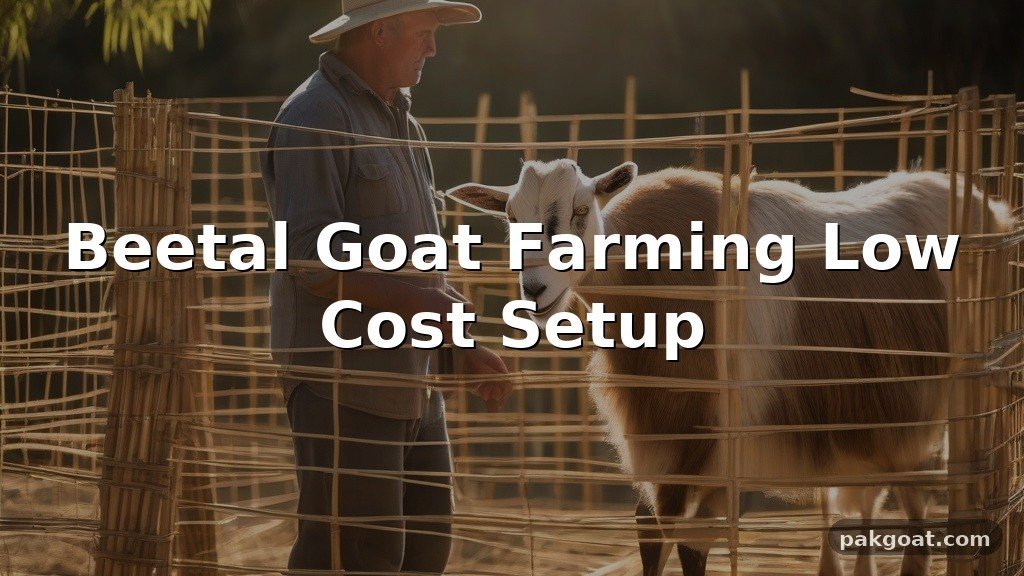
Starting a beetal goat farming low cost setup requires focusing on modular infrastructure and leveraging local resources rather than expensive commercial equipment. Beetal goats are a popular breed in South Asia, valued for their dual-purpose utility in both milk and meat production. By prioritizing simple, sustainable housing and home-grown forage, you can keep initial capital expenditure significantly lower than intensive industrial models.
This approach allows small-scale farmers to enter the market without the burden of heavy debt, ensuring that the business remains profitable from the first breeding cycle. A lean strategy relies on natural ventilation, repurposed materials, and strict health management to keep your herd thriving while overhead costs remain minimal.
Core Infrastructure Requirements
A successful beetal goat farming low cost setup starts with the shelter. You do not need concrete structures; a raised wooden or bamboo platform is often superior because it prevents foot rot and allows waste to fall through. Ensure the roof is slanted to shed rain and use locally sourced thatch or corrugated metal sheets.
Budget-Friendly Shelter Design
- Raised Flooring: Use slatted wood or bamboo to maintain hygiene and airflow.
- Natural Ventilation: Open sides covered with removable mesh or burlap curtains help regulate temperature.
- Partitioning: Use simple wooden hurdles to separate nursing does from the rest of the herd.
- Waste Management: Place the shelter over a designated manure collection area to simplify daily cleaning.
Operational Costs and Revenue Estimates
Managing your cash flow is the most critical aspect of keeping your farm profitable. Feed usually accounts for 70% of operational expenses, so identifying low-cost grazing or crop residue options is essential for your bottom line.
| Expense Category | Budget Strategy | Impact on Costs |
|---|---|---|
| Feed | Grazing and crop waste | Reduces cost by 40% |
| Housing | Repurposed wood/bamboo | Lower initial investment |
| Health | Preventative vaccination | Avoids high vet fees |
Managing Herd Health on a Budget
Preventative care is far cheaper than treating an outbreak within your herd. Daily observation is the best tool for spotting early signs of illness, such as lethargy or changes in appetite. Keeping the shelter dry and clean prevents common respiratory issues and skin infections that frequently plague small goat farms.
Essential Preventative Measures
Implement a strict deworming schedule at the start and end of the monsoon season to keep your goats productive. Supplementing their diet with mineral blocks ensures they receive necessary micronutrients without expensive commercial feed additives. Always quarantine new arrivals for at least 14 days before introducing them to the main group to prevent the spread of contagious diseases.
Frequently Asked Questions
How much space is required for 50 goats?
You should allocate approximately 10 to 12 square feet per goat for indoor housing. A, a beetal goat farming low cost setup typically occupies a smaller footprint because it relies on rotational grazing for the majority of the day.
What is the best feed for low-cost production?
Utilize a mix of free-range grazing and crop residues like wheat straw or maize stalks. Supplementing with leguminous fodder like berseem or alfalfa increases milk yield without requiring high-cost concentrated grains.
How long does it take for a herd to become profitable?
Most farmers see a return on their initial investment within 18 to 24 months. This timeline depends on your breeding efficiency and your ability to sell kids for meat or surplus milk to local markets.
Do I need expensive fencing?
No, you can use simple, durable materials like woven wire or even thick, thorny hedges if you have enough land. The goal is to keep predators out and the herd contained, not to build a fortress.
Establishing Your Farm
Executing a beetal goat farming low cost setup relies on discipline and smart resource allocation. By focusing on natural grazing, simple housing, and consistent health monitoring, you keep your margins healthy and your risks manageable. Your next step is to source high-quality breeding stock from reputable local breeders, as genetic health is the foundation of your future production.
Start with a small herd to gain experience before scaling up your operations. With careful attention to detail and a commitment to low-overhead practices, you can build a stable income stream that serves your local community’s demand for high-quality meat and milk.
