

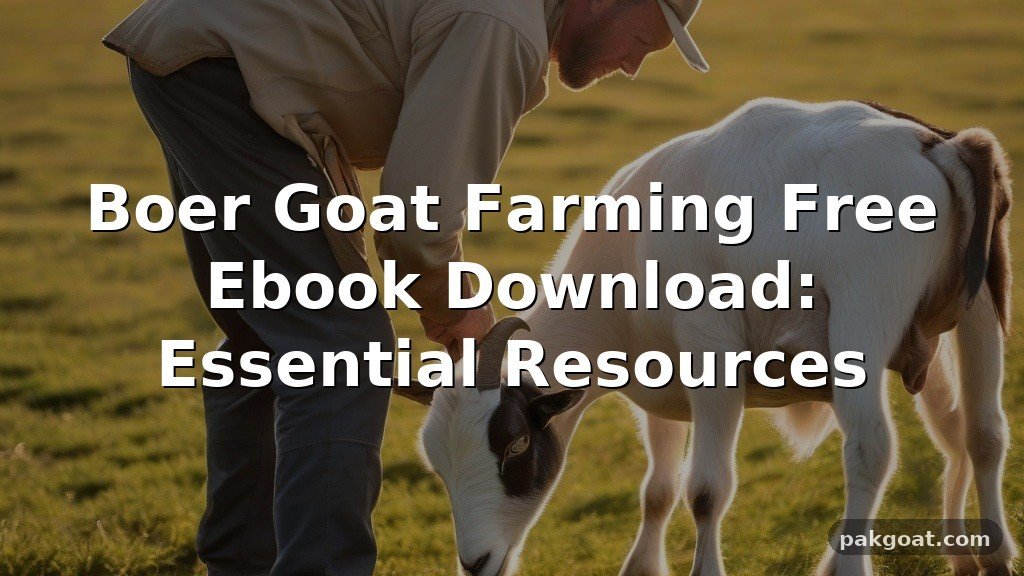
Securing a reliable boer goat farming free ebook download is often the first step for aspiring producers aiming to master this high-yield livestock sector. Because Boer goats are prized for their rapid growth and lean meat, having accurate technical data is essential for profitability. Most credible industry manuals provide foundational knowledge on breed standards, herd management, and basic husbandry practices.
You can usually find these resources through agricultural extension services, university websites, or established goat breeder associations that distribute digital guides to encourage best practices in the field. Leveraging these documents early helps avoid common startup mistakes and establishes a baseline for long-term operational success.
Understanding Boer Goat Productivity
The primary appeal of Boer goats lies in their superior feed conversion ratios compared to dairy or dual-purpose breeds. These animals are specifically bred for meat production, meaning they reach market weight faster when provided with high-quality forage and targeted protein supplements. A standard technical guide will explain how to evaluate weight gain against feed costs to ensure your operation remains in the black.
Management Priorities
Successful farmers prioritize three core operational pillars to keep their herd healthy and productive. These include:
- Infrastructure and Housing Solutions: Creating dry, draft-free shelters that protect animals from extreme weather.
- Secure fencing: Installing high-tensile woven wire to deter predators and prevent herd wandering.
- Health Monitoring and Disease Prevention: Implementing strict scheduled vaccination programs and regular hoof trimming routines.
Financial Planning and Market Strategy
Profitability depends heavily on your ability to manage overhead while maximizing output per acre. Many farmers find that culling unproductive does is the quickest way to improve the average herd performance over a two-year period. You should track your input costs against market prices to determine when to sell for the highest margin.
The following table illustrates the typical performance expectations for a commercial Boer goat operation:
| Metric | Standard Expectation |
|---|---|
| Average Daily Gain | 0.15 kg to 0.25 kg |
| Kidding Rate | 150% to 180% |
| Mortality Rate (Kids) | Below 10% |
| Market Weight | 35 kg to 45 kg |
Accessing Technical Manuals
When you perform a search for a boer goat farming free ebook download, look for documents that emphasize regional climate adaptations rather than generic advice. A manual written for temperate climates may not account for the specific parasite pressures or heat stress issues found in tropical regions. Ensure your chosen resource covers common ailments like pneumonia, which can devastate a herd if not caught early through consistent observation.
Frequently Asked Questions
How often should I vaccinate my Boer goats?
Most veterinarians recommend a twice-yearly schedule for clostridial diseases, though this should be adjusted based on local risks and the advice of your regional agricultural extension officer.
What is the most common cause of loss in goat farming?
Respiratory issues and internal parasites are the leading causes of morbidity in young kids, which is why strict sanitation and pasture rotation are critical.
Do I need specialized equipment for small-scale farming?
Basic equipment includes a weighing scale, a hoof trimmer, and a secure handling crate for medical treatments, which are typically detailed in introductory farming manuals.
Can I raise Boer goats on limited acreage?
Yes, Boer goats are well-suited for intensive grazing systems, provided you manage forage quality and move the herd frequently to prevent overgrazing and parasite buildup.
Conclusion
Starting your journey with a quality boer goat farming free ebook download provides the technical foundation needed to manage a healthy, thriving herd. While digital manuals offer excellent starting points, nothing replaces the value of keeping detailed records on your specific animals and adapting your strategy to your local environment. Focus on consistent health monitoring and efficient feed management to maximize your returns.
As you grow, continue to seek out peer-reviewed agricultural data to refine your methods. If you have questions about specific regional challenges, reach out to local livestock cooperatives to connect with experienced producers in your area.
