

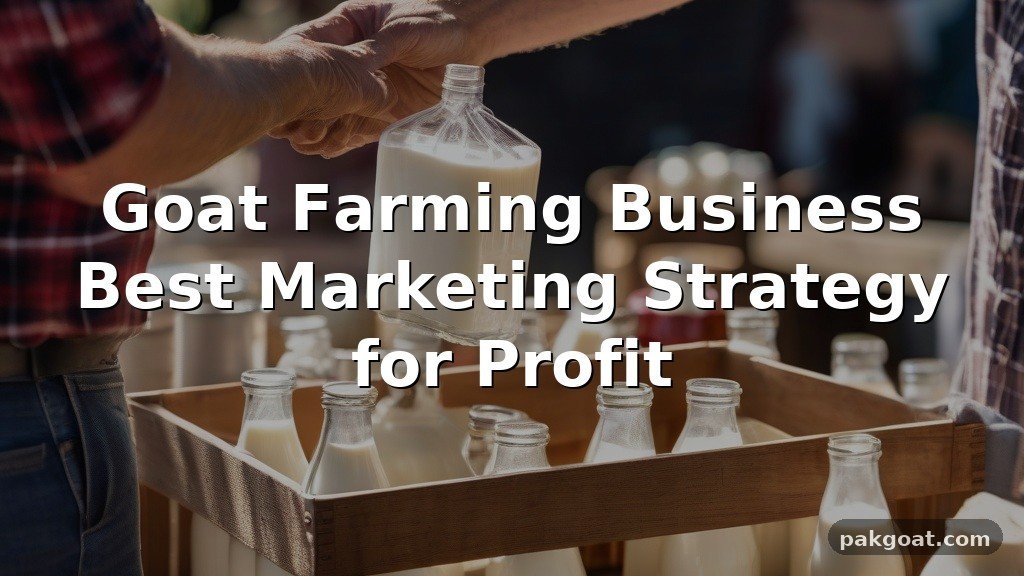
Developing a goat farming business best marketing strategy starts with identifying your primary revenue stream, which for most profitable operations is either direct-to-consumer meat sales or niche dairy products. Successful producers prioritize local butcher shops and farmers’ markets over traditional auction houses, as these direct channels typically yield a 20% to 30% higher margin per animal.
By cutting out intermediaries, you retain the value added by your specific herd management practices and animal health standards. This approach requires consistent branding and a clear value proposition that differentiates your goat meat or milk from mass-market alternatives available in supermarkets.
Direct Sales and Local Distribution Channels
The most effective way to capture value is through a localized sales model. Instead of selling to large-scale livestock buyers, focus on building relationships with local restaurants and ethnic markets that demand high-quality, fresh goat meat. These buyers often pay a premium for consistent supply and transparent farming practices.
Leveraging Farmers’ Markets
Farmers’ markets offer more than just immediate sales; they provide a platform to educate customers about your goat farming methods. When you display products, focus on the health of your herd and the quality of your feed. Providing samples or recipe cards can significantly increase conversion rates for customers unfamiliar with goat products.
Partnering with Local Butchers
Establishing a contract with a local USDA-inspected processor allows you to sell retail-ready cuts. Selling by the cut rather than by the live animal allows you to maximize the profit potential of every part of the goat. This strategy transforms your farm into a boutique food producer rather than a raw commodity provider.
Digital Presence and Customer Retention
Modern agriculture requires a digital footprint to maintain a steady flow of orders. While you do not need a complex e-commerce site, a simple landing page or social media presence helps you communicate availability and pricing. Email marketing remains one of the most reliable ways to notify regular buyers when a new batch of meat is processed or when fresh dairy is ready for pickup.
| Marketing Channel | Primary Benefit | Estimated ROI |
|---|---|---|
| Farmers’ Markets | High retail price/Immediate cash | High |
| Direct-to-Restaurant | Consistent volume | Medium-High |
| Social Media/Email | Customer loyalty/Pre-orders | High |
| Livestock Auctions | Speed of sale | Low |
Core Marketing Pillars
To execute a goat farming business best marketing strategy, you must focus on these fundamental activities that keep your operation visible to your target audience.
- Transparency: Share photos and videos of your herd to build trust regarding animal welfare.
- Niche Targeting: Identify specific demographics, such as health-conscious shoppers or cultural groups that prioritize goat meat.
- Product Differentiation: Highlight unique traits, such as pasture-raised, organic-fed, or specific breed qualities.
- Customer Database: Maintain an email list to alert repeat buyers about seasonal harvest dates.
Frequently Asked Questions
How do I set pricing for my goat products?
Pricing should be based on your total cost of production plus a target margin, but you must also check local competitor rates. Never underprice your goods to gain market share, as this hurts the perceived value of your premium product.
Should I focus on milk or meat for higher profit?
Meat typically has a lower barrier to entry regarding processing regulations and equipment. Dairy requires significant investment in pasteurization technology and strict health inspections, though it can offer higher recurring revenue.
How do I find my first consistent customers?
Start by attending local food events and offering samples to chefs and specialty grocery managers. Personal connections are more effective in the food industry than cold calling or generic advertising.
Is social media necessary for a farm?
It is a powerful, low-cost tool for visual storytelling. Customers want to see the environment where their food is raised, so high-quality photos of your goats in the pasture can drive significant interest.
Building Long-Term Growth
Your success depends on your ability to treat your herd management as a professional business rather than a hobby. By focusing on direct sales and maintaining a transparent relationship with your local community, you create a sustainable brand that stands apart from industrial agriculture. The core of a goat farming business best marketing strategy is consistency; ensure your product quality remains high and your communication with buyers is reliable.
Start by building a small, loyal base of repeat customers at the local level before attempting to scale your production. Consistent growth in your local market creates the stability needed to eventually expand your operations or diversify your product line.
