

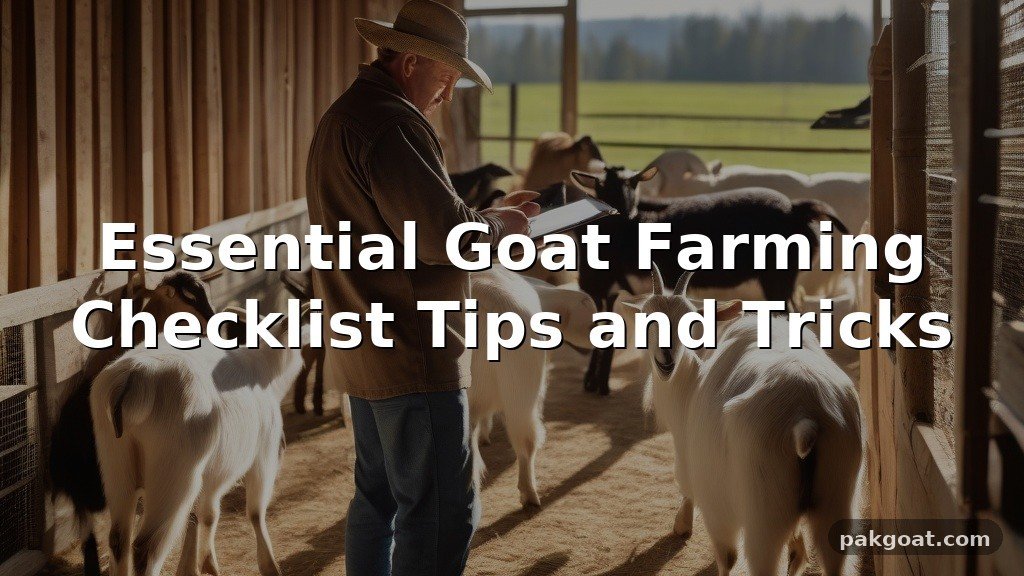
Starting a successful herd requires more than just land and enthusiasm, as effective goat farming checklist tips and tricks center on preparation and consistent management. You need to secure your perimeter, establish a reliable water source, and source healthy foundation stock before bringing your first animals home. These initial steps determine your long-term success, whether you are raising goats for milk, meat, or fiber.
By focusing on infrastructure and health protocols early, you avoid the common pitfalls that lead to high mortality rates or runaway costs. Mastering these operational basics ensures your farm remains sustainable, profitable, and manageable from the very first day.
Foundational Requirements for Your Herd
The most critical aspect of starting is ensuring your infrastructure is ready before the animals arrive. Goats are notorious escape artists, so a four-foot woven wire fence is the industry standard to keep them secure.
You must also provide a dry, draft-free shelter that offers at least 12 to 15 square feet of space per adult goat. Clean water is non-negotiable; goats will refuse to drink stagnant or dirty water, which directly impacts their milk production and overall health.
Daily Operational Essentials
- High-quality hay: Always keep a supply of grass or legume hay available to supplement grazing.
- Mineral blocks: Provide loose minerals specifically formulated for goats to prevent deficiencies like copper shortages.
- Hoof trimmers: Schedule regular maintenance every 6 to 8 weeks to prevent foot rot and mobility issues.
- Vaccination schedule: Consult a local veterinarian to manage common threats like Enterotoxemia and Tetanus.
Cost and Profitability Factors
Understanding the financial side of your operation is essential for longevity. While startup costs vary by region, your primary recurring expenses will be feed and veterinary care.
High-quality hay often represents the largest portion of your monthly budget during winter months. You can improve your margins by rotating pastures, which lowers feed costs and breaks the parasite life cycle.
| Expense Category | Estimated Frequency | Impact on Profit |
|---|---|---|
| Supplemental Hay | Daily (Winter) | High |
| Veterinary/Deworming | Quarterly | Medium |
| Fencing Repairs | Annually | Low |
| Mineral Supplements | Monthly | Low |
Health and Maintenance Protocols
Goats are highly susceptible to internal parasites, particularly barber pole worms. Implementing a strict deworming strategy based on FAMACHA scoring helps you identify which animals need treatment rather than blanket-treating the entire herd.
This approach prevents drug resistance and keeps your animals performing at their peak. Always keep a basic medical kit on hand, including electrolytes, antiseptic spray, and a thermometer.
Frequently Asked Questions
What is the most important part of a goat farming checklist?
The most important element is secure fencing. Goats will exploit any weakness in a perimeter, and a secure fence prevents predator attacks and property damage.
How much water does a single goat need?
An average adult goat requires between 1 to 3 gallons of water daily. This amount increases significantly during hot weather or when the doe is lactating.
Should I start with kids or adults?
Beginners are often better off purchasing healthy, mature goats that have already been vaccinated and trained. Starting with kids requires more intensive care and a steeper learning curve regarding health management.
How often should goats be fed grain?
Grain is a supplement, not a primary diet. Most goats only need grain during late pregnancy or peak lactation, as overfeeding can lead to severe digestive issues like bloat.
Sustainable Herd Management
Managing a healthy herd is a marathon rather than a sprint. By applying these goat farming checklist tips and tricks, you create a stable environment that allows your animals to thrive while keeping your labor hours efficient. Remember that observation is your best tool; spending time with your herd daily helps you spot subtle changes in behavior that signal illness before it becomes a crisis.
Start small, focus on building high-quality facilities, and prioritize the nutritional needs of your stock. As your experience grows, you can expand your operations with confidence, knowing you have the foundational systems in place to handle the challenges of small-scale livestock production.
