

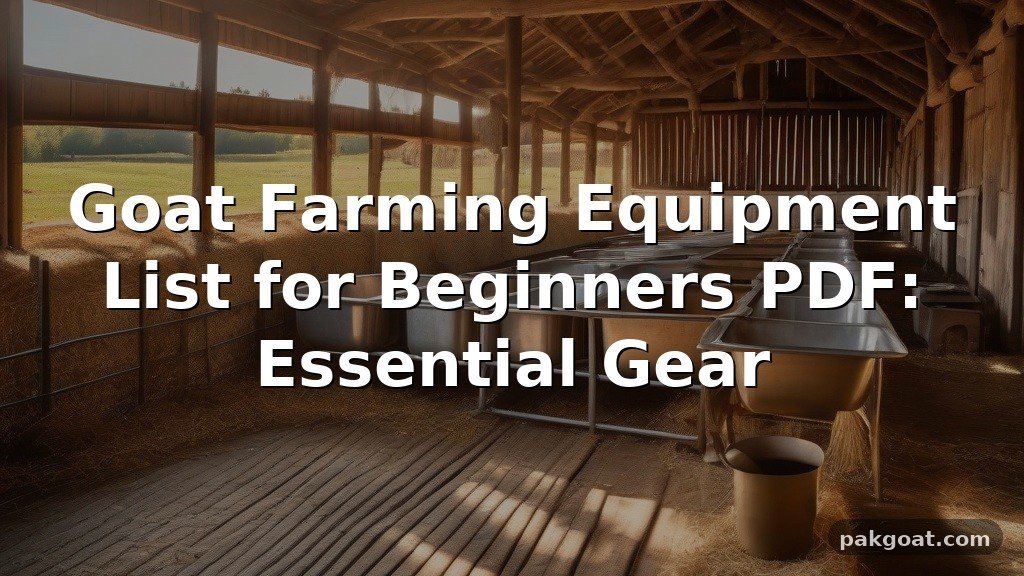
Securing a reliable goat farming equipment list for beginners pdf is the first step toward building a sustainable small-scale operation. Whether you are focusing on milk production, fiber, or meat, your success depends on having the right tools ready before the animals arrive on your farm.
This article provides the essential inventory of gear required to keep your herd healthy and your daily chores efficient. By following this structured approach, you can avoid unnecessary spending while ensuring your goats have a safe, clean environment to thrive in from day one.
Core Equipment for Daily Operations
Every new farmer needs a specific set of tools to manage daily feeding, watering, and health monitoring. You should prioritize durability, as these items will be exposed to the elements and the natural curiosity of your goats.
Feeding and Watering Infrastructure
Goats are notoriously picky eaters and will quickly contaminate food that touches the ground. Use elevated feeders to keep hay clean and reduce waste significantly. For water, provide a clean, constant source using heavy-duty troughs that are difficult for the goats to tip over.
- Elevated Hay Feeder: Keeps forage off the ground to prevent parasite transmission.
- Heavy-Duty Troughs: Large enough to accommodate the herd without constant refilling.
- Mineral Feeders: Dedicated containers for loose minerals or salt blocks.
- Scrub Brushes: Essential for cleaning water containers to prevent algae buildup.
Shelter and Fencing Essentials
Your goats require a dry, draft-free structure to protect them from extreme weather conditions. Even a simple three-sided shed works well, provided it stays dry during heavy rainfall. Supplement this with high-tensile woven wire fencing, which is the industry standard for keeping goats contained while excluding predators.
Health and Maintenance Toolkit
Maintaining a healthy herd requires proactive care rather than just reactive treatment. Keep a dedicated medical kit stored in a cool, dry place that is easily accessible during emergencies.
| Tool Category | Essential Item | Primary Purpose |
|---|---|---|
| Hoof Care | Hoof Trimmers | Preventing lameness and foot rot |
| Identification | Ear Tags or Collars | Tracking individual health and breeding records |
| Grooming | Curry Combs | Removing loose hair and checking for skin issues |
| Record Keeping | Farm Journal | Tracking vaccination dates and weight gains |
Grooming and Handling
Regular handling builds trust between you and your goats, making medical checks much easier. Keep a sturdy halter and lead rope on hand for moving goats or securing them during veterinary visits. Frequent grooming sessions also allow you to spot lice, mites, or unusual lumps before they become major problems.
Frequently Asked Questions
How many goats should a beginner start with?
A beginner should start with at least two or three goats because they are highly social herd animals. Keeping a single goat often leads to extreme stress, fence-jumping, and constant bleating.
What should a first-time owner know about daily care?
You must provide fresh water daily and ensure they have access to quality hay or pasture. Spend time observing their behavior each morning, as goats are excellent at hiding signs of illness until it is advanced.
What food items are dangerous for goats?
Avoid feeding goats anything in the nightshade family, such as tomato plants or potatoes, as these can be toxic. Also, ensure they do not have access to azaleas, rhododendrons, or wilted cherry leaves, which are deadly.
What is the most important piece of equipment for a beginner?
Fencing is arguably the most critical investment for any new farm. If your perimeter is not secure, you will face constant frustration and potential loss of livestock to local predators.
Getting Started with Your Setup
Building your inventory requires careful planning and a clear understanding of your long-term goals. By acquiring items like high-quality fencing and specialized hoof trimmers, you set a professional tone for your operation. Many beginners find it helpful to print a goat farming equipment list for beginners pdf to keep in their barn as a checklist during the initial setup phase.
Once you have the basics, focus on observing your goats’ specific needs and adding specialized gear as you expand. Connecting with local agricultural extension offices can also provide insights into equipment that works best for your specific climate. Reach out to experienced friends in the industry to see if they have spare tools they might be willing to sell or lend.
