

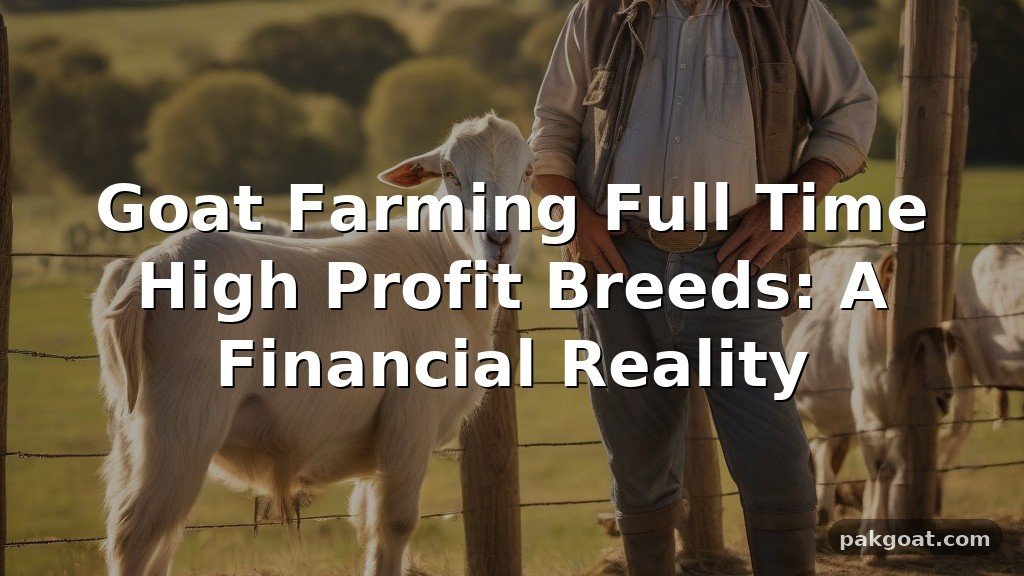
Selecting the right animals is the foundation of any agricultural venture, and finding the right goat farming full time high profit breeds is essential for long-term viability. While many beginners start with general-purpose animals, true commercial success depends on matching your specific climate and market to the biological strengths of the breed.
You will see the highest returns by focusing on specialized meat or dairy production rather than hobby farming. This article breaks down the essential genetics and management strategies that separate casual keepers from profitable, full-time operations.
Which Breeds Generate the Most Profit?
The most profitable animals depend entirely on your target market, but meat production currently offers the fastest turnover for most commercial farms. If you are aiming for high-volume sales, the Boer goat remains the industry standard due to its rapid growth rate and heavy muscling. For those closer to urban centers with high demand for artisanal products, dairy breeds like the Alpine or Nubian provide consistent daily income streams.
Profitability Comparison by Breed Type
The following data compares typical annual output potential based on market-ready weight or dairy production capacity.
| Breed Type | Primary Revenue Source | Growth/Yield Potential |
|---|---|---|
| Boer | Meat | High weight gain (up to 0.5 lbs/day) |
| Kiko | Meat | High parasite resistance, low input |
| Alpine | Dairy | 2,000–2,500 lbs of milk per lactation |
| Angora | Fiber | High-value mohair yield |
Managing Revenue Streams
Diversification is the hallmark of a stable goat farm. Relying on a single product often leaves a business vulnerable to market fluctuations or seasonal shifts in demand. Successful operators often stack their income sources to ensure cash flow remains positive throughout the year.
- Direct-to-consumer meat sales at local farmers’ markets.
- Selling registered breeding stock to other farmers for herd improvement.
- Value-added dairy products like artisanal cheeses or yogurt.
- Manure sales to local gardening centers and organic farms.
- Agritourism or educational farm tours during peak seasons.
Reducing Operational Costs
Your ability to make money is often dictated by how well you control feed expenses, which typically account for 60% to 70% of total costs. Utilizing rotational grazing is the single most effective way to lower overhead while improving pasture health. By moving your herd every few days, you force the goats to consume less-desirable weeds and prevent the buildup of internal parasites.
Investing in high-quality infrastructure, such as automated waterers and portable electric fencing, reduces labor hours significantly. While the initial capital expenditure is higher, these assets allow one person to manage a much larger herd. Always track your feed conversion ratio to identify which individuals are costing more than they produce.
Frequently Asked Questions
What is the most profitable goat breed for beginners?
Many professional farmers recommend the Kiko for beginners because of its extreme hardiness and parasite resistance. These goats require less medical intervention and thrive on forage, which helps keep your startup costs low while you learn the ropes.
How many goats do I need to make a full-time income?
A full-time income typically requires a herd of at least 100 to 150 breeding does, depending on your local market prices. Reaching this scale allows you to supply consistent volume to meat processors or dairy cooperatives, which is vital for long-term contracts.
Is it better to focus on meat or dairy?
Meat goats are generally easier to manage because they do not require twice-daily milking. However, dairy goats offer a higher daily cash flow if you have a local market for processed goods like cheese. Choose based on your available time and proximity to buyers.
Do I need a large amount of land to be profitable?
Not necessarily, as high-density rotational grazing allows you to support more animals on less acreage. Many profitable farms operate on as little as 10 to 20 acres by maximizing soil health and pasture productivity.
Building a Sustainable Future
Achieving a professional level of success in this industry requires more than just high-quality animals. You must treat your farm as a business, keeping meticulous records of birth weights, feed costs, and medical expenses. Those who prioritize data-driven decisions regarding goat farming full time high profit breeds consistently outperform those who rely on intuition alone.
Start small, validate your local market demand, and scale your herd only when your profit margins prove the model is sustainable. If you remain disciplined with your feed management and keep your health protocols tight, you can build a resilient operation. Reach out to local agricultural extension offices to connect with mentors who can help you refine your specific regional strategy today.
