

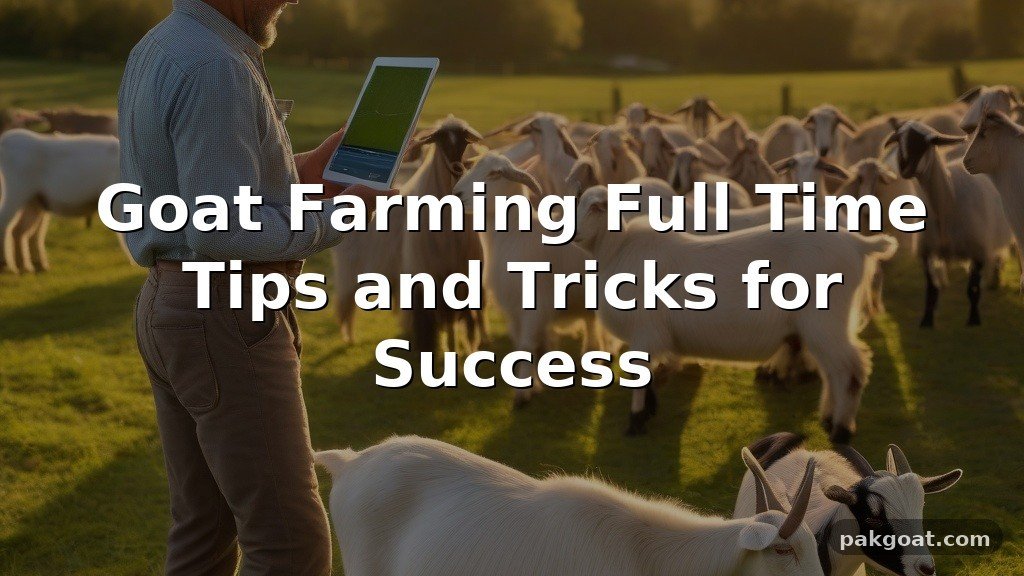
Mastering goat farming full time tips and tricks requires a shift from hobbyist thinking to structured, data-driven agricultural management. To scale a profitable operation, you must focus on high-yield production cycles, rigorous disease prevention, and efficient resource allocation.
Whether you are scaling for meat or milk, the difference between breaking even and building a sustainable income lies in your ability to manage herd density and feed costs. This article outlines the operational realities of transitioning to a full-time professional setup, ensuring you have the practical knowledge to manage your livestock effectively while maintaining a healthy bottom line.
Profitability and Stocking Rates
To reach profitability, most commercial operations require a minimum of 50 to 100 breeding does. While you can start smaller, the overhead costs of specialized equipment and fencing make a larger herd more efficient for full-time income. You generally need one acre of land for every 6 to 10 goats, depending on your local forage quality and supplemental feeding strategy. If you rely heavily on pasture, you will need more space to prevent overgrazing and parasite buildup.
Operational Efficiency Table
The following table highlights the estimated resource requirements and production goals for a professional-scale goat farm.
| Metric | Meat Operation | Dairy Operation |
|---|---|---|
| Primary Revenue | Kidding/Weight Gain | Daily Milk Yield |
| Labor Intensity | Low to Moderate | High (Daily Milking) |
| Acres (for 50 goats) | 5-8 Acres | 3-5 Acres (High Input) |
| Profit Margin | Volume-based | Value-added products |
Essential Management Practices
Success in this industry depends on keeping your animals healthy to avoid expensive veterinary intervention. You must implement a strict vaccination schedule and perform regular hoof trimmings to maintain mobility. Providing loose minerals, including baking soda, helps prevent bloat, which is a common and often fatal issue in herds fed high-energy grain rations.
- Fencing: Use woven wire at least 48 inches high to prevent escapes and deter predators.
- Shelter: Ensure your barn provides at least 15 square feet per goat with excellent ventilation to prevent respiratory illness.
- Feed: Store high-quality hay in a dry environment to prevent mold, which can cause severe health declines in your herd.
- Monitoring: Keep detailed breeding records for each doe to track reproductive success and offspring performance.
Managing Herd Health
Parasite management is the single biggest challenge in professional goat farming. You must rotate pastures every 2 to 3 weeks to break the parasite life cycle and reduce reliance on chemical dewormers. When you notice a goat lagging behind the rest of the herd, isolate it immediately to prevent the potential spread of contagious diseases. Regular body condition scoring is your best tool for identifying nutritional gaps before they become medical emergencies.
Frequently Asked Questions
How many goats do I need to be profitable?
While it varies by market, most farmers find that a herd of at least 50 to 100 breeding does is necessary to generate a full-time income. This scale allows you to absorb fixed costs like fencing and barn maintenance while producing enough meat or milk to satisfy wholesale or direct-to-consumer contracts.
Why is baking soda provided to goats?
Goats are prone to digestive upsets, particularly when they consume high-concentrate feeds or lush spring pasture. Free-choice baking soda acts as a buffer in the rumen, helping to regulate pH levels and prevent dangerous conditions like bloat or acidosis.
How long does it take for goats to clear an acre?
Ten goats can clear a moderately overgrown acre of brush in approximately 7 to 14 days. This timeline depends on the density of the vegetation and the age of the goats in your herd.
What is the most important factor for full-time success?
Consistent management of your forage and feed costs is the most important factor. Since feed represents the largest variable expense, optimizing your grazing rotation and sourcing high-quality, local hay is vital for maintaining margins.
Implementing these goat farming full time tips and tricks requires dedication to daily observation and long-term planning. By focusing on herd health, strategic stocking, and disciplined financial management, you can build a resilient agricultural business. Start by securing your infrastructure with high-quality fencing and establishing a reliable supply chain for feed before expanding your numbers.
Scaling slowly allows you to learn the specific needs of your breed and local environment without overextending your resources. If you stay consistent with your record-keeping and veterinary protocols, you will be well-positioned to grow your operation into a sustainable, full-time venture. Reach out to local agricultural extensions for region-specific advice on forage types and market demand in your area.
