

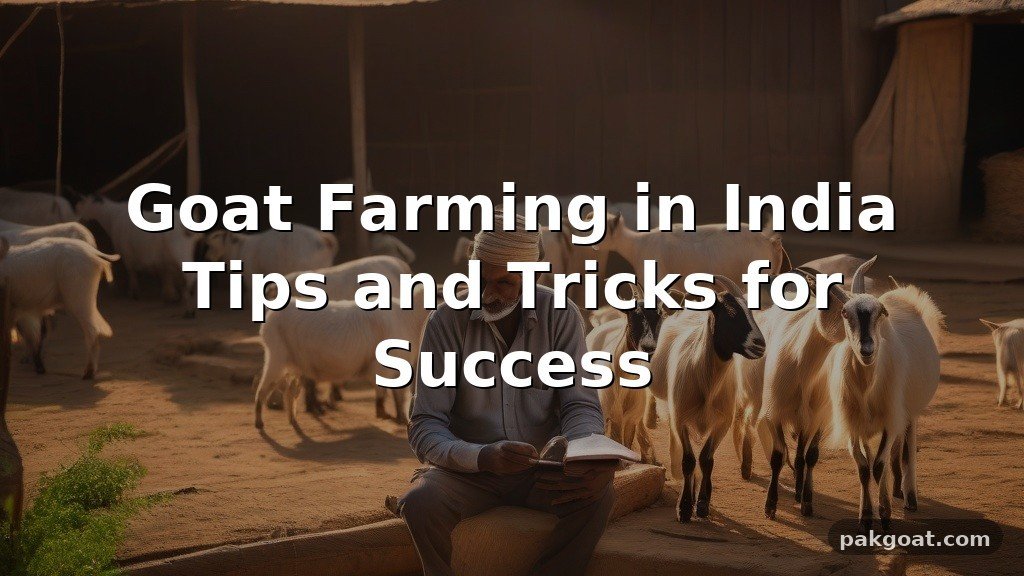
Mastering goat farming in India tips and tricks requires a focus on breed selection, disease prevention, and efficient feed management. As a low-investment business with high demand for meat and milk, this sector offers a reliable income stream for rural and semi-urban entrepreneurs.
By understanding the specific environmental needs of your herd and applying scientific management practices, you can significantly increase your profit margins. This overview highlights the practical steps and essential data points needed to run a sustainable and productive operation.
Profitability and Setup Costs
Many new farmers ask about the potential returns from a herd of 100 goats. On average, a well-managed farm of this size can generate an annual net profit ranging between ₹3,00,000 and ₹5,00,000, depending on market access and feed costs. Initial setup costs for 100 animals typically hover around ₹5,00,000 to ₹7,00,000, covering housing, initial stock, and basic equipment.
Key Financial Metrics
| Expense Category | Estimated Investment |
|---|---|
| Shed Construction | ₹1,50,000 – ₹2,00,000 |
| Initial Goat Stock | ₹3,00,000 – ₹4,00,000 |
| Feeding and Medicine | ₹50,000 – ₹1,00,000 |
Selecting the Right Breed
Choosing the correct breed is the most critical decision for your business. Profitability depends on selecting animals that thrive in your specific local climate and have high growth rates.
- Jamunapari: Known for high milk production and large body size.
- Black Bengal: Highly valued for its superior meat quality and early maturity.
- Sirohi: Extremely hardy and disease-resistant, making it ideal for arid regions.
- Barbari: Excellent for intensive farming systems due to its compact size and high twinning rate.
Essential Management Practices
Effective management involves more than just providing grass. You must maintain a strict vaccination schedule to prevent common outbreaks like Peste des Petits Ruminants (PPR) and Enterotoxaemia.
Housing and Hygiene
Goats are highly sensitive to damp conditions and poor ventilation. Build your shed on elevated ground to ensure proper drainage, and keep the floor clean to prevent hoof rot and parasitic infections. Providing at least 10 to 12 square feet of space per adult goat ensures the animals remain stress-free and productive.
Feeding Strategies
A balanced diet is the cornerstone of animal health. Supplement grazing with high-protein fodder such as Azolla, Subabul, or legumes to boost growth rates. Always ensure constant access to clean drinking water, as dehydration is a common cause of reduced milk yield and poor weight gain.
Frequently Asked Questions
How much land is required for 100 goats?
You generally need about half an acre for the shed and exercise area if you are using an intensive or semi-intensive farming system. If you plan to grow your own fodder, you will need an additional 2 to 3 acres of land.
Which goat breed is most profitable in India?
The Black Bengal is often cited as the most profitable for meat production due to its high fertility and high-quality skin. For dairy-focused operations, the Jamunapari or Beetal breeds are usually superior choices.
Is government subsidy available for goat farming?
Yes, the National Bank for Agriculture and Rural Development (NABARD) offers various credit-linked subsidy schemes for livestock development. You should contact your local District Veterinary Office or a regional rural bank to check current eligibility criteria.
How often should goats be vaccinated?
You must follow a seasonal vaccination calendar provided by your local veterinarian. Typically, vaccinations against PPR, Foot and Mouth Disease (FMD), and Enterotoxaemia are required annually or bi-annually, depending on the disease prevalence in your region.
Building a Sustainable Future
Implementing these goat farming in India tips and tricks will help you mitigate common risks and improve your herd’s performance. Start small to gain practical experience with animal behavior and market dynamics before scaling up your operations. Consistent record-keeping regarding feed intake, weight gain, and health treatments will provide the data you need to optimize your business decisions over time.
By focusing on animal welfare and local market requirements, you can build a resilient agricultural enterprise. Engage with local veterinary services early to establish a strong support network as you grow your farm.
