

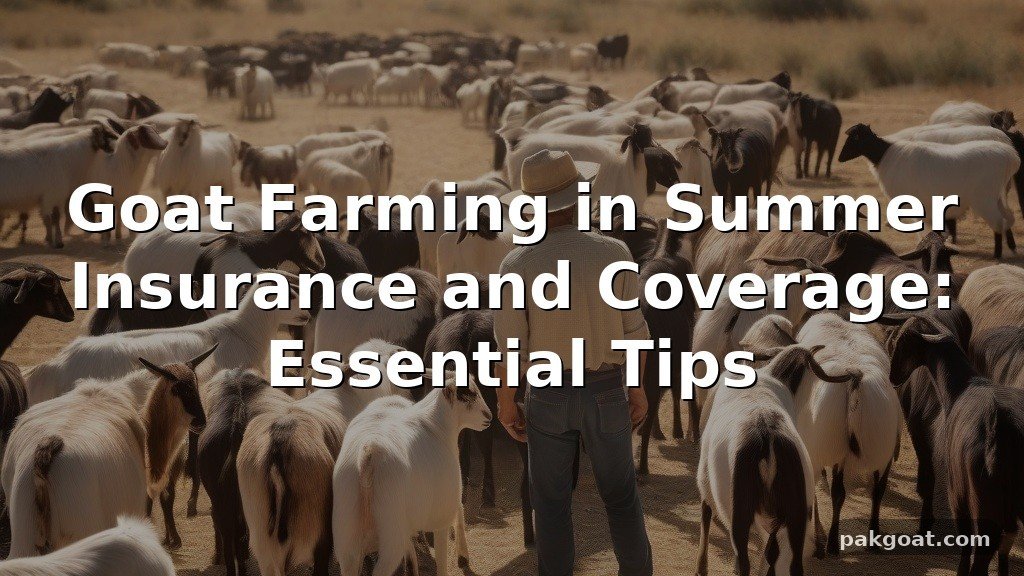
Managing goat farming in summer insurance and coverage requires a proactive approach to mitigate risks associated with heat stress, seasonal pathogens, and increased grazing activity. Farmers often overlook the specific vulnerabilities that arise when temperatures spike, leaving their operations exposed to financial loss.
Understanding the nuances of your policy ensures that your herd remains protected against climate-related incidents and unforeseen liabilities. This article provides the practical data you need to secure your livestock and maintain stable operations during the hottest months of the year.
What specific coverage do you need for summer?
The most critical protection for your operation involves Livestock Mortality Insurance, which pays out if animals die due to heat stroke, accidents, or disease outbreaks common in summer. You should also ensure your policy includes General Farm Liability, which protects you if your goats escape during summer storms or cause damage to neighboring properties. Most standard farm policies do not automatically cover heat-related illness unless you add specific riders for extreme weather events.
Assessing Risk Factors in Summer
Summer introduces unique stressors that standard year-round policies might not fully address. High humidity and extreme heat increase the risk of respiratory issues and parasite proliferation, such as barber pole worms, which thrive in warm, moist environments. If your herd experiences a significant health decline, you need to know if your policy covers veterinary intervention or only total loss.
Key categories of summer farm risk
* Heat Stress Mortality: Sudden death due to prolonged high temperatures.
* Liability Risks: Damage to infrastructure or crops caused by goats seeking shade.
* Equipment Failure: Breakdown of automatic waterers or ventilation systems.
* Pathogen Outbreaks: Increased medical costs for seasonal health management.
Comparing Insurance Options
Not all insurance providers offer the same level of protection for small ruminants. When evaluating options, compare the deductible, the payout percentage, and whether the policy requires a necropsy to verify the cause of death.
| Policy Type | Primary Benefit | Summer Relevance |
|---|---|---|
| Mortality Insurance | Covers death loss | High (Heat stress protection) |
| Liability Coverage | Third-party damage | Moderate (Escapes in summer) |
| Property Insurance | Facility damage | Low (Unless storm-related) |
Managing Financial Stability
Keeping your farm profitable during the summer months often means balancing insurance premiums against the value of the herd. If you operate a commercial meat or dairy farm, the cost of comprehensive insurance is generally 1.5% to 3% of the animal’s total market value annually. Investing in shade structures and cooling systems can often lower your premiums, as insurers view these as proactive risk management strategies.
Strategies to lower insurance costs
* Install high-quality water filtration to prevent water-borne diseases. * Maintain accurate, digital health records for every goat in the herd. * Work with an agent who specializes in small ruminant livestock. * Review your coverage levels every spring before the heat hits.
Frequently Asked Questions
Does standard farm insurance cover heat-related deaths?
Most standard policies exclude “natural causes” or “disease,” which often includes heat stress. You must specifically ask your broker for a mortality rider that explicitly covers death due to environmental conditions.
What is the average cost to insure a dairy goat?
Premiums vary based on the breed, age, and production value of the goat. On average, expect to pay between $20 and $50 per year per high-value animal for mortality coverage.
How do I prove a loss for an insurance claim?
You must provide clear documentation, including veterinary reports, photos of the deceased animal, and proof of ownership. Many insurers require a licensed veterinarian to sign off on the cause of death.
Is liability insurance necessary for small hobby farms?
Yes, liability insurance is essential for any farm. If your goats escape and cause a car accident or damage a neighbor’s garden, you are legally responsible for the costs.
Securing Your Future
Effective goat farming in summer insurance and coverage relies on your ability to identify and insure against specific seasonal threats. By verifying that your policy includes heat-related mortality and robust liability protections, you shield your livelihood from the volatility of changing weather patterns. Take the time to audit your current plan with your agent before the peak summer heat arrives to ensure there are no gaps in your protection.
Maintaining a healthy herd and a solid financial safety net allows you to focus on growth rather than disaster recovery. Please contact your local agricultural extension or insurance broker to review your specific needs and confirm you have the best possible coverage for your farm today.
