

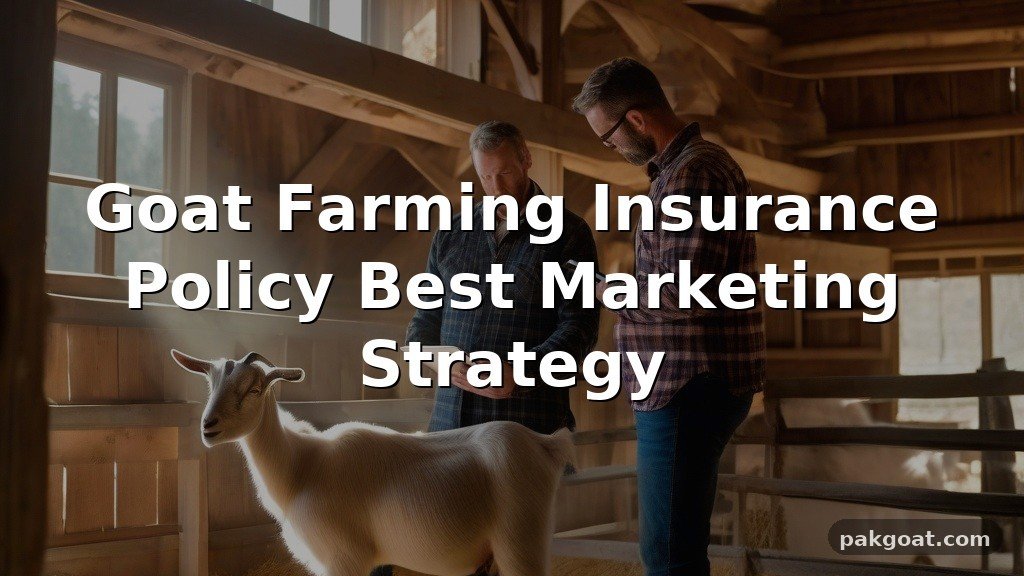
Developing a successful goat farming insurance policy best marketing strategy relies on positioning coverage as a vital business asset rather than a sunk cost. Producers often view insurance as an unnecessary expense until a catastrophic event threatens their entire operation.
By shifting the conversation toward risk management and long-term stability, you can effectively demonstrate the value of these policies to skeptical farmers. The most effective approach involves highlighting how specific coverage protects their primary revenue streams and ensures the longevity of their livestock assets.
Understanding the core value proposition
The most effective goat farming insurance policy best marketing strategy centers on the concept of business continuity. Farmers are not just insuring animals; they are insuring their livelihood, equipment, and future output.
When you explain that a policy provides a financial safety net against disease, theft, or extreme weather, the product becomes a tool for growth. You should focus on how risk protection allows a producer to scale their herd without the constant fear of total loss.
Effective channels for reaching producers
Agriculture remains a relationship-driven industry where trust is the primary currency. Digital marketing has its place, but face-to-face interactions at trade shows, local livestock auctions, and agricultural cooperative meetings remain essential.
Providing educational content that explains the nuances of crop insurance versus livestock mortality coverage helps establish your authority. Use these interactions to gather feedback and refine your messaging based on the specific concerns of local goat breeders.
- Attend regional livestock exhibitions to build face-to-face trust.
- Partner with local feed stores to distribute informative brochures.
- Host webinars focused on financial planning for small-scale dairy operations.
- Develop email newsletters that share real-world risk management success stories.
- Utilize social media to showcase the financial stability of insured farms.
Comparing marketing approaches
Different segments of the industry respond to different messaging tactics. While commercial dairy producers prioritize high-volume risk mitigation, hobbyist or boutique farmers are often more concerned with the emotional and financial value of individual pedigree animals. Your marketing materials should reflect these distinct priorities to maximize conversion rates.
| Target Segment | Primary Selling Point | Marketing Channel |
|---|---|---|
| Commercial Dairy | Revenue stability | Direct B2B outreach |
| Boutique Breeders | Asset protection | Social media advertising |
| Small-scale Producers | Affordability | Local community events |
Addressing Common Industry Questions
Why is insurance often overlooked by goat farmers?
Many producers operate on thin margins and view insurance as an optional expense. They often underestimate the potential financial impact of a single disease outbreak or a natural disaster. Professional marketing must bridge this gap by showing the exact cost of inaction compared to the annual premium.
How does risk management improve farm profitability?
Risk management acts as a stabilizer for the farm’s cash flow. By transferring the risk of loss to an insurer, the farmer can allocate capital toward expansion or better feed rather than maintaining a large emergency cash reserve. This creates a more predictable financial outlook for the business.
What role does education play in your marketing plan?
Educational content is the backbone of a successful campaign in the agricultural sector. When you provide clear, jargon-free explanations of how a policy works, you reduce the barrier to entry for the customer. Farmers are more likely to purchase a product they fully understand and trust.
Which insurance features should be highlighted first?
Always highlight the specific perils covered, such as fire, lightning, theft, and accidental shooting. Producers want to know exactly what is protected before they discuss pricing. Once the coverage scope is clear, move the conversation toward how the policy protects their bottom line and annual revenue.
Building a Sustainable Outreach Plan
Consistency is the secret to refining your messaging over time. Track which outreach methods yield the highest number of inquiries and double down on those specific channels. If local seminars consistently produce more leads than paid social ads, adjust your budget to prioritize those events.
As you continue to implement your goat farming insurance policy best marketing strategy, remember that your goal is to be seen as a partner rather than just a vendor. Sharing data on common risks and providing actionable advice on herd health can create a deeper connection with your target audience. Stay focused on transparency, keep your language accessible, and always emphasize the long-term security that a well-structured policy provides to the modern agricultural producer.
