

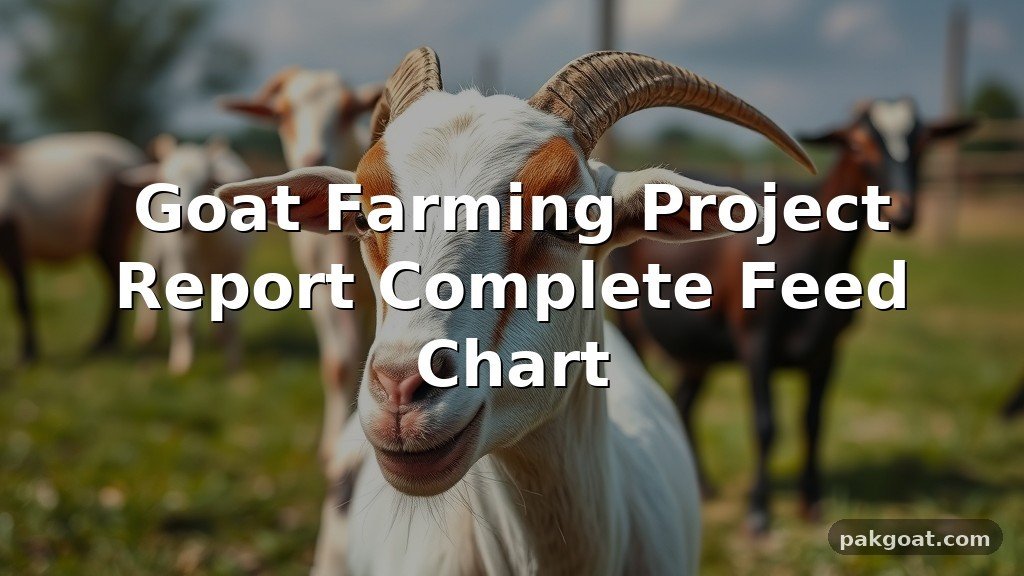
Developing a successful goat farming project report complete feed chart requires a precise understanding of nutritional requirements, local forage availability, and the specific growth stages of your herd. Feed costs typically account for 60% to 70% of total operational expenses, making your feeding strategy the most critical factor in determining overall profitability.
By balancing dry matter intake with protein and energy density, producers can optimize weight gain for meat breeds or milk production for dairy goats. This article provides the technical framework necessary to build a sustainable feeding plan that supports herd health while maintaining strict budgetary control.
Understanding Nutritional Requirements for Goats
Goats are ruminants with a unique digestive physiology that allows them to thrive on a variety of vegetation. Unlike cattle, which are primarily grazers, goats are browsers that prefer shrubs, tree leaves, and high-quality weeds. When confined in a farm setting, you must replicate this dietary diversity through a combination of roughage and concentrates.
Energy is the primary driver of growth and lactation, while protein is essential for muscle tissue and milk synthesis. An adult goat requires approximately 3% to 4% of its body weight in dry matter intake daily. If a goat weighs 50 kg, it needs roughly 1.5 to 2 kg of dry matter per day to maintain healthy bodily functions.
Deficiencies in minerals like copper, selenium, and zinc often lead to poor reproductive performance and weakened immune systems. Providing a high-quality loose mineral mix specifically formulated for goats is non-negotiable. Ensure that this mineral supplement is available free-choice at all times to allow animals to self-regulate based on their individual needs.
Structure of a Balanced Feed Ration
A functional ration consists of two main components: roughage and concentrates. Roughage includes hay, silage, and grazing pasture, which provides the necessary fiber for proper rumen function. Concentrates include grains such as corn, oats, or barley, which provide the high energy density needed for rapid growth.
The ratio of roughage to concentrate shifts depending on the purpose of your farm. A breeding doe maintaining weight needs a higher percentage of roughage, while a kid being finished for market requires a higher proportion of energy-dense grains. You should aim for a diet where at least 60% of the dry matter comes from fiber sources.
Water intake is often the most overlooked aspect of a feeding program. A goat will consume between 4 to 10 liters of water daily, depending on temperature and lactation status. If water intake drops, feed intake will immediately follow, resulting in stunted growth or decreased milk yields.
Daily Feeding Schedules and Distribution
Consistency is the cornerstone of rumen health in goats. Abrupt changes in diet can lead to acidosis or bloat, which can be fatal. When transitioning goats to new feed sources, implement a 7-to-10-day period of gradual mixing to allow the rumen microflora to adapt.
Divide the daily ration into two or three feedings throughout the day rather than providing the entire amount at once. This practice reduces waste, as goats are notorious for trampling feed that sits in the trough for too long. Feeding in the morning and late afternoon keeps the rumen active and prevents the animals from becoming overly aggressive during meal times.
Always clear out leftover wet feed or spoiled hay from troughs to prevent mold growth. Moldy feed contains mycotoxins that can cause severe respiratory issues or abortion in pregnant does. Keep your feeding area clean to minimize the presence of parasites and flies that thrive in organic debris.
The Role of Forage and Pasture Management
Rotational grazing is the most cost-effective way to manage your goat farming project report complete feed chart. By dividing your land into smaller paddocks, you allow pastures to recover while keeping goats on fresh, nutrient-dense forage. This strategy also breaks the life cycle of many internal parasites, reducing the need for chemical deworming.
When selecting forage, prioritize legumes such as alfalfa or clover for their high protein content. If you are relying on native grasses, supplement with high-quality hay during the dry season or winter months. A standard rule of thumb is to stock no more than 6 to 8 adult goats per acre of managed pasture.
You can find more detailed guidance on managing forage quality through the USDA Natural Resources Conservation Service, which offers extensive resources on sustainable grazing techniques. Proper pasture management reduces the amount of expensive grain you need to purchase. It also improves the overall soil health of your farm over time.
Calculating Feed Costs and Economic Viability
Tracking feed expenses is mandatory for any serious business plan. You should calculate the cost per kilogram of your total mixed ration (TMR) regularly. If the price of corn or soybean meal spikes, you must be prepared to adjust your formulation to maintain margins.
Many farmers choose to grow their own fodder to lower costs, such as hydroponic barley or silage. While this requires initial capital investment in equipment, it hedges against market volatility for commercial feed. Always include a 10% buffer in your budget for unexpected fluctuations in commodity prices.
Feed Cost Analysis Table
| Feed Type | Crude Protein (%) | Daily Amount (kg) | Cost per kg ($) |
| :— | :— | :— | :— |
| Alfalfa Hay | 15-18% | 1.2 | 0.25 |
| Corn Grain | 8-10% | 0.5 | 0.35 |
| Wheat Bran | 14-16% | 0.3 | 0.30 |
| Mineral Mix | N/A | 0.02 | 1.50 |
Key Milestones in Goat Development
The feeding requirements of your goats will change significantly as they transition through different life stages. A buck in the off-season has different needs than a doe in peak lactation. Ignoring these variations leads to wasted money on overfeeding or poor production from underfeeding.
* Weaning Phase: Transition kids from milk to high-quality creep feed and leafy hay.
* Growth/Finishing: Increase energy density through grains to reach target market weights.
* Breeding Period: Implement “flushing” by increasing protein intake 3 weeks before breeding.
* Gestation: Maintain consistent body condition scores to ensure healthy fetal development.
* Lactation: Provide high-protein supplements to support milk production and body recovery.
Focusing on these stages allows for targeted feeding. You avoid the common mistake of providing expensive high-protein rations to animals that are only in a maintenance phase.
Monitoring Body Condition Scores
A goat farming project report complete feed chart is only as good as the animal’s physical response to it. Body condition scoring (BCS) is a simple, tactile method to assess whether your feeding program is working. You feel the goat’s spine, ribs, and sternum to determine fat coverage.
A score of 1 is emaciated, while a score of 5 is obese. The ideal score for most breeds is between 2.5 and 3.5.
If your herd consistently scores below 2, you must increase the energy density of your ration. If they score above 4, you are likely overspending on feed and potentially risking reproductive issues due to excess fat.
Perform these checks during routine vaccinations or hoof trimming sessions. Keeping a simple logbook of these scores will help you identify which individual animals are struggling to thrive on the current feed. This allows you to cull inefficient producers or isolate them for specialized care.
Common Mistakes in Feed Formulation
One frequent error is failing to account for the mineral antagonism that occurs in certain feedstuffs. For example, high levels of molybdenum in forage can block copper absorption, leading to deficiencies even if you are providing a mineral block. Always test your soil and forage if you notice persistent health issues in your herd.
Another mistake is feeding by volume instead of weight. Grains have different densities; one liter of oats weighs significantly less than one liter of corn.
Always use a digital scale to weigh out your daily rations. Consistency in weight prevents the accidental overfeeding or underfeeding of your animals.
Finally, do not underestimate the danger of sudden dietary changes. The rumen micro-organisms require time to adjust to new substrates. If you decide to switch from a corn-based grain mix to a barley-based one, do so over the course of two weeks.
Conclusion
Creating an effective goat farming project report complete feed chart is an ongoing process of monitoring, adjusting, and refining. By prioritizing high-quality roughage, maintaining a consistent feeding schedule, and tracking the body condition of your animals, you build a foundation for a profitable operation. Remember that feed is your largest recurring expense, and even small improvements in feed efficiency can significantly impact your bottom line.
Use the data gathered from your BCS logs and cost analysis to make evidence-based decisions rather than relying on guesswork. As you gain experience, you will learn to balance the nutritional needs of your herd with the economic reality of your local market. Start by implementing a simple, reliable feeding plan today and watch how your herd’s health and productivity transform over the coming seasons.
