

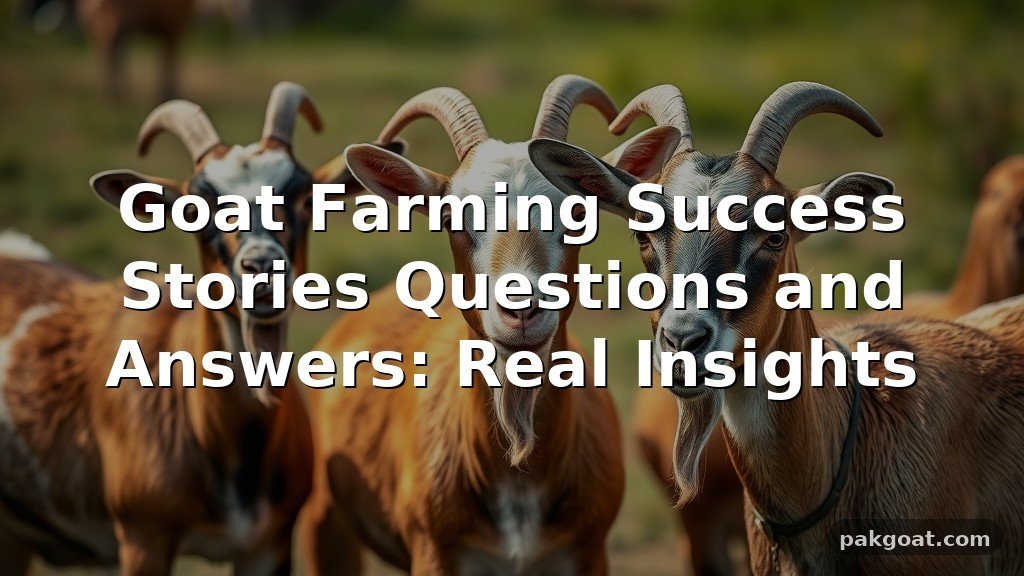
Examining goat farming success stories questions and answers provides a clear picture of what separates profitable operations from those that struggle. Most owners find that consistent income depends on choosing the right breed, managing forage efficiently, and securing local market channels before the first kid is born.
While many beginners focus on equipment, the most successful producers prioritize animal health and pasture rotation protocols above all else. This article breaks down the financial realities and operational strategies that define a thriving small-scale dairy or meat goat enterprise today.
The Profitability of Specific Breeds
When analyzing goat farming success stories questions and answers, the question of profitability usually centers on the breed. Dairy breeds like the Saanen or Alpine are often cited for high output, but they require significant labor and infrastructure. Conversely, Kiko or Boer goats are frequently favored for meat production because of their hardiness and lower management intensity.
Many profitable farms operate on a crossbreeding model to capture hybrid vigor. A common strategy involves crossing a high-growth meat breed with a local, parasite-resistant line. This results in offspring that gain weight faster while requiring fewer veterinary interventions.
Boer goats remain the industry standard for meat, often reaching market weight within 5 to 7 months. However, their susceptibility to internal parasites in humid climates can lead to high medical expenses. Farmers who succeed with Boers often use intensive rotational grazing to keep the herd off contaminated grass.
Key Breed Performance Factors
* Growth Rate: Meat breeds should show daily weight gains of 0.2 to 0.4 pounds.
* Litter Size: A target of 1.5 to 2 kids per doe annually is standard for commercial viability.
* Milk Fat: Nubian goats produce milk with higher butterfat, which is essential for artisan cheese production.
Essential Questions to Ask Established Farmers
If you are looking for guidance through goat farming success stories questions and answers, you must ask the right people the right things. Do not ask about general happiness; ask about specific failure points. Most mentors will tell you that the biggest obstacle is not the animal itself, but the lack of a defined supply chain.
Ask about their feed conversion ratios and how they mitigate the cost of winter hay. Many successful producers in the northern hemisphere report that winter feeding accounts for up to 60% of their annual operating budget. Knowing how to source local, low-cost silage or hay is often the difference between a break-even year and a profitable one.
Another critical query involves local processing regulations. In many regions, you cannot legally sell goat meat or raw milk directly from the farm without specific permits. Understanding the local health department’s requirements before building a facility can save you thousands in retrofitting costs.
Managing Internal Parasites Effectively
Parasite management is the single most significant factor in herd longevity. When reviewing goat farming success stories questions and answers, you will notice that high-performing farms use the FAMACHA scoring system. This diagnostic tool involves checking the color of the goat’s eyelid mucosa to identify anemia.
Relying solely on chemical dewormers is a recipe for disaster. Parasites have developed widespread resistance to common anthelmintics, meaning a product that worked five years ago may have zero effect today. Successful farmers now prioritize targeted selective treatment, only deworming the animals that show clinical signs of infestation.
Pasture management is the most effective preventative measure. By moving goats to fresh paddocks every few days, you interrupt the life cycle of the barber pole worm. This practice also ensures the herd always has access to the most nutritious, parasite-free forage available.
Financial Benchmarks for New Operations
To understand the economics of this industry, look at the following data points which reflect typical startup and operational costs for a small-scale commercial herd of 20 does.
| Expense Category | Estimated Annual Cost (USD) |
|---|---|
| Quality Hay & Grain | $3,500 – $5,000 |
| Veterinary & Vaccines | $800 – $1,200 |
| Fencing & Infrastructure | $1,500 – $2,500 |
| Miscellaneous Supplies | $500 – $700 |
These figures represent a lean operation focused on efficiency. If you plan to invest in high-end dairy processing equipment, these numbers will shift significantly. Always maintain a cash reserve for unexpected veterinary emergencies, which can easily exceed $500 per incident for a single animal.
Infrastructure and Fencing Requirements
Goats are notoriously difficult to contain and have a penchant for jumping or squeezing through small gaps. A successful farm typically utilizes woven wire fencing, often reinforced with an electric wire offset to prevent rubbing or climbing. If you do not invest in high-quality perimeter security, you will spend more time chasing loose animals than managing the herd.
Shelter requirements are relatively modest but must include dry, draft-free areas for kidding. A three-sided structure facing away from prevailing winds is sufficient in many climates. Ensure the flooring is well-drained, as damp conditions lead to hoof rot and respiratory issues.
Proper ventilation is just as important as protection from the elements. Many new farmers accidentally build structures that are too airtight, leading to ammonia buildup. A simple roof with open sides often outperforms a fully enclosed barn in terms of overall animal health.
Marketing Strategies for Goat Products
Finding a market for your product is the final step in any of the goat farming success stories questions and answers you might encounter. Direct-to-consumer sales, such as farmers’ markets or farm-gate sales, usually offer the highest profit margins. However, these channels require a significant time investment in customer relationships and marketing.
Some producers find success by forming cooperatives to aggregate supply for larger ethnic markets. These markets have high demand for chevon, particularly during specific religious holidays. Establishing a reputation for consistent quality and reliable delivery will help you secure contracts with local butchers or restaurant groups.
Diversification is another powerful tool for long-term survival. Many successful farms sell more than just meat or milk; they offer manure for compost, fiber, or even soap products. Creating value-added goods allows you to capture a larger share of the consumer dollar while reducing reliance on a single revenue stream.
The Importance of Record Keeping
Data-driven decision-making separates hobbyists from professional producers. You should track birth weights, growth rates, and medical history for every single animal in your herd. This allows you to identify your most productive does and cull those that consistently underperform or require excessive care.
A simple digital spreadsheet is often enough to track individual performance. You can monitor the lifespan of your equipment and the frequency of repairs to predict future capital expenditures. If you are serious about this, consult resources like the USDA Agricultural Research Service for information on best practices in animal husbandry.
Consistency in data collection also helps with breeding programs. By tracking which buck produced the best-performing offspring, you can make informed decisions about future breeding cycles. Over time, this selective pressure will increase the overall efficiency and profitability of your farm.
Common Mistakes to Avoid
Many newcomers fail because they over-capitalize on equipment before establishing a market. Do not buy a $10,000 milking parlor if you only have five goats. Start small, validate your demand, and scale your infrastructure as your revenue grows.
Another common error is ignoring the importance of mineral supplementation. Goats have specific copper and selenium requirements that vary by region. A lack of proper minerals will lead to poor growth, weak immune systems, and low reproductive success.
Finally, underestimate the time required for daily chores at your own peril. Even a small herd requires daily attention, including checking for injuries, monitoring water, and inspecting fences. If you cannot commit to this daily rhythm, the operation will likely fail regardless of your financial investment.
Conclusion
True success in this industry comes from a disciplined approach to animal health, pasture management, and market development. When you navigate the various goat farming success stories questions and answers, you will notice that the most resilient operations are those that keep overhead low and focus on high-quality outputs. There are no shortcuts to building a productive herd, but by focusing on the core metrics of growth and efficiency, you can create a sustainable enterprise.
Start by securing your land and fencing, then slowly build your herd based on local demand. If you remain consistent with your record-keeping and adaptive to market shifts, you will find that the effort invested in your livestock pays dividends over time.
