

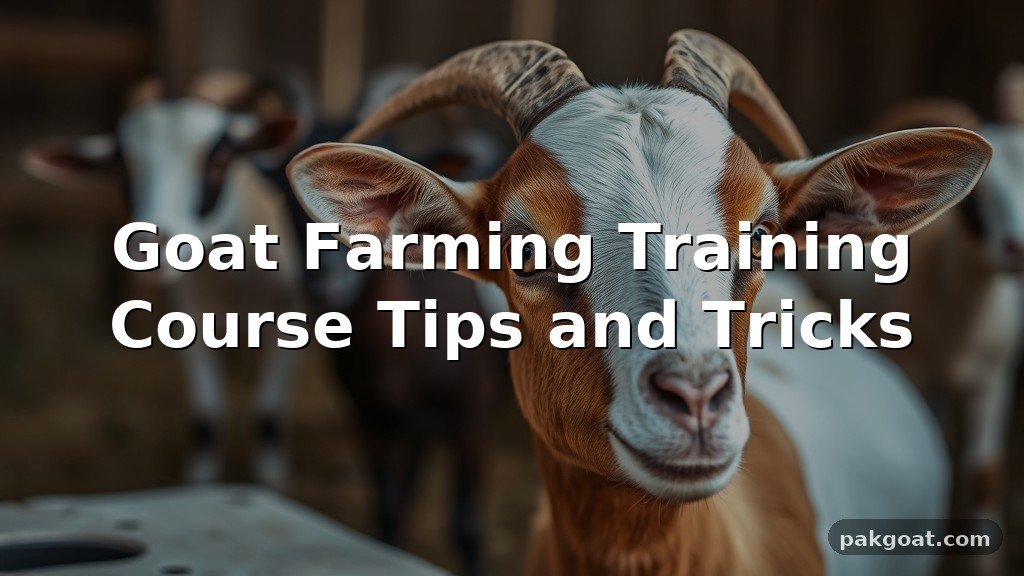
Finding the right goat farming training course tips and tricks can transform a challenging agricultural venture into a highly profitable, sustainable business model. Most beginners struggle because they overlook the nuances of herd health, nutritional management, and local market demands before purchasing their first animals. By focusing on practical education rather than theoretical models, you can avoid common pitfalls like overstocking pasture or ignoring parasite resistance.
This article provides the essential insights you need to evaluate training programs and apply actionable strategies to your own farm. Whether you are aiming for dairy production or meat sales, these foundational lessons ensure your operation remains resilient during volatile market shifts.
The Core Objectives of Goat Farming Training
A high-quality educational program should prioritize animal welfare and economic viability above all else. When evaluating potential courses, look for modules that cover the “Two-Step” method of herd expansion: securing healthy foundation stock followed by rigorous biosecurity protocols.
Most reputable instructors will emphasize that your initial investment should go toward high-quality fencing and shelter rather than expensive, unproven genetics. You need to understand that the primary goal is not just raising goats, but managing an ecosystem that supports long-term growth.
Training should explicitly teach you how to perform basic health checks, including FAMACHA scoring for anemia and hoof maintenance. If a course focuses entirely on business theory without hands-on clinical experience, it is likely missing the mark. You must be able to identify respiratory distress or digestive issues within minutes of entering the barn.
Instructors should provide specific, actionable checklists that you can keep in your pocket during daily chores. These tools are the foundation of preventing costly medical emergencies that often bankrupt new farmers.
Selecting the Right Curriculum
Not all agricultural programs are created equal, and you must distinguish between academic theory and field-tested reality. A reliable curriculum should offer a mix of classroom learning and on-site demonstrations where you can observe daily routines. Look for courses that include modules on local regulations, as zoning laws and waste management requirements vary significantly by region.
You should ask whether the instructors have active, commercial operations or if they are purely academic researchers. Practical experience usually trumps textbook knowledge when it comes to the day-to-day unpredictability of livestock management.
When reviewing the syllabus, ensure it covers the specific breed you intend to raise, whether it is for dairy, meat, or fiber. The nutritional requirements for a Boer goat differ drastically from those of a Nigerian Dwarf, and a generic course may lead you to make expensive feeding errors.
Check if the program provides access to a network of mentors or alumni who have already launched their own farms. Peer support is often as valuable as the formal lessons because it provides a realistic look at the challenges you will face in your first two years.
Essential Nutrition and Feeding Strategies
One of the most critical aspects of any training program is understanding the complex digestive needs of goats. Goats are browsers, not grazers, meaning they prefer brush and woody plants over standard pasture grass. A effective course will teach you to calculate dry matter intake to prevent both malnutrition and metabolic diseases like pregnancy toxemia.
You should learn how to supplement minerals, specifically copper, which is vital for goat health but toxic to sheep. Understanding the balance between forage and grain is the difference between a high-performing herd and one plagued by chronic health issues.
Many experts suggest keeping baking soda available at all times as a free-choice supplement for the herd. This simple trick helps maintain rumen pH and prevents bloat, which can be fatal if not addressed immediately. Your training should also cover the importance of clean water access, as goats are notoriously picky drinkers and will refuse water that has been contaminated by debris.
You will learn to build or purchase troughs that prevent fecal contamination while ensuring the animals have constant access to hydration. These small, practical details often save more money than large investments in specialized equipment.
Managing Herd Health and Parasites
Parasite management is the single biggest challenge for goat farmers, and your training must focus on integrated pest management (IPM). You should learn to utilize rotational grazing to break the life cycle of common internal parasites like Haemonchus contortus. A good course will teach you how to use a microscope to perform fecal egg counts rather than relying on blanket deworming.
Over-reliance on chemical dewormers has led to widespread resistance, making it essential for you to learn natural or targeted treatment alternatives. You will gain the skills to identify which individuals are resilient and which need to be culled from the herd.
Biosecurity is the second pillar of a healthy farm, especially when bringing new animals onto your property. Always implement a quarantine period of at least 30 days for any goat entering your herd from an external source. During this time, you should perform blood tests for common diseases like Caseous Lymphadenitis (CL) and Caprine Arthritis Encephalitis (CAE).
These conditions can devastate a herd and are difficult to eradicate once they take hold. A professional training course will provide you with a standard operating procedure for incoming livestock that keeps your existing animals safe.
Financial Planning and Profitability
Successful farming requires treating your livestock operation as a business, not a hobby. You need to track every expense, from feed and veterinary supplies to electricity and transport costs. A robust training program will help you build a spreadsheet model that calculates your break-even point for every animal.
You must know your cost of production per pound of meat or per gallon of milk to set profitable prices. Without these figures, you are essentially guessing, which is a fast route to financial loss.
Consider the following table when analyzing your potential revenue streams and associated costs:
| Revenue Stream | Primary Input Cost | Profit Margin Potential |
|---|---|---|
| Meat Production | Pasture/Forage | Low to Moderate |
| Dairy/Cheese | Labor/Equipment | High |
| Breeding Stock | Genetics/Marketing | High |
| Manure/Compost | Collection/Storage | Low |
Infrastructure and Facility Design
Your farm layout should be designed to minimize labor and maximize animal comfort. Goats require sturdy fencing, as they are capable of jumping and climbing, often finding weaknesses in standard wire mesh. A well-designed barn should provide adequate ventilation while protecting the animals from cold drafts and moisture.
You will learn that moisture is the enemy of goat health, as it promotes respiratory infections and foot rot. The training should include site planning sessions where you map out your paddocks, water lines, and shelter locations for maximum efficiency.
Think about the workflow of your daily chores to avoid unnecessary walking or heavy lifting. If you are moving hay twice a day, your storage area should be as close as possible to the feeding area. You should also consider the ease of cleaning; sloped floors or raised platforms can make waste removal much faster.
Investing in proper infrastructure upfront reduces the physical strain on you and the stress on your animals. These design choices are permanent, so getting them right during the planning phase is crucial.
Building a Market for Your Products
Production is only half the battle; the other half is selling your product at a fair price. You need to identify your target market, whether it is local ethnic markets for meat or high-end restaurants for artisan cheese. The best training courses will include modules on marketing, branding, and legal compliance for food sales.
You should understand the difference between selling live animals at auction and selling processed products directly to consumers. Each path has different licensing requirements and profit margins that you must weigh carefully.
For more information on establishing safe and legal food production, visit the United States Department of Agriculture for official guidance on livestock regulations. Networking is also key; joining local goat associations or agricultural cooperatives can provide you with access to shared processing facilities and collective bargaining power.
Do not underestimate the power of word-of-mouth marketing in your local community. Building a reputation for quality and consistency will eventually allow you to charge a premium for your products.
Common Beginner Mistakes to Avoid
Many new farmers fail because they start with too many animals before they have the skills to manage them. Start small with a handful of goats to learn the rhythm of the farm before scaling up. Another common error is failing to keep accurate records, which makes it impossible to track the performance of individual animals.
You should document breeding dates, kidding results, health treatments, and weight gains for every goat in your herd. This data will eventually tell you which animals are paying their way and which are merely consuming your resources.
* Always have a vet-approved emergency kit on hand.
* Never buy an animal without viewing its medical history.
* Keep your fences maintained to avoid neighbor disputes.
* Plan for the cost of winter feed before the season starts.
* Join a local 4-H or agricultural club for hands-on experience.
Conclusion
Mastering the art of livestock management requires dedication and a commitment to continuous learning. By focusing on the practical application of goat farming training course tips and tricks, you ensure that your farm is built on a foundation of health and profitability.
Start by identifying your primary goals, whether you are interested in commercial production or hobbyist farming, and seek out mentors who have walked the path before you. Remember that the most successful farmers are those who stay observant, track their data, and adapt their strategies based on real-world results.
As you begin your journey, prioritize the well-being of your herd and the sustainability of your land. These elements are the bedrock of any successful agricultural enterprise.
If you stay disciplined with your health protocols and business management, you will find that the effort invested in your education pays dividends for years to come. Reach out to local extension offices or veteran farmers to begin building the support network that will sustain your growth in the coming seasons.
