

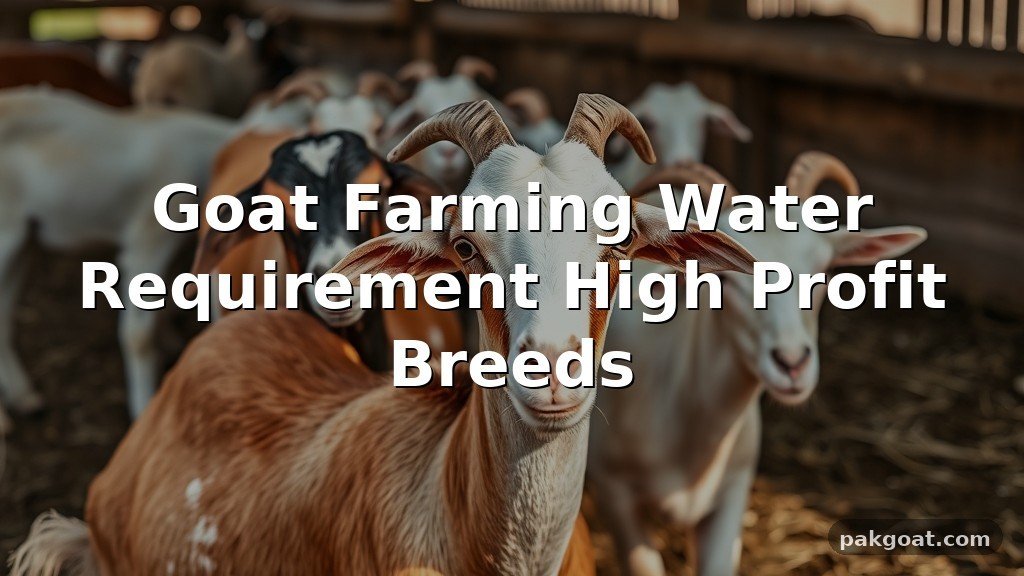
Understanding the specific goat farming water requirement high profit breeds need is the most critical step for any producer aiming for financial success. Maintaining a healthy herd depends on access to clean, consistent hydration, which directly impacts milk yield, meat quality, and overall growth rates.
By aligning your management practices with the physiological needs of high-value animals, you can significantly reduce mortality and overhead costs. This article explores how to balance these essential hydration needs with the selection of the most lucrative breeds to maximize your farm’s productivity and bottom line.
Daily Water Intake for Profitable Herds
A mature goat typically requires between 2 and 4 gallons of water per day, depending on its size, lactation status, and environmental temperature. High-performing dairy breeds, such as the Anglo-Nubian or Alpine, often demand higher volumes due to their elevated metabolic rates and milk production demands. If you fail to meet this threshold, you will see an immediate decline in both milk volume and fat content.
During hot summer months or periods of intense physical activity, these requirements can spike by as much as 50%. A lactating doe needs significantly more water to support the fluid content of her milk. Providing ad-libitum access to clean, cool water is the industry standard for ensuring optimal herd health.
Installing automatic waterers is a common strategy to ensure that your livestock never experience dehydration. These systems prevent the water from becoming stagnant, which reduces the risk of waterborne parasites and diseases. When goats have constant access, they maintain better digestion, leading to faster weight gain and improved immunity.
High-Profit Breeds and Their Specific Needs
Selecting the right animal is just as important as managing your resources. Breeds known for high profitability generally fall into two categories: meat-producing powerhouses and high-yield dairy animals. The Boer goat remains the gold standard for meat production, known for its rapid growth rate and excellent carcass composition.
Dairy-focused farmers often look toward the Saanen or Toggenburg breeds. These animals are prized for their consistent, high-volume milk production throughout the year. However, these high-output breeds often have higher maintenance requirements, including a more precise diet and consistent hydration.
| Breed Type | Primary Output | Growth/Yield Potential |
|---|---|---|
| Boer | Meat | High weight gain (up to 0.2kg/day) |
| Saanen | Milk | High volume (3-4 liters/day) |
| Kalahari Red | Meat | Excellent drought tolerance |
| Alpine | Milk | Consistent year-round yield |
Managing Water Quality for Herd Health
Water quality is just as vital as quantity when managing your goat farming water requirement high profit breeds strategy. Goats are notoriously picky drinkers and will avoid water that is dirty, smells of algae, or has been contaminated by urine. If they refuse to drink, they will stop eating, which quickly halts weight gain and lowers milk production.
You should clean water troughs at least twice a week to prevent the buildup of biofilm and sediment. Scrubbing the basin with a stiff brush and rinsing it thoroughly ensures that your herd isn’t exposed to harmful bacteria. If you use a well or a pond, consider testing the water annually for mineral content and fecal coliforms.
High mineral content, such as excessive iron or sulfur, can lead to long-term health issues or reduced water consumption. Installing a basic filtration system can solve many of these quality issues before the water reaches the pen. Investing in water quality is a proactive way to protect your investment in expensive, high-profit livestock.
Infrastructure and Distribution Systems
Your farm layout must prioritize the efficient movement of water to minimize labor costs. Carrying buckets is unsustainable once your herd size grows beyond a dozen animals. Gravity-fed systems or pressurized pipes leading to central watering stations are essential for scaling a profitable operation.
Consider the placement of your waterers in relation to shade and grazing areas. Goats prefer to drink near their feeding stations but will avoid water that is located in heavy traffic zones where it can be easily fouled. You can find detailed technical guidance on agricultural water systems through the Food and Agriculture Organization of the United Nations.
Ensure that all piping is buried deep enough to avoid freezing in winter and overheating in summer. Plastic piping is generally preferred for its durability and resistance to corrosion compared to metal alternatives. A well-designed distribution network allows you to spend more time on breed improvement and marketing rather than manual labor.
Financial Planning for Herd Expansion
Profitability in goat farming is rarely accidental; it requires a strict adherence to a business plan. Your primary costs will include feed, veterinary care, and infrastructure maintenance. Water management is a low-cost, high-impact area where you can gain a competitive advantage over less organized operations.
* Feed costs: Typically account for 60-70% of total operational expenses.
* Veterinary bills: Preventative care is cheaper than crisis management.
* Marketing: Direct-to-consumer sales often yield higher margins than selling to auctions.
* Utility bills: Electricity for water pumps and lighting must be factored in.
Track your monthly expenses against the revenue generated from milk, cheese, or meat sales. If you are not seeing a 20-30% profit margin, re-evaluate your feed conversion ratios and herd health protocols. Understanding the specific goat farming water requirement high profit breeds need allows you to optimize these margins by ensuring your animals remain in peak physiological condition.
Environmental Factors and Herd Performance
Climate plays a massive role in how much water your herd consumes and how they perform. In arid regions, you may need to supplement water with electrolytes to prevent dehydration during heatwaves. High-performing breeds often have less resilience to extreme heat than hardier, local varieties.
Providing adequate shade is a non-negotiable requirement for high-profit breeds. Goats under heat stress will spend more time resting and less time grazing, which directly impacts your bottom line. Use open-sided structures that allow for maximum airflow while providing a barrier against direct sunlight.
During the winter, water temperature becomes a secondary concern. If the water is near freezing, goats will drink less, leading to reduced feed intake and weight loss. Some farmers use tank heaters to keep the water at a temperate, drinkable level during the coldest months of the year.
Breeding for Efficiency and Profit
When selecting your foundation stock, look for animals that demonstrate high feed-to-meat or feed-to-milk conversion ratios. A goat that produces more milk on less feed is inherently more profitable. These traits are often hereditary, so keeping detailed records of each doe’s performance is essential.
Avoid the temptation to buy cheap, unverified stock from local markets. High-profit breeds require a pedigree that guarantees they possess the genetic markers for high performance. Investing in a quality buck can improve your entire herd’s output within a single generation.
Continuous culling is the hallmark of a successful farm. If an animal consistently produces less than the herd average or requires excessive veterinary intervention, remove it from the breeding program. Focus your resources on the top 20% of your herd that drives the majority of your profits.
Scaling Your Operation Sustainably
Growth should always be managed at a pace that your infrastructure can support. If you add more goats without upgrading your watering and feeding systems, you will inevitably see a drop in performance. Each new animal increases the daily water demand, so ensure your supply capacity can handle the expansion.
Consider the carrying capacity of your land before increasing your herd size. Overgrazing leads to soil erosion and the spread of internal parasites, which can decimate your profit margins. Rotational grazing is a proven method to keep your pastures healthy and your goats in prime condition.
As you grow, look for opportunities to add value to your products. Selling raw milk is often less profitable than processing it into cheese, yogurt, or soap. By moving up the value chain, you can increase your revenue without necessarily increasing the number of animals you need to maintain.
Conclusion
Achieving success with goats requires a deep understanding of the physiological needs of your animals. By focusing on the specific goat farming water requirement high profit breeds need, you establish a foundation of health that supports consistent growth and high output. Whether you are focusing on high-quality meat or premium dairy products, the principles of cleanliness, accessibility, and genetic selection remain the same.
Start by auditing your current water infrastructure and ensuring it meets the daily needs of your existing herd. Once you have stabilized your management practices, you can confidently scale your operations and invest in superior genetics.
Success in this industry is built on small, consistent improvements to your daily routine. We encourage you to monitor your herd’s performance data closely and refine your strategy as you work toward a more profitable future.
