

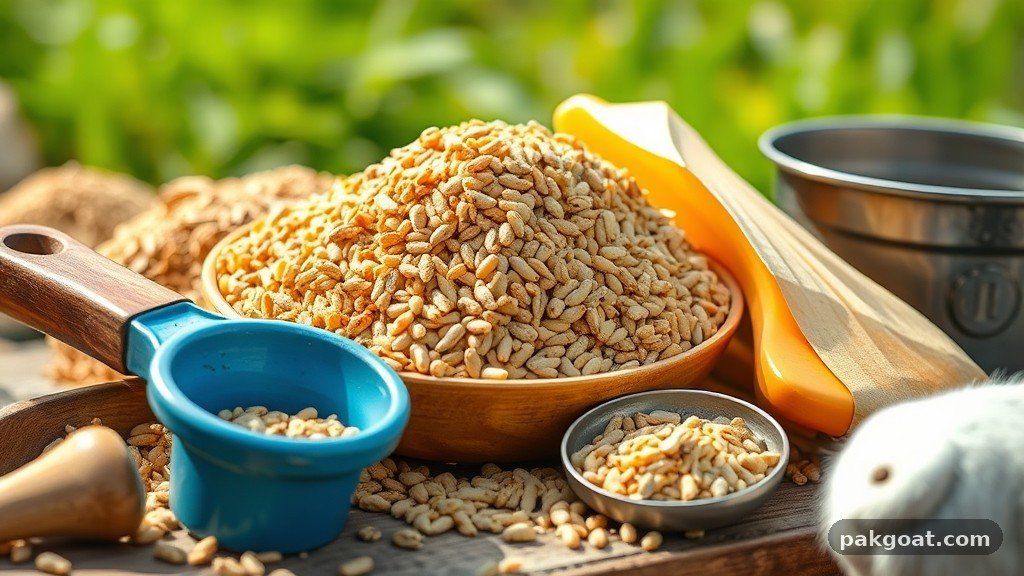
Understanding the specific goat feed formula equipment and tools needed is the first step toward achieving optimal herd health and cost efficiency. When you manage your own feed production, you gain control over the nutritional profile and reduce dependence on expensive commercial bags. This article breaks down the essential hardware and precision instruments required to turn raw grains and minerals into balanced, growth-promoting rations for your livestock.
Defining Your Production Scale
The exact goat feed formula equipment and tools needed depend heavily on the size of your operation. A hobbyist with five goats requires vastly different machinery than a commercial producer managing a herd of five hundred. You must first determine if you are mixing small batches by hand or automating the process with industrial-grade mills.
For small-scale setups, manual labor is often sufficient if you invest in high-quality measuring tools. As you scale, the labor cost of hand-mixing becomes prohibitive, making automated vertical mixers a necessity. You should aim to balance your initial capital expenditure against the long-term savings of buying bulk raw ingredients.
Core Grinding and Milling Machinery
A hammer mill is the most critical piece of equipment for processing grains like corn, barley, or oats. Goats have specific digestion requirements, and feeding whole grains often leads to excessive waste through undigested passage. A hammer mill shatters the grains into a consistent particle size, which helps the rumen fermentation process.
You should look for a mill that features adjustable screens to control the coarseness of the final product. If the grind is too fine, it creates dust that can cause respiratory issues in goats; if it is too coarse, they will selectively feed and leave the nutrients behind. Many small-scale farmers opt for a combined mill-and-mix unit to save on floor space.
Precision Weighing and Measuring Tools
Precision is non-negotiable when you are balancing rations for minerals and additives. You cannot rely on volumetric measurements like “scoops” because the density of feed ingredients changes based on moisture levels and settling. A digital platform scale is a foundational tool for any serious goat farmer.
You need a scale capable of measuring down to the gram for micro-ingredients like vitamins, minerals, and probiotics. Even a small error in the concentration of copper or selenium can have severe health consequences for your herd. Always calibrate your weighing equipment at least once every quarter to ensure accuracy remains consistent.
Mixing and Blending Solutions
Once your grains are ground and your minerals are weighed, you need a robust mixing solution to ensure a homogeneous blend. A ribbon blender is the industry standard for mixing goat feed because it moves ingredients in two directions simultaneously. This prevents the “layering” effect where heavy minerals settle at the bottom of the bin.
If you are operating on a tighter budget, a concrete mixer or a specialized drum mixer can suffice for smaller batches. Ensure the mixer is thoroughly cleaned between batches to prevent cross-contamination, especially if you are using specialized additives like coccidiostats. The goal is to reach a uniform distribution where every mouthful of feed contains the exact same ratio of nutrients.
Storage and Moisture Control
Feed spoilage is the silent killer of profitability in goat farming. You need airtight storage silos or heavy-duty plastic bins to protect your grain from rodents, insects, and moisture. High humidity levels can lead to mold growth, which produces mycotoxins that are highly toxic to goats.
Install a moisture meter to test your grain batches before they enter the mill. If your moisture content exceeds 12% to 14%, you risk spoilage during storage. Using a moisture-wicking floor system or elevating your storage bins on pallets can prevent ground-level dampness from infiltrating your feed supply.
Essential Small-Scale Hand Tools
While heavy machinery handles the bulk of the work, several hand tools are essential for daily operations. A high-quality scoop with a clear volume marking is useful for quick visual checks, though it should never replace the scale. You will also need heavy-duty shovels for moving bulk ingredients from bags to the hopper.
A set of stainless steel buckets is superior to plastic for mixing small batches or delivering supplements. Plastic can scratch and harbor bacteria, which is problematic when dealing with sensitive nutritional additives. Sturdy, galvanized steel containers are easier to sanitize and stand up to the daily abuse of a farm environment.
Equipment Comparison Table
The following table summarizes the primary equipment categories based on your production volume. Use this as a starting point when planning your budget and facility layout for feed processing.
| Equipment Type | Small Herd (1-20) | Large Herd (50+) |
|---|---|---|
| Grinding | Manual hand-crank mill | Electric hammer mill |
| Mixing | Hand-held paddle mixer | Industrial ribbon blender |
| Weighing | Digital kitchen scale | Industrial floor scale |
| Storage | Sealed plastic bins | Galvanized steel silos |
Safety and Maintenance Protocols
Safety is paramount when working with mechanical feed equipment. All belts, pulleys, and augers must be guarded to prevent accidents during operation. You should also implement a lockout-tagout procedure if you are performing maintenance on an electric mill or mixer.
Regular maintenance extends the life of your equipment significantly. Create a strict schedule for greasing bearings, checking belt tension, and sharpening hammer mill blades. Dull blades force the motor to work harder, increasing electricity consumption and leading to inconsistent particle sizes in your feed.
Commonly Needed Ancillary Items
Beyond the primary machinery, you will need a variety of support tools to keep your production line running. These include items for cleaning, documentation, and quality control.
- Heavy-duty shop vacuum for cleaning dust from the milling area
- Industrial-grade floor broom and dustpan
- Logbook or digital spreadsheet for recording batch formulas
- Labels and markers for identifying different feed types
- Personal protective equipment like N95 masks and safety goggles
- A reliable handheld moisture tester for raw grain
Sourcing and Quality Control
Sourcing high-quality raw ingredients is just as important as the equipment you use to process them. You should establish relationships with local grain elevators or suppliers who can provide consistent batches.
Always ask for a nutritional analysis of the grain you purchase to ensure your formulas remain accurate. For further reading on nutritional standards, the National Agricultural Library provides extensive research on livestock feed requirements.
Never assume that two batches of grain are identical simply because they come from the same supplier. Seasonal changes and harvest conditions impact the protein and fiber content of grains significantly. Adjust your formulas based on these findings rather than sticking to a static, outdated recipe.
Conclusion
Investing in the right goat feed formula equipment and tools needed for your specific operation is a strategic decision that pays dividends in herd health and lower feed costs. By mastering the grinding, mixing, and storage processes, you ensure that your goats receive a consistent, high-quality diet throughout the year. Start by evaluating your current herd size and identifying the bottlenecks in your existing feeding routine.
Whether you are upgrading from hand-mixing or building a sophisticated feed room from scratch, focus on accuracy, cleanliness, and maintenance. Consistent effort in these areas will yield healthier, more productive animals, making your farm more efficient and sustainable for the long term. Contact your local agricultural extension agent if you need help fine-tuning your initial feed formulas.
