

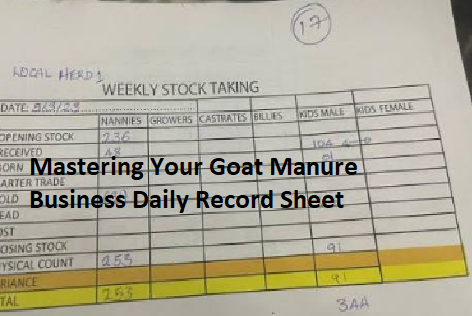
Managing a profitable livestock operation requires rigorous attention to detail, and a well-maintained goat manure business daily record sheet serves as the backbone of your operational efficiency. By tracking daily output, processing labor, and sales volume, you transform raw waste into a predictable revenue stream. This documentation allows you to identify seasonal trends in fertilizer demand and optimize your herd size relative to your composting capacity.
Whether you are scaling a small homestead or managing a commercial facility, consistent data entry is the difference between guesswork and growth. Understanding these metrics helps you maximize the value of every pound of byproduct your farm generates.
Tracking Daily Production Metrics
The primary function of a goat manure business daily record sheet is to quantify your raw material output. On average, an adult goat produces roughly 2 to 3 pounds of manure per day, depending on its diet and weight.
Recording these figures daily allows you to project your monthly compost yield with high accuracy. You should note the number of goats currently in the barn to establish a baseline for your daily expectations.
If your daily harvest drops significantly, it may indicate health issues or dietary changes within the herd. Tracking this data helps you correlate fiber intake with waste volume, which is essential for consistent fertilizer quality.
Use a simple log to note the weight of collected manure before it enters the curing pile. Consistent measurement prevents the accumulation of excess waste that could otherwise lead to sanitation challenges.
Categorizing Operational Expenses
Your financial success depends on understanding exactly how much it costs to process your manure. A comprehensive record sheet must include columns for labor hours, bedding materials, and transportation costs.
You might pay for wood shavings or straw to manage the moisture levels in the goat stalls. Recording these expenses alongside your output reveals your true profit margin per unit of fertilizer.
Break down your labor costs by the time spent cleaning pens and turning compost piles. If you are hiring help, these records are vital for tax purposes and cash flow management.
You will likely find that early morning labor is more efficient, and documenting this helps you schedule your team effectively. Keep receipts for any bulk purchases of carbon-rich materials like sawdust or shredded paper to balance your nitrogen-rich manure.
Managing Sales and Distribution Data
Revenue tracking is the most critical component of your daily record sheet. Each entry should capture the date of sale, the volume of manure sold, and the price per bag or cubic yard.
This transparency allows you to identify your most profitable customer segments, such as local organic gardeners or wholesale nursery operators. Monitoring inventory levels ensures you never promise more product than your current curing cycle can provide.
Categorize your sales by distribution channel to see which marketing efforts are yielding the highest returns. If you deliver to local farms, track the mileage and fuel costs associated with each trip.
This data helps you decide whether to adjust your pricing for delivery or focus on on-farm pickup options. Your record sheet should also include a section for customer contact information to facilitate repeat business.
Understanding Composting Timelines
Effective manure management requires strict adherence to safety guidelines, such as those provided by the Natural Resources Conservation Service for soil health and nutrient management. Your log should track the date manure was added to the compost pile and the expected date for it to reach maturity.
Proper composting typically takes 90 to 120 days to ensure pathogen reduction and weed seed destruction. Recording the internal temperature of your piles ensures the process is working correctly.
If a pile fails to heat up, your records will show if the nitrogen-to-carbon ratio was off during that specific batch. Use the record sheet to note turning dates, as regular aeration is necessary for aerobic decomposition.
By keeping this schedule, you avoid selling immature product that could damage a customer’s garden. A professional record sheet prevents the risk of shipping contaminated or “hot” fertilizer to clients.
Comparing Yearly Performance Metrics
To truly understand your business growth, you must compare your current data against previous years. This historical perspective reveals whether your herd expansion is actually leading to increased profitability. You can use a table to track key performance indicators that highlight seasonal spikes in demand.
| Metric | Year 1 | Year 2 | Year 3 |
|---|---|---|---|
| Total Manure Collected (tons) | 12 | 18 | 25 |
| Processing Costs (USD) | $450 | $600 | $850 |
| Total Sales Revenue (USD) | $2,200 | $3,800 | $5,500 |
| Net Profit Margin | 79% | 84% | 85% |
Reviewing these figures annually helps you identify the most efficient periods for production. You might notice that demand peaks in early spring, allowing you to ramp up your curing process during the winter months.
Use this table to adjust your herd size or your marketing strategy for the upcoming season. Data-driven decisions are always more sustainable than gut-based estimates.
Optimizing Herd Nutrition for Quality
The quality of your final product is directly influenced by what your goats eat. A goat manure business daily record sheet should include a section for tracking the feed composition of your herd.
High-quality forage produces manure that is easier to compost and more nutrient-dense for soil applications. If you notice a decline in demand, check your logs to see if a change in feed occurred around the same time.
Maintain records of any supplements or minerals provided to the goats, as these pass through to the manure. Some gardeners specifically look for high-potassium or high-phosphorus fertilizer, which you can market if you know your feed inputs.
Keeping these records professional allows you to provide a “product specification sheet” to your customers. This level of detail differentiates your business from competitors who offer generic, untested manure.
Essential Documentation Components
Organizing your paperwork effectively is just as important as the data itself. You should consider the following elements when building your daily logbook:
- Daily weight of raw manure collected from stalls
- Volume of carbon amendments added (e.g., straw, wood chips)
- Compost pile temperature checks (recorded weekly)
- Total hours spent on manual labor and equipment maintenance
- Customer names and specific volume requirements
- Dates of pile turning and aeration sessions
- Inventory of bags, labels, and packaging materials
These categories ensure that you capture every aspect of the production cycle. By maintaining a structured format, you can easily hand off these tasks to an employee or family member without losing data integrity.
Consistency is the primary goal of any record-keeping system. If the process is too complex, you will struggle to maintain it over the long term.
Scaling Your Operations Safely
As your output grows, you may need to invest in machinery like a manure spreader or a front-end loader. Your records will indicate exactly when your manual labor capacity is exceeded by the volume of waste.
Use the data from your goat manure business daily record sheet to justify these capital expenditures. If you can prove that you are losing sales due to a lack of cured product, the investment becomes a logical business move.
Ensure that your records also track local zoning compliance and environmental safety measures. Keeping a log of when you test your soil or manure for heavy metals and pathogens builds trust with your community.
Regulatory bodies appreciate businesses that demonstrate proactive safety monitoring. This documentation protects your farm from liability and ensures that you remain a respected supplier in the agricultural market.
Conclusion
Implementing a structured approach to your record-keeping transforms the way you handle agricultural byproducts. By prioritizing your goat manure business daily record sheet, you gain clear visibility into your production costs, sales velocity, and overall profitability.
You no longer have to guess about the health of your compost piles or the efficiency of your herd management. Instead, you can rely on hard data to guide your expansion and marketing efforts throughout the year.
Start today by creating a simple log that covers the basic metrics of weight, time, and revenue. As you become more comfortable with the process, you can add more granular details to refine your operations even further.
Consistent documentation is the most reliable path toward building a sustainable and profitable farm business. Stay diligent with your entries, and you will find that your organized records become your most valuable asset.
