

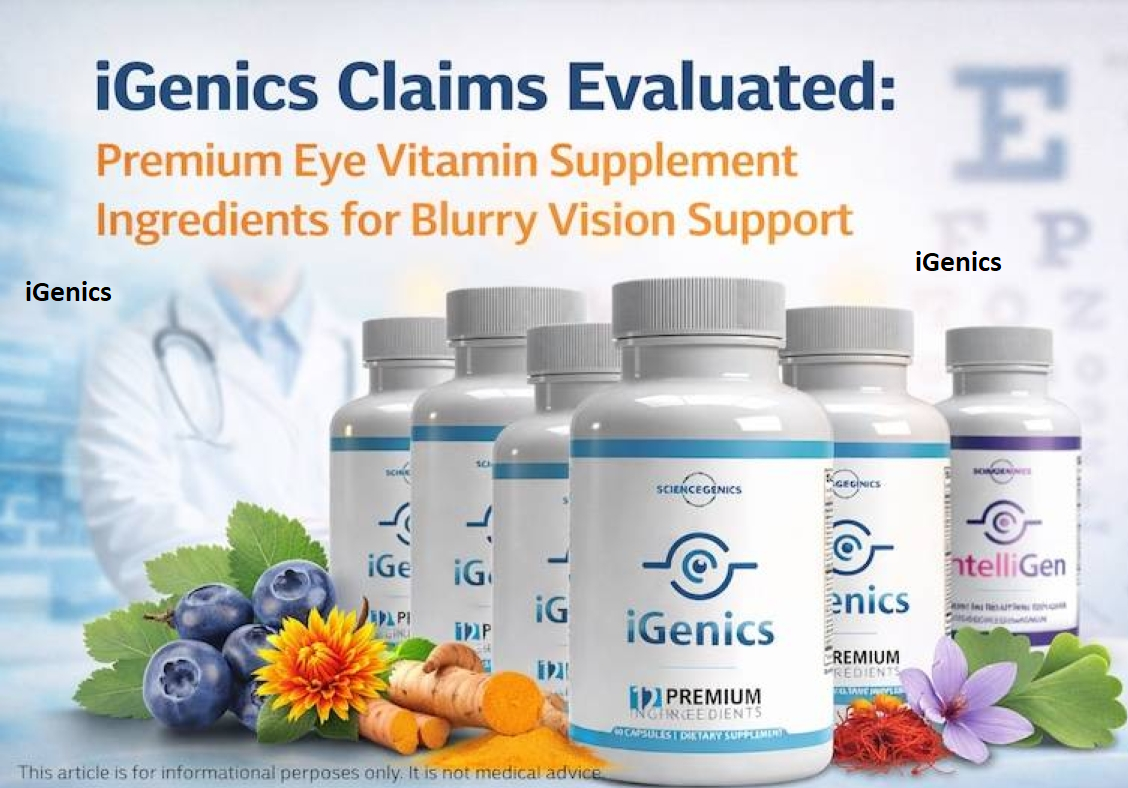
What Is iGenics and Why Are People Searching for It?
If you are over 40 and have noticed your eyes tiring faster at the computer, or you have heard that certain nutrients can protect your vision as you age, you have probably come across iGenics. It is marketed as a daily eye health supplement in capsule form. Many people search for it because the ads describe a single product that packs several well-known eye nutrients into one routine. That convenience is a real appeal.
Still, a strong marketing pitch does not tell you much about what is actually in the bottle or whether it does anything. This review takes a measured look at iGenics. You will find what the product claims, which ingredients have real research behind them, where the evidence runs thin, what buyers report, and how to avoid the purchasing pitfalls that appear again and again in online complaints.
Understanding the Basics of Age-Related Vision Changes
Before judging any supplement, it helps to understand what it is supposed to address. Many adults in their forties and older notice changes that feel like aging eyes. Near-focus gets harder. Glare bothers them more. Screens leave their eyes dry, gritty, or strained by the end of the day.
These everyday symptoms differ from serious eye diseases. Age-related macular degeneration, or AMD, is a leading cause of central vision loss in older adults. Cataracts and glaucoma are others. The National Eye Institute sponsored large studies, known as AREDS and AREDS2, that tested specific nutrient combinations in people who already had moderate or advanced AMD. Those studies offer the strongest evidence in this category, and they matter when reading any eye supplement label.
A key point: those trials studied people with existing disease. They do not prove that the same nutrients prevent vision problems in people with healthy eyes. Keep that distinction in mind throughout this review.
Don’t miss out! Click the button below to visit the official website, check today’s exclusive price, and secure your order before the limited stock runs out. Supplies may not last long, so take action now and grab yours while it’s still available!
The Ingredients Listed for iGenics
Sources disagree about the exact formula, so treat the following as a summary of what reviewers commonly report rather than a confirmed label. Check the physical bottle or the official product panel before you buy.
Most descriptions include lutein and zeaxanthin. These are carotenoids, plant pigments that accumulate in the macula, the central part of the retina. Research on these two compounds is substantial, particularly in the context of macular pigment density and the AREDS2 formulas. Many eye supplements include them for that reason.
Other ingredients often mentioned include bilberry extract, a berry traditionally used for vision and eye fatigue; saffron extract, which has small human studies on retinal and visual function; and ginkgo biloba, turmeric or curcumin, and black pepper extract. Some descriptions also list vitamins A, C, and E, zinc, and copper, which mirror the AREDS2 vitamin and mineral core.
Here is the honest assessment. Individual ingredients have published research, but that is not the same as proof that the complete iGenics formula works. Human studies typically test specific doses of a single compound or a specific formula, not a different blend. Ingredient research gives reasons for interest. It does not show results for this exact product.
Do the Listed Doses Match the Research?
Dosage is where many supplements quietly fall short, and it deserves careful attention. Some reviews report that iGenics contains 20 milligrams of lutein, 10 milligrams of zeaxanthin, 480 milligrams of bilberry extract, and 20 milligrams of saffron. If accurate, those amounts line up with doses studied in certain trials. Other sources describe a different formula with fewer ingredients or different amounts entirely.
Because these reports conflict, you cannot confirm the dosing from this review alone. This is exactly why you should read the supplement facts panel on the label you receive. A reputable manufacturer will list every ingredient with its exact amount. If the label is vague or only shows a proprietary blend without amounts, that is a reason for caution.
Dosage also matters for safety. Some ingredients, such as high-dose vitamin A, zinc, and ginkgo, can interact with medications or cause problems for certain people. Anyone taking blood thinners, managing a chronic condition, or pregnant should speak with a doctor or pharmacist before starting a new supplement.
What the Evidence Says About Results
This is the question most readers care about most. Does iGenics actually improve vision or reduce eye strain?
The honest answer is that no independent, peer-reviewed clinical trial of the iGenics product itself appeared in the sources examined for this review. That gap matters a great deal. Many supplements claim that their ingredients work, but the finished product was never tested in people. Without a study of the actual formula, nobody can say with confidence that the capsule produces the results its advertising describes.
Some review sites report personal experiences, such as people noticing less eye strain or needing drops less often after several weeks. Individual stories like these can be sincere, but they are anecdotes. They do not control for placebo effects, changes in screen habits, lifestyle, or the natural ups and downs of eye comfort. Treat them as interesting reports rather than evidence.
Also be wary of promises that sound too strong. Some promotional material claims the supplement can reverse macular damage, restore vision at a cellular level, or cleanse toxins from the optic nerve. Those statements are not supported by reliable science. No supplement is approved to treat or reverse eye disease. The U.S. Food and Drug Administration does not evaluate dietary supplements for effectiveness before they reach the market, and supplement makers cannot legally claim to treat or cure disease.
Pricing and Where to Buy
Reported prices vary widely. Depending on the source and package size, you might see figures ranging from about $39 to $69 per bottle, with some listings around $59. One review estimates the daily cost at roughly $1.30 to $1.97. Prices can also change, and promotional bundles or discounts may appear at checkout.
Where you purchase matters as much as the price. Several sources report that complaints often come from people who bought through third-party marketplaces or unfamiliar websites. Some buyers say they received a product that looked different, had no smell or taste, or appeared to contain other ingredients. Others report unexpected charges, delayed orders, or trouble getting refunds.
Watch for these red flags when shopping. Be cautious of sites that copy the same wording across many pages, sell through a Google Sites page or a file-sharing platform rather than a real storefront, or pressure you with countdown timers. Be cautious of video sales pages that feature a doctor whose name and credentials you cannot verify. Check whether the seller provides a physical address, a working customer service phone number, and clear terms about subscriptions and cancellation.
If you decide to try the product, look for a clear refund policy in writing before you enter payment information. Review the subscription terms carefully, since some supplement offers enroll you in recurring shipments unless you cancel.
Is iGenics a Scam or a Legitimate Product?
People often ask this directly, and the answer requires nuance. The reviews examined for this article disagree sharply. Some call the company legitimate and point to GMP certification and ingredient disclosure. Others describe the sales funnel as a classic supplement scam built on exaggerated claims and unverifiable endorsements.
Two things can be true at once. The ingredients themselves are real, researched compounds. The marketing, however, goes well beyond what the evidence supports, and the sales environment around the product has enough warning signs that caution is warranted. A product can contain legitimate ingredients and still be sold through misleading advertising.
The company name is also reported inconsistently across sources, appearing as Science Genics, ScienceGenix, and similar variations. Before buying, confirm the seller’s legal name, business address, and contact details on the official site. A company that makes these details easy to find is more trustworthy than one that hides them.
Pros of iGenics
Several strengths deserve recognition. The formula, as described, focuses on ingredients that have genuine research connections to eye health. Combining carotenoids, bilberry, and vitamins in one capsule can simplify a routine for people who dislike managing multiple bottles. Some reports describe the manufacturing facility as GMP certified, which means it follows good manufacturing practices. Ingredient transparency, when a label lists each amount, also helps buyers make informed choices.
For someone already interested in lutein and zeaxanthin, iGenics may be a reasonable option to consider alongside a conversation with an eye doctor. It may also suit adults who eat few leafy greens and want a supplement covering those nutrients.
Cons and Concerns to Consider
The concerns are real and should not be minimized. No independent clinical trial of the finished product was found. Ingredient amounts and formulas are reported inconsistently. Marketing includes unsupported disease claims. Counterfeit and third-party sales appear to create the most serious complaints. Refund and subscription issues come up repeatedly in consumer reports.
Cost is another factor. Premium supplements can add up over months, and the price-to-evidence ratio is harder to justify when the product itself lacks direct testing. Finally, a supplement cannot replace an eye exam. Regular check-ups catch problems like glaucoma and AMD early, when treatment works best, and a capsule will not change that.
Who Might Consider iGenics and Who Should Skip It
iGenics may be worth discussing with a doctor if you are an adult who wants to support your eyes with nutrients that have research behind them and you understand the limits of that evidence. It could also fit someone who has already had an eye exam and has no medication conflicts.
You should probably skip it, or at least talk to your eye doctor first, if you have been diagnosed with AMD, glaucoma, cataracts, or another eye condition. The same goes for anyone who takes blood thinners, is pregnant or nursing, or manages a condition that could interact with ginkgo, high-dose vitamins, or zinc. Anyone expecting dramatic vision improvement within days should reconsider, because that expectation is not supported by the evidence.
How to Get the Most From Any Eye Health Routine
Supplements work best as part of a broader approach, not as a standalone fix. Schedule regular comprehensive eye exams, especially after age 40. Follow the 20-20-20 rule for screen use: every twenty minutes, look at something about twenty feet away for twenty seconds. Adjust screen brightness, use proper lighting, and blink more often to reduce dryness.
Diet matters too. Leafy greens such as spinach and kale provide lutein and zeaxanthin naturally. Eggs, colorful vegetables, citrus, nuts, and fish contribute other eye-friendly nutrients. Many people find that food sources give them a solid foundation, and a doctor can advise whether a supplement adds value for their specific situation.
Final Verdict on iGenics
Here is the bottom line. iGenics contains ingredients that have legitimate research in eye health, including lutein, zeaxanthin, and bilberry. It is marketed with claims that go far beyond what those ingredients can deliver, and no independent trial of the finished product was found. Reported ingredient amounts and prices vary between sources, so verify everything against the label and the official site. The most serious consumer complaints appear to involve third-party sellers, counterfeit concerns, and difficult refunds.
If you are curious, the safest path is to talk with an eye care professional, review the full label, buy only from a verifiable seller with a clear refund policy, and keep your expectations realistic. A supplement can be one piece of a healthy eye routine, but it cannot reverse disease or replace professional care.
Frequently Asked Questions About iGenics
Does iGenics really work?
No independent clinical trial of the finished iGenics formula was found in the sources reviewed. Its ingredients, such as lutein and zeaxanthin, have research behind them, but that does not prove this specific product improves vision. Results from ingredient studies cannot be assumed to carry over to a different blend.
Is iGenics a scam?
The reviews disagree. Some describe the company as legitimate with GMP-certified manufacturing and disclosed ingredients. Others criticize the marketing for overstated disease claims and point to counterfeit sales and refund problems. Verify the seller and read the refund policy before buying.
What are the main iGenics ingredients?
Reported ingredients commonly include lutein, zeaxanthin, bilberry extract, saffron, ginkgo biloba, turmeric, and vitamins and minerals such as vitamins A, C, and E, zinc, and copper. Formulas differ between sources, so confirm the list on the bottle you receive.
What are the possible iGenics side effects?
Specific side effect data for the finished product was not found. Ingredients like ginkgo, high-dose vitamin A, and zinc can cause stomach upset or interact with medications, especially blood thinners. Stop use and contact a doctor if you notice unusual symptoms.
Where should I buy iGenics safely?
Buy only from a seller that lists a physical business address, a working phone number, and clear refund and cancellation terms. Avoid third-party marketplaces and unfamiliar sites, since counterfeit and card-fraud complaints appear frequently in consumer reports.
How much does iGenics cost?
Reported prices range from about $39 to $69 per bottle, with some sources listing about $59. Prices vary by package and promotion, so check the official seller directly before purchasing.
Can iGenics replace an eye exam?
No. A supplement cannot diagnose or treat glaucoma, cataracts, or macular degeneration. Regular comprehensive eye exams catch these conditions early, when treatment is most effective.
Is iGenics safe to take every day?
Many people tolerate common eye supplement ingredients well, but safety depends on your health, medications, and dosage. Ask a doctor or pharmacist before starting, especially if you take blood thinners or have a chronic condition.
