

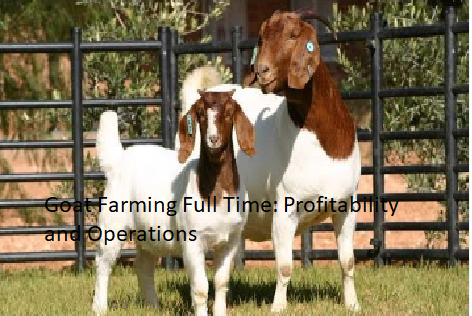
Transitioning to goat farming full time requires a shift from hobbyist management to rigorous business planning. While many start with a few animals for brush control or milk, turning this into a primary income stream demands a focus on scale, market access, and operational efficiency. Most producers find that profitability depends on diversifying revenue streams beyond simple meat or milk sales.
You can expect to need at least 50 to 100 breeding does to generate a consistent, full-time livelihood. At this scale, the operation moves from a supplemental activity to a professional enterprise.
Profitability is rarely found in selling raw commodities alone; instead, it comes from value-added products like artisan cheeses, specialized meat cuts, or high-quality breeding stock. You must analyze your local market to determine which product category offers the highest return on investment for your specific region.
Financial Requirements and Initial Capital
Entering the industry as a primary career requires a significant upfront investment in infrastructure. You will need to budget for sturdy fencing, secure housing, and medical equipment before purchasing your first herd. The cost of high-tensile, predator-proof fencing alone can range from $2,000 to $5,000 per acre depending on the terrain.
Operating expenses are equally important to calculate before jumping in. You must account for feed, veterinary care, mineral supplements, and labor.
A common mistake is underestimating the cost of quality hay during winter months. If you lack sufficient pasture, your feed bill will be your largest monthly expense, often consuming 40% to 60% of your gross revenue.
Land Management and Carrying Capacity
The amount of land you need depends entirely on your management style and local climate. In lush, high-rainfall areas, you might support 6 to 10 goats per acre using intensive rotational grazing. In arid regions, that number drops significantly, sometimes requiring 5 to 10 acres per animal.
Rotational grazing is the backbone of sustainable, long-term production. By moving your herd through small paddocks every few days, you break the parasite cycle and allow forage to recover.
This practice increases the productivity of your land without needing expensive synthetic fertilizers. You should invest in portable electric netting to make these frequent moves feasible for a single operator.
Revenue Streams for Full-Time Operations
Successful farmers rarely rely on a single source of income. Diversification protects the business from market volatility and seasonal fluctuations. You should map out a strategy that leverages the unique aspects of your herd.
* Meat production: Selling wethers for ethnic markets or high-end restaurants.
* Dairy sales: Processing raw milk into cheese, yogurt, or soap.
* Breeding stock: Selling registered, healthy animals to other farmers.
* Agritourism: Offering farm tours or goat yoga sessions to the public.
* Vegetation management: Renting your herd out for targeted weed and brush control.
Comparing Production Models
Choosing between a dairy focus and a meat focus changes your daily schedule and infrastructure needs entirely. Dairy operations require twice-daily milking, which ties you to the farm seven days a week. Meat operations are less labor-intensive but often require longer periods to reach market weight.
| Factor | Dairy Operation | Meat Operation |
|---|---|---|
| Labor Intensity | High (Daily milking) | Moderate (Routine checks) |
| Infrastructure | Milking parlor, cooling | Fencing, handling chutes |
| Market Cycle | Continuous, year-round | Seasonal, batch-based |
| Processing | Requires food safety license | USDA inspected facility |
Health and Herd Management
Health management is the most critical technical skill for a full-time producer. Parasite resistance is a growing problem, particularly with Haemonchus contortus, or the barber pole worm.
You must learn to perform FAMACHA scoring to identify which animals need treatment and which are naturally resilient. Over-reliance on dewormers will lead to resistance, which can devastate a herd in a single season.
Consulting with a local veterinarian who specializes in small ruminants is essential. You need a proactive vaccination program that covers common local diseases like caseous lymphadenitis and enterotoxemia.
Keep detailed records for every animal, noting birth dates, health treatments, and growth rates. Good data allows you to make informed decisions about which animals to cull and which to keep for breeding stock.
Marketing and Sales Strategy
You cannot be a successful farmer if you are not also a successful marketer. Direct-to-consumer sales generally offer the highest profit margins compared to selling at a livestock auction. Building a brand around your farm’s practices—such as pasture-raised, organic, or heritage breeds—can justify a premium price.
Social media and local farmers’ markets are powerful tools for small-scale agriculture. Use these platforms to tell the story of your farm and educate customers on the benefits of goat products.
Transparency builds trust, and trust leads to repeat customers who are willing to pay for quality. Check the USDA Agricultural Marketing Service for data on national trends and price reporting to better understand market cycles.
Legal and Zoning Considerations
Before scaling up, you must verify local zoning laws and agricultural regulations. Some jurisdictions have strict limits on the number of livestock allowed on a property, especially in peri-urban areas. You may need to obtain specific permits for manure management or on-farm processing facilities.
If you plan to sell dairy products, the regulations are often rigorous. State departments of agriculture frequently require separate facilities for milk handling that meet Grade A standards.
Research these requirements early in your planning phase to avoid expensive retrofits later. Ignoring legal compliance can result in fines that jeopardize the entire business.
Infrastructure and Equipment Needs
A full-time farm requires equipment that minimizes manual labor. A well-designed handling system, including a squeeze chute and sorting pens, is vital for safe vaccinations and hoof trimming. Do not attempt to manage 100 goats without proper restraint equipment.
Water infrastructure is another area where you should not cut corners. Automatic waterers save hours of labor and ensure that your herd always has access to clean, fresh water.
In cold climates, consider heated troughs to prevent freezing. Reliable water access is the single most important factor for maintaining milk production and animal weight gain.
FAQ: Common Questions
Is goat farming profitable as a full-time business?
Profitability is achievable but requires scale and a focus on high-value products. It is rarely profitable to sell raw commodities at bulk prices; successful farmers typically process their own products or sell directly to consumers to capture the full retail margin.
How many goats can one person manage alone?
A single dedicated person can typically manage a herd of 100 to 150 goats if the infrastructure is efficient and the grazing system is well-designed. Beyond that number, the labor required for kidding, milking, and medical care usually necessitates hiring part-time or seasonal help.
What is the biggest challenge for beginners?
Parasite management is consistently cited as the primary challenge for new producers. Failing to implement a rigorous rotational grazing plan or ignoring the signs of internal parasite load will lead to poor animal performance and high veterinary costs.
How much does it cost to feed a goat per month?
Feed costs vary wildly based on the availability of quality pasture. If you are entirely dependent on purchased hay and grain, you might spend $20 to $40 per month per doe, but this can be reduced to almost zero during the peak growing season if you have access to productive, managed forage.
Do I need a large amount of land?
You do not necessarily need hundreds of acres, but you do need well-managed land. Intensive rotational grazing allows you to support a surprisingly large herd on a small parcel of land, provided you are willing to move the herd frequently and invest in portable fencing.
Building a Sustainable Future
Achieving success with goat farming full time is a process of constant learning and adaptation. You must be prepared to adjust your herd size, change your product offerings, and improve your infrastructure as the market evolves. Focus on building a resilient herd that thrives on your specific land and meets the demands of your local community.
The most successful producers are those who treat their farm as a business first. Keep your overhead low, stay disciplined with your health protocols, and never stop looking for ways to add value to your products.
With consistent effort and a clear plan, you can turn a passion for livestock into a viable and rewarding career. Start small, refine your systems, and grow your herd only when your management practices are fully optimized.
