

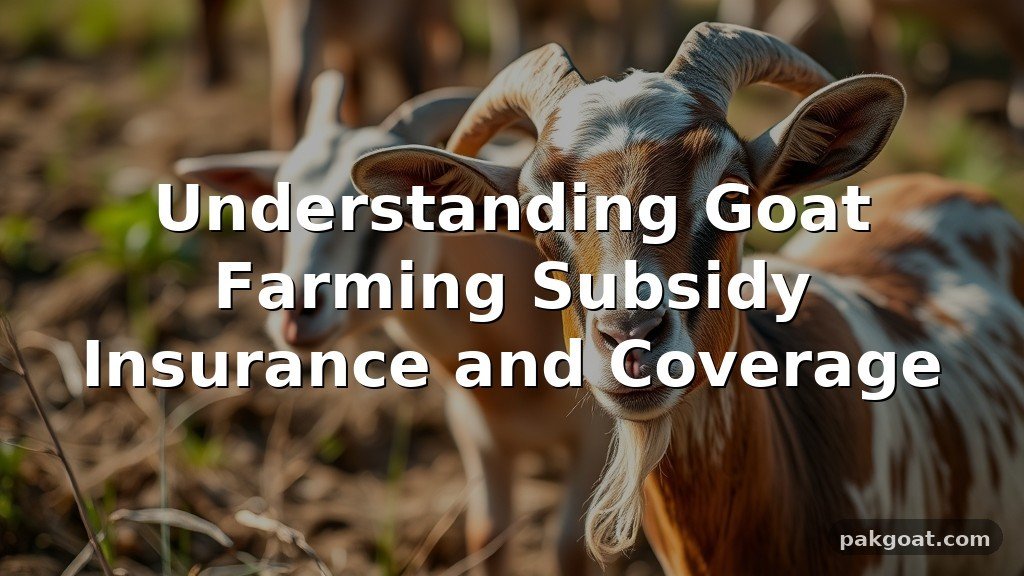
Navigating the financial complexities of goat farming subsidy insurance and coverage is essential for any producer looking to build a resilient agricultural business. By securing the right protections and leveraging available government support, farmers can mitigate the inherent risks associated with livestock management. This guide breaks down the specific financial tools and protective measures you need to stabilize your operations against market volatility and biological threats.
Financial Protection and Government Support
The most direct answer regarding financial support is that while direct “goat farming” subsidies are rare, producers often qualify for broader livestock assistance programs. Under the United States Department of Agriculture, you can access the Livestock Indemnity Program (LIP) for losses caused by adverse weather or predator attacks. These payments cover up to 75% of the market value of the livestock lost.
Most small-scale goat operations do not receive a flat-rate subsidy check simply for existing. Instead, you must participate in specific cost-share programs that reimburse you for infrastructure improvements like fencing or water systems. These programs are often administered through the Natural Resources Conservation Service (NRCS) via the Environmental Quality Incentives Program.
Livestock Insurance Options
Securing adequate coverage for your herd requires moving beyond basic property insurance. Most commercial insurers offer livestock mortality policies that protect your investment against death resulting from illness, accidents, or fire. These policies are typically priced as a percentage of the animal’s total declared value.
You should expect to pay premiums ranging from 3% to 7% of the animal’s insured value annually. High-value breeding stock often commands higher premiums due to the increased financial risk associated with their replacement. Before signing a policy, ensure it covers specific disease outbreaks, as many standard plans exclude common goat ailments like scrapie or foot-and-mouth disease.
Key Risks Covered by Policies
Understanding what your policy excludes is just as important as knowing what it covers. Standard livestock coverage usually includes mortality from lightning, flood, and accidental shooting. However, death from natural causes or old age is almost never covered under basic policies.
Many farmers choose to bundle their coverage to reduce overall costs. By combining general farm liability with specific livestock mortality insurance, you can often negotiate a lower total premium. Always document the health of your herd with veterinary records, as insurance adjusters require proof of preventative care before approving claims.
Assessing Your Herd Value
Accurately valuing your goats is a prerequisite for any insurance contract. You must maintain a current inventory that reflects the market value of your specific breed and age profile. Using an outdated valuation will lead to under-insurance, meaning you won’t receive enough to replace your stock in an emergency.
| Goat Type | Average Market Value | Estimated Annual Insurance Cost |
|---|---|---|
| Commercial Meat Kids | $150 – $250 | $5 – $15 |
| Dairy Does (Mature) | $400 – $800 | $20 – $50 |
| Registered Breeding Bucks | $1,000+ | $60 – $120 |
Available Government Assistance Programs
Beyond private insurance, federal programs provide a safety net for significant disasters. The Livestock Forage Disaster Program (LFP) is particularly relevant for those dealing with drought conditions. This program provides compensation to eligible livestock producers who suffer grazing losses for covered livestock.
To qualify for these benefits, you must meet specific criteria regarding land ownership and grazing permits. You must also maintain accurate records of your forage acreage and the number of head grazing on that land during the disaster period. Failure to keep these records will result in the denial of your application, regardless of the severity of the drought.
Strategic Risk Management Steps
You can reduce your reliance on insurance by implementing proactive risk management on your farm. Installing predator-proof fencing is one of the most effective ways to lower your mortality rate and potentially qualify for lower insurance premiums. Many insurers offer a discount for farms that demonstrate a high standard of physical security.
Biosecurity is another critical factor that impacts your insurability. By maintaining a closed herd or strictly quarantining new animals, you minimize the risk of a catastrophic disease outbreak. Insurance companies view these management practices as indicators of a lower-risk operation, which can lead to more favorable policy terms.
Documenting Your Assets
Maintaining a rigorous record-keeping system is the backbone of successful goat farming subsidy insurance and coverage. Every animal should have an identification number, whether through ear tags, tattoos, or microchips. This allows you to track health history, breeding cycles, and individual value over time.
* Health Records: Document all vaccinations, worming schedules, and veterinary visits.
* Inventory Logs: Update your herd count monthly to reflect births, deaths, and sales.
* Financial Statements: Keep receipts for all feed, medicine, and infrastructure expenses.
* Disaster Logs: Record dates and severity of any weather events impacting your property.
The Role of Cooperatives
Joining a regional goat farming cooperative can provide access to group insurance rates that are otherwise unavailable to individual producers. Cooperatives often negotiate bulk coverage plans for their members, significantly reducing the cost per head. This collective bargaining power is a powerful tool for small-scale farmers.
These organizations also provide educational resources on how to navigate the complex application processes for government grants. By networking with other producers, you gain insights into which insurance providers have a track record of fair and timely claims processing. Do not underestimate the value of peer-to-peer knowledge in the agricultural sector.
Financial Planning for the Long Term
Incorporating insurance premiums into your annual operating budget is a sign of a professional operation. You should treat these costs as a fixed expense rather than an optional add-on. If your margins are too thin to cover basic insurance, you likely need to reassess your production efficiency or market strategy.
Consider setting aside a small emergency fund specifically for livestock replacement. This allows you to handle minor losses without filing an insurance claim, which keeps your future premiums low. Over time, this self-insurance buffer works in tandem with formal policies to create a robust financial safety net.
Evaluating Policy Terms and Conditions
Before signing a contract, read the fine print regarding “per occurrence” versus “aggregate” limits. An aggregate limit caps the total payout for the year, while a per-occurrence limit applies to each individual event. For a farm prone to recurring weather issues, a per-occurrence limit is generally more protective.
Check for “deductible” options that align with your cash flow. A higher deductible will lower your monthly premium, but it requires you to have more liquid cash available in the event of a claim. Choose a balance that allows you to remain solvent if a significant portion of your herd is lost.
Tax Implications of Insurance Payouts
Remember that insurance proceeds are often treated as taxable income. If you receive a payment for the loss of livestock, you may need to report it on your annual tax return. However, there are provisions for “involuntary conversion” that allow you to defer taxes if you use the money to purchase replacement livestock within a specific timeframe.
Consult with an accountant who specializes in agricultural tax law to understand your specific obligations. Mismanaging these funds can lead to unexpected tax bills that negate the benefit of the insurance payout. Proper planning ensures that the money you receive actually helps you recover and rebuild your business.
Conclusion
Securing goat farming subsidy insurance and coverage is a vital step in transforming your passion into a sustainable enterprise. By combining federal disaster programs with private mortality insurance, you create a financial foundation that can withstand unexpected shocks. Remember that your best defense is always proactive herd management, diligent record-keeping, and the strategic use of cooperative resources.
Start by assessing your current herd value and reaching out to local agricultural extension offices for information on regional programs. Taking these steps today ensures your farm remains resilient for years to come. Reach out to local insurance agents or your regional Farm Service Agency office to begin reviewing your specific coverage needs and building a more secure future for your operation.
