

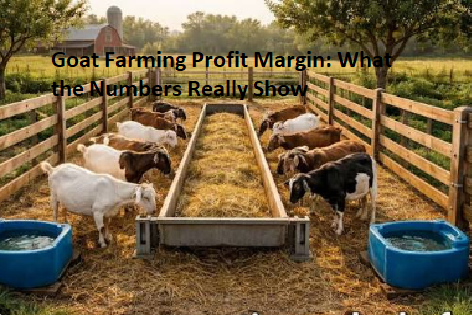
Understanding the goat farming profit margin is essential for anyone considering this venture as a primary source of income or a side business. While industry estimates vary significantly based on location, breed, and management style, a well-run commercial operation typically targets a net profit margin of 15% to 25% after accounting for all operating expenses.
Success depends less on the total number of animals and more on the efficiency of your feed conversion, veterinary care, and marketing channels. By analyzing your local market demand and keeping overhead costs low, you can build a sustainable business model that generates consistent returns.
Calculating your potential goat farming profit margin requires an honest look at your fixed and variable costs. New farmers often underestimate the initial capital needed for fencing, shelter, and high-quality breeding stock.
Once the infrastructure is in place, the daily expenses shift to feed, mineral supplements, and routine health maintenance. Profitability is rarely instantaneous; most operations require at least two to three years of steady growth before they see a significant return on investment.
Understanding the Financial Basics
The primary drivers of your profit margin are the cost of production and the final market price of your product. Whether you are raising goats for meat, dairy, or fiber, the “cost per head” must be tracked with precision.
Feed typically accounts for 60% to 70% of your total variable costs, making it the most critical variable to control. If you have access to high-quality pasture, you can significantly reduce your reliance on expensive commercial grain, which in turn boosts your bottom line.
Revenue streams are often diversified in successful operations to protect against market fluctuations. A meat goat farmer might sell weanlings at auction, while a dairy producer relies on a consistent supply of milk for cheese or soap production.
Diversification helps stabilize the goat farming profit margin during periods when one specific market segment might be underperforming. You must also account for labor costs, even if you are doing the work yourself, to understand the true value of your time.
Infrastructure and Setup Costs
Your initial investment in infrastructure sets the ceiling for your future efficiency. Proper fencing is the single most expensive startup cost, but it is also the most important for predator control and rotational grazing.
High-tensile woven wire fencing is the industry standard for keeping goats contained and safe from coyotes or stray dogs. While it requires a larger upfront investment, it prevents the massive losses associated with predation, which can wipe out an entire year’s profit in a single night.
Shelter requirements for goats are relatively modest compared to other livestock, provided they have a dry, draft-free area to escape the elements. You do not need expensive, climate-controlled barns, as goats are hardy animals that thrive in simple three-sided structures.
By repurposing existing farm buildings or using low-cost materials like corrugated metal and timber, you keep your capital expenditure low. Maintaining a low debt-to-asset ratio is the secret to a healthy long-term goat farming profit margin.
Managing Feed and Nutrition
Feed efficiency determines how quickly your animals reach market weight or peak lactation. Rotational grazing is the most effective way to maximize the nutritional value of your land while minimizing input costs.
By moving goats between small paddocks, you allow the forage to recover and prevent the spread of internal parasites, which are a major hidden cost in goat farming. When goats graze on diverse vegetation, they consume a wider array of nutrients, reducing the need for expensive mineral supplements.
Commercial grain should be used strategically rather than as a primary food source. Using high-protein grain to finish meat goats before sale can improve their carcass quality and fetch a higher price, but it must be balanced against the cost of the feed.
If the price of grain rises, you must be able to pivot back to forage-based systems to protect your margins. Many successful farmers use the United States Department of Agriculture (USDA) resources to monitor national forage trends and regional feed prices.
Health and Veterinary Expenses
Veterinary care is a recurring expense that can fluctuate wildly if you do not have a proactive management strategy. Developing a relationship with a local large-animal veterinarian is vital for emergency situations, but you should aim to handle routine tasks like hoof trimming and vaccinations yourself.
A good health program focuses on prevention, such as regular fecal egg counts to monitor parasite loads. Treating an animal for a preventable illness is far more expensive than maintaining a clean, dry environment that discourages disease.
Mortality rates are the silent killers of the goat farming profit margin. If you lose 10% of your kid crop every year, you are effectively giving away 10% of your potential revenue.
Proper nutrition, clean water, and timely vaccinations are the best tools for keeping your herd healthy and productive. Keep detailed records of every animal, noting their growth rates and any health issues, so you can cull unproductive or sickly animals from your herd quickly.
Market Segmentation and Pricing
The market you choose to enter will define your pricing power and your margins. Direct-to-consumer sales, such as selling meat directly to families or cheese to local restaurants, offer the highest profit margins because you capture the retail markup.
Auction houses are easier for volume sales, but they take a percentage of the sale price and leave you vulnerable to market-wide price dips. Building a brand based on quality or specific breed characteristics can help you command a premium price regardless of the broader market.
Seasonality plays a massive role in meat goat pricing, with demand often spiking during specific religious holidays. Planning your breeding cycle to align with these peaks can significantly increase your profit per head.
You must research the specific demand cycles in your region to ensure your goats are ready for sale when buyers are most active. A well-timed sale can sometimes net you 20% to 30% more than a sale made during a market lull.
Comparing Income Sources
Different types of goat farming yield very different financial outcomes. Dairy goats require a daily commitment and expensive milking equipment, but they provide a consistent, year-round cash flow.
Meat goats, on the other hand, allow for a more seasonal workflow with lower daily maintenance requirements. You should compare the potential revenue against the labor intensity of each model before deciding on your core focus.
| Production Type | Labor Intensity | Cash Flow Frequency | Relative Margin |
|---|---|---|---|
| Meat Goats | Low to Medium | Seasonal | Moderate |
| Dairy Goats | Very High | Daily | High |
| Fiber (Mohair/Cashmere) | Medium | Annual | Variable |
| Breeding Stock | High | Occasional | Very High |
Managing Labor and Scaling
Scaling a goat farm is not just about adding more animals; it is about increasing the number of animals one person can manage effectively. Automation in feeding and watering can save hundreds of hours per year, which is essentially “buying back” your own labor time.
As you grow, the complexity of managing herd genetics and health increases, requiring better record-keeping systems. You must decide if you want a lifestyle farm that breaks even or a commercial enterprise that pays a full-time salary.
If you choose to scale, you will eventually reach a point where hired labor is necessary. This shift changes your financial structure entirely, as you must now account for wages, payroll taxes, and insurance.
Many farmers find that the sweet spot is a size that allows for family management without the need for external employees. Before expanding, calculate if the marginal increase in profit justifies the exponential increase in management headaches and overhead.
Common Financial Pitfalls
Many new farmers fail because they treat their farm as a hobby rather than a business. Failing to track individual animal costs is the most common reason for a shrinking goat farming profit margin.
You must account for the cost of the buck, the cost of the doe’s maintenance, and the cost of the kid’s feed until it is sold. If you do not know exactly what it costs to produce a single pound of meat or a quart of milk, you cannot price your product for profit.
Another mistake is over-investing in machinery or fancy barns that do not directly contribute to animal performance. Goats do not care about the aesthetics of the barn; they care about cleanliness, ventilation, and access to food.
Spend your money on high-quality breeding stock that produces healthy, fast-growing kids. A superior genetic line will do more for your long-term profitability than any amount of expensive equipment ever could.
Frequently Asked Questions
How many goats do I need to make a profit?
Profitability is not tied to a specific number of animals, but rather to your cost structure and market access. Some small-scale farmers with 20 high-quality dairy goats make more profit than those with 100 meat goats on poor-quality pasture. You should start with a small herd to test your management skills before scaling up to a commercial level.
Is goat farming profitable in the USA?
Yes, it can be highly profitable for farmers who focus on niche markets like ethnic meat demand or artisanal dairy products. The key is to avoid competing directly with large-scale commodity producers who rely on massive economies of scale. Focus on local, high-quality, or specialty products to maintain a healthy goat farming profit margin.
What is the biggest expense in goat farming?
Feed is consistently the largest variable expense, often representing over half of your total operating costs. If you can master rotational grazing and pasture management, you can drastically reduce this expense. Minimizing the need for purchased grain or hay is the most effective way to improve your overall profitability.
How do I calculate the return on investment for my goats?
To calculate your return, subtract your total operating expenses—including feed, vet bills, and infrastructure depreciation—from your total annual revenue. Divide this figure by your total invested capital to get a percentage return. Tracking this annually will tell you if your goat farming profit margin is trending in the right direction.
Is it better to sell at auction or direct to consumer?
Direct-to-consumer sales almost always offer better margins because you eliminate the middleman and capture the retail price. Auctions are convenient for moving large numbers of animals quickly, but they rarely provide the highest price per head. If you have the time to build a local customer base, direct sales are superior for profitability.
Final Thoughts
The potential for a healthy goat farming profit margin is real, but it requires a disciplined approach to both animal husbandry and business management. You must treat every dollar spent as an investment that needs to generate a return, whether through weight gain, milk production, or animal sales. By focusing on low-input systems like rotational grazing and keeping your infrastructure costs under control, you create a buffer against market volatility.
Success in this industry is rarely about luck; it is about the consistent application of sound management principles. Keep your records detailed, your herd healthy, and your eyes on the local market trends.
As you refine your processes and find your niche, you will find that the margins become more predictable and sustainable. Start small, learn the nuances of your chosen breed, and steadily build your operation to ensure long-term viability in the goat farming sector.
