

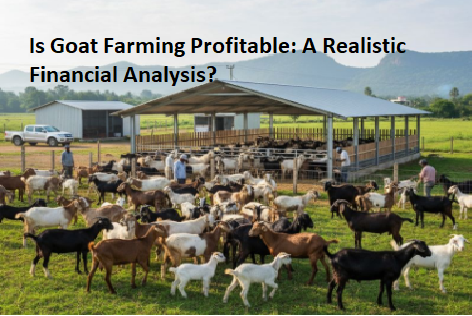
Determining whether is goat farming profitable depends entirely on your production model, local market access, and operational efficiency. While many small-scale producers find it challenging to generate a full-time living from just a few animals, commercial operations often see consistent returns by focusing on high-demand niches. Understanding the real-world economics of livestock management is the first step toward building a sustainable venture.
Whether you are looking at meat, dairy, or fiber production, the financial reality requires careful planning and a clear understanding of your overhead costs versus your projected revenue streams.
The Profitability Reality Check
For most beginners, the answer to whether is goat farming profitable is a qualified “yes,” provided you manage your input costs with extreme discipline. You should not expect to become wealthy from a small herd of ten goats, as the labor-to-income ratio is often unfavorable at that scale.
Profitability typically begins to stabilize when you move from a hobby-farm setup to a commercial scale of at least 50 to 100 breeding does. At this level, you can achieve economies of scale regarding feed, veterinary supplies, and equipment usage.
Most successful operations generate revenue through multiple channels rather than relying on a single product. For example, a farm that sells meat goats might also sell manure as fertilizer and offer agritourism experiences during kidding season. Diversification acts as a safety net against market volatility in any one specific sector.
If the price of goat meat drops, the income from dairy or breeding stock sales can help keep the operation afloat.
Understanding the Cost Structure
Calculating if is goat farming profitable requires an honest audit of your fixed and variable expenses. Your biggest ongoing cost will almost certainly be supplemental feed, especially during winter months or when pasture quality declines.
High-quality hay, alfalfa, and grain mixes can quickly consume your profit margins if you are not careful. You must also account for veterinary bills, which can be significant if you do not have the skills to perform basic health checks and hoof trimming yourself.
Infrastructure costs also represent a substantial initial barrier to entry. You need secure fencing that can withstand the inquisitive and sometimes destructive nature of goats. A basic perimeter fence can cost anywhere from $2,000 to $5,000 per acre depending on the materials used, such as woven wire or high-tensile electric fencing.
You also need shelter space, which must remain dry and draft-free to prevent respiratory issues in your herd.
Revenue Streams and Market Access
To determine if is goat farming profitable for your specific location, you must look at your local market demand. Meat goats, particularly breeds like the Boer, are highly sought after by ethnic markets that observe specific holidays requiring goat meat.
These markets often pay a premium for animals that meet specific weight and age criteria. You should research local auction houses and private buyers before you purchase your first goat to ensure you have a viable sales channel.
Dairy production offers a different set of financial opportunities and challenges. Selling raw or pasteurized goat milk, or processing it into cheese, requires significantly more investment in milking parlors and food safety compliance.
However, the value-added potential of goat cheese is much higher than the per-pound price of meat. You must check your state’s regulations regarding the sale of dairy products, as these laws vary wildly across the United States.
| Revenue Source | Market Stability | Profit Margin Potential |
|---|---|---|
| Meat Kids | High | Moderate |
| Breeding Stock | Medium | High |
| Raw Milk | Low | Low |
| Artisan Cheese | High | Very High |
The Importance of Herd Management
The health of your herd is directly tied to your bottom line. Parasite management, particularly the control of barber pole worms, is a constant battle that can lead to significant losses if ignored. You need a robust deworming protocol and a strategy for rotational grazing to prevent pasture contamination. Using tools like the USDA Animal and Plant Health Inspection Service guidelines can provide you with science-backed information on disease prevention.
Reproductive efficiency is another critical factor in determining if is goat farming profitable. Does that fail to conceive or produce only single kids significantly drag down your annual revenue. You should cull animals that consistently underperform in terms of growth rates or fertility.
Maintaining detailed records of breeding cycles, kidding dates, and weaning weights allows you to identify your most productive lines.
Scaling and Operational Efficiency
Once you have mastered the basics, scaling your herd is the most common way to increase absolute profit. However, scaling too quickly can be a recipe for disaster if your management skills do not grow alongside your animal count.
You should aim to increase your herd size gradually, perhaps by keeping your best-performing doelings each year instead of buying expensive replacement stock. This strategy keeps your capital investment low and ensures your animals are already adapted to your local climate and forage.
Operational efficiency also means minimizing waste. If you are buying hay, you need to ensure it is stored properly to prevent rot and mold. Feeding goats on the ground is a major source of waste, as they will trample and soil a significant portion of their daily ration.
Investing in elevated hay feeders can pay for itself within a single season by reducing feed loss by as much as 20 percent.
Essential Equipment and Labor
Labor is often the hidden cost that makes people question if is goat farming profitable. Goats require daily attention, including feeding, watering, and monitoring for signs of illness.
If you have to pay for labor, your profit margins will shrink rapidly unless you have a high-value product. Many successful farmers view their own labor as an investment rather than an expense, at least in the early years of the operation.
* Secure Fencing: Essential for predator control and pasture management.
* Mineral Feeders: Goats require specific mineral supplementation to thrive.
* Hoof Trimmers: Regular maintenance is necessary to prevent foot rot.
* Medical Kit: Basic supplies like needles, syringes, and electrolytes.
* Weigh Scales: Necessary for tracking growth and determining market readiness.
Managing Financial Risk
Agriculture is inherently risky, and goat farming is no exception. Drought can destroy your pasture, leading to a massive increase in feed costs. Disease outbreaks can wipe out a significant portion of your herd in a matter of weeks.
You must maintain a financial cushion to survive these inevitable lean periods. Diversification into other farm products or off-farm income is a common strategy for farmers who want to remain profitable during market downturns.
Insurance is another often-overlooked aspect of the business. While traditional livestock insurance can be expensive, liability insurance is essential if you have people visiting your farm for tours or sales. You should also consider the cost of disaster recovery.
Having a backup water supply and an emergency generator can prevent a catastrophic loss during a power outage or a severe storm.
Common Pitfalls for New Farmers
Many new farmers fail because they focus on the “glamour” of raising animals rather than the business side of the operation. They buy expensive, pedigree-registered animals without having a market for the high-end breeding stock they intend to produce.
They also fail to budget for the inevitable reality of mortality. Even with the best care, you will lose kids, and sometimes you will lose adults.
Another common mistake is underestimating the cost of land. If you do not own your land, the rent payments can make it nearly impossible to turn a profit. You need to maximize the productivity of every acre you have.
Intensive rotational grazing, where you move goats frequently between small paddocks, can double the carrying capacity of your land compared to letting them roam over a large, unmanaged pasture.
Frequently Asked Questions
How many goats do I need to start a profitable farm?
You generally need at least 50 breeding does to move from a hobby to a commercial operation. This scale allows you to amortize the costs of equipment and bulk feed purchases over a larger number of animals.
What is the most profitable goat breed to raise?
The most profitable breed depends entirely on your goal. Boer goats are the gold standard for meat production, while Nubian or Alpine goats are generally preferred for dairy operations due to their high milk volume and butterfat content.
How much land is required for 100 goats?
The amount of land depends on your climate and the quality of your forage. In a productive, well-managed system, you might be able to keep 10 to 15 goats per acre, but you should expect to provide supplemental hay for much of the year.
What are the biggest expenses in goat farming?
Supplemental feed and hay are typically the largest variable costs. Infrastructure, such as high-quality fencing and shelter, represents the largest initial fixed cost.
Is goat meat in high demand in the US?
Yes, the demand for goat meat in the United States continues to grow, driven largely by shifting demographics and an increasing consumer interest in lean, healthy protein sources. The market is strongest during specific religious holidays.
Conclusion
Evaluating if is goat farming profitable ultimately comes down to your ability to treat the farm as a business rather than a collection of pets. You must be willing to make hard decisions about culling, marketing, and cost management. While it is certainly possible to make money in this industry, it requires a significant investment of time, capital, and emotional resilience.
If you are ready to move forward, start by identifying your target market and calculating your expected costs on a per-head basis. Connect with local livestock associations to learn from experienced producers in your area, as they can provide invaluable insights into the specific challenges of your climate and region. With a solid plan and a focus on efficiency, you can build a sustainable and rewarding operation.
