

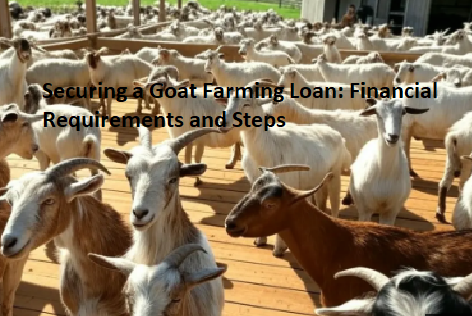
Securing a goat farming loan requires a clear understanding of agricultural financing, as lenders prioritize business viability over simple enthusiasm for livestock. Whether you are expanding an existing herd or launching a new operation, your ability to document projected cash flow and collateral will determine your eligibility. By preparing a professional business plan and aligning your goals with institutional standards, you can significantly improve your chances of approval.
This article explores the specific financial mechanisms, documentation requirements, and strategic steps necessary to obtain funding for your agricultural business. Understanding these core elements ensures you approach lenders with a realistic outlook on the capital needed for equipment, land, and livestock procurement.
Understanding Loan Amounts and Borrowing Capacity
The amount you can secure for a goat farming loan depends primarily on your existing assets, credit history, and the scale of your intended operation. Most agricultural lenders do not offer a flat-rate “goat loan” but rather provide general farm operating or ownership loans that can be applied to livestock.
For small-scale, entry-level operations, borrowers often seek between $10,000 and $50,000 to cover initial fencing, shelter, and breeding stock. Larger commercial enterprises looking to scale to 100 or more goats may require capital in the $150,000 to $500,000 range for land acquisition and infrastructure.
Your borrowing capacity is calculated through a debt-to-income analysis that looks at your farm’s projected net profit. Lenders typically look for a debt service coverage ratio of at least 1.25, meaning your farm must generate $1.25 for every $1.00 of debt payment.
If you are a new farmer, lenders will often require you to show personal income streams or off-farm employment to bridge the gap during the initial growth years. It is rare for a startup to be fully funded by farm revenue alone in its first 24 months of operation.
The Role of Government-Backed Financing
Government programs often provide the most accessible paths for those seeking a goat farming loan, particularly through the Farm Service Agency (FSA). These agencies offer direct loans and guaranteed loans, which minimize the risk for private commercial banks by backing a portion of the debt.
Direct farm ownership loans can cover up to 100 percent of the purchase price of a farm, provided you meet specific experience requirements. To qualify, you generally need at least three years of experience in managing or operating a farm, though this can sometimes be met through educational credits or apprenticeship.
Guaranteed loans function differently, as they are issued by local commercial banks but backed by the government. This structure allows farmers who might not meet strict traditional lending criteria to access capital at competitive interest rates.
These loans are specifically designed to support beginning farmers and socially disadvantaged groups, providing a vital safety net for those entering the industry. You should consult with your local county office to determine which specific programs are currently accepting applications in your region.
Key Documentation Requirements
Lenders require a comprehensive business plan that details how you intend to turn a profit with your goats. This document should include a three-year financial projection, a marketing strategy, and a clear breakdown of your operational costs.
You must list your expected income sources, such as milk production, meat sales, or breeding stock, and justify these figures with current market research. If you lack a formal history of farming, include letters of recommendation or certifications from agricultural workshops to demonstrate your technical competence.
You will also need to provide personal and business financial statements, including tax returns for the past three years. Expect the lender to request a detailed inventory of your current assets, including any land, machinery, or livestock you already own.
A clear balance sheet that separates your personal finances from your farm’s business finances is essential for professional credibility. If you are seeking a loan for land, a formal appraisal and a purchase agreement will be among the first documents requested during the underwriting process.
Land Requirements for Goat Herds
Calculating the necessary land for your operation is a critical part of your loan application, as it dictates the size of your capital request. A common rule of thumb is that you can support 5 to 10 meat goats per acre, depending on the quality of the forage and your use of rotational grazing.
If you intend to rely on supplemental feed, you can increase your stocking density, but this will significantly raise your variable operational costs. Lenders will examine your land usage plans to ensure you are not overgrazing, which is a major risk factor for agricultural business failures.
You must also account for infrastructure beyond just the pasture, such as barns, milking parlors, and secure fencing. High-tensile woven wire fencing is the industry standard for goats and represents a significant initial capital investment.
When presenting your budget, be sure to include costs for water systems, waste management, and predator control measures like guard dogs or electric netting. Providing a detailed map of your property, including planned paddock rotations, shows the lender that you have a practical, long-term approach to resource management.
Comparing Traditional and Specialized Financing
Choosing the right type of lender can be the difference between approval and rejection, as some institutions are better equipped to handle agricultural risk. Commercial banks are often more conservative and may require more substantial collateral than government-backed lenders.
Farm Credit System associations, however, are specifically designed to support rural businesses and may offer more flexible terms for livestock-based operations. The following table provides a general comparison of common funding avenues for goat farming.
| Lender Type | Risk Appetite | Interest Rate Range | Best For |
|---|---|---|---|
| Commercial Banks | Low | 5.0% – 9.0% | Established farms with strong credit |
| FSA/Government | Moderate | 3.5% – 6.0% | Beginning farmers, startups |
| Farm Credit Co-ops | Moderate | 4.5% – 7.5% | Mid-sized expansions, land purchase |
| Private Micro-loans | High | 8.0% – 15.0% | Equipment upgrades, small herd growth |
Managing Operational Risks
Lenders will scrutinize your plan for managing the inherent risks of livestock farming before they approve a goat farming loan. You must demonstrate that you have a contingency plan for disease outbreaks, market price fluctuations, and severe weather events.
Including a section on biosecurity and herd health management in your application shows that you are proactive rather than reactive. Having a relationship with a local veterinarian who can vouch for your husbandry practices can also strengthen your case.
Market volatility is another concern, especially for those selling goat meat or dairy products. Diversifying your income streams is an effective way to mitigate this risk, as it ensures that a downturn in one sector does not bankrupt the entire operation.
You might consider selling fiber, manure, or breeding stock alongside your primary product to create multiple revenue channels. Lenders appreciate seeing a business that is resilient enough to handle seasonal shifts in demand and pricing.
Essential Steps for Loan Approval
Getting approved requires more than just filling out forms; it requires building a professional relationship with a loan officer. Start by gathering all your personal financial documents and identifying the specific costs associated with your herd setup.
Attend a workshop on agricultural business planning, as many lenders offer preferential treatment to those who have completed formal training programs. Once you have a polished business plan, set up a preliminary meeting with a lender to discuss your goals before submitting a formal application.
- Prepare a clean, detailed balance sheet showing all assets and liabilities.
- Draft a 3-year cash flow projection based on realistic market pricing for goat products.
- Secure a reliable buyer or contract for your meat or milk before applying.
- Invest in basic infrastructure like fencing and shelter to prove operational readiness.
- Maintain a high credit score to secure the most favorable interest rates.
- Join a local agricultural cooperative or association for networking and resource access.
Frequently Asked Questions
Can I get a loan for a goat farm if I have no experience?
Most lenders, especially the FSA, require some level of experience to qualify for a farm ownership loan. If you lack direct experience, you can often substitute it with educational courses, internships, or a mentor program that documents your training. Lenders want to see that you understand the daily realities of animal husbandry and farm management before they commit capital.
How long does it typically take to get a goat farming loan?
The timeline varies significantly depending on the lender and the complexity of your application. Government-backed loans often take longer due to administrative reviews, sometimes ranging from 3 to 6 months. Commercial bank loans can be faster, sometimes closing within 30 to 60 days if your documentation is complete and your credit profile is strong.
Do I need to own the land to get a loan for goats?
You do not necessarily need to own land to get a loan, as operating loans can be used to lease land or purchase livestock and equipment for an existing farm. However, owning your land provides more collateral, which makes it significantly easier to secure larger loans. If you are leasing, lenders will require a long-term lease agreement that proves you have secure access to the property for the duration of the loan.
What is the most common reason for loan rejection?
The most frequent reason for rejection is a lack of a clear, realistic business plan that demonstrates how the farm will generate enough profit to repay the debt. Lenders also frequently reject applications where the borrower has insufficient collateral or a poor credit history. Ensuring your financial projections are grounded in actual market data is the best way to avoid these common pitfalls.
Building Your Future in Agriculture
Securing a goat farming loan is a significant milestone that requires careful planning, transparent financial reporting, and a commitment to operational excellence. By focusing on the specific requirements of lenders and demonstrating your ability to manage both the livestock and the business side of the farm, you create a foundation for long-term success. Remember that every successful farm began with a clear strategy for growth and a realistic assessment of the resources required to reach that goal.
As you move forward, focus on refining your business plan, strengthening your credit, and building the professional relationships necessary to sustain your operation for years to come. With the right preparation, you can secure the necessary funding to turn your vision for a profitable farm into a reality.
