

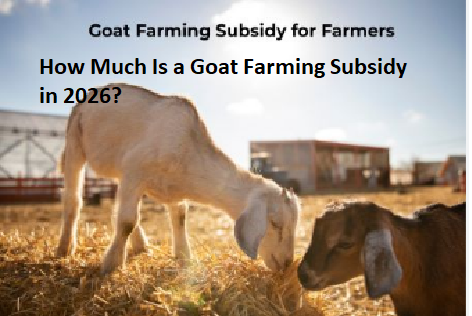
Securing a goat farming subsidy can significantly reduce the initial capital burden for new livestock producers. These financial incentives are typically administered through state or national agricultural departments to encourage meat and dairy production. Understanding the specific eligibility criteria and funding caps is essential before you commit to purchasing land or breeding stock.
Government support for goat farming is generally structured as a percentage-based reimbursement or a fixed grant per animal unit. In many regions, applicants can expect to receive between 25% and 50% of the total project cost as a subsidy, depending on their socio-economic category.
For instance, farmers in specific disadvantaged groups or those operating in designated “backward” districts often qualify for the higher end of that spectrum. You should verify your local district’s specific budget allocation, as these funds are frequently released in limited annual tranches.
Understanding Eligibility Requirements
Most programs require that you own or lease a minimum amount of land before you can apply for financial aid. You will typically need to demonstrate that you have access to at least 0.5 to 1 acre of grazing land per 20 goats to satisfy environmental and welfare standards. Documentation such as land titles, lease agreements, or tax records must be submitted alongside your application.
Age and residency status are also critical factors for approval. Most government schemes target individuals between the ages of 18 and 60 who are permanent residents of the region where the farm is located.
You will likely need to provide a government-issued photo ID and proof of residence to confirm your eligibility. Some states prioritize applicants who have completed a short-term training course in animal husbandry or basic veterinary care.
Financial Breakdown of Typical Support
The amount of money you receive is directly tied to the scale of your operation. Small-scale farmers starting with 10 to 20 animals often face different subsidy thresholds than commercial operations managing 100 or more goats. The following table provides a general estimate of how funding is often tiered by herd size.
| Herd Size | Estimated Total Investment | Typical Subsidy Percentage |
|---|---|---|
| 10 Goats | $3,000 – $5,000 | 30% – 50% |
| 50 Goats | $15,000 – $22,000 | 25% – 40% |
| 100 Goats | $30,000 – $45,000 | 20% – 35% |
These figures are estimates based on standard equipment and animal costs. Your actual return will depend on local market fluctuations and the specific requirements of your regional agricultural board. Always consult the USDA Farm Service Agency or your local equivalent for official regional guidance on livestock support programs.
Application Documentation Necessary for Approval
A successful application relies on the completeness of your paperwork. Authorities require a detailed project report that outlines your business model, expected annual production, and your plan for marketing your meat or milk. This document acts as your formal proposal to the government for the requested funds.
You must also include a technical feasibility study that covers your housing facilities and feed management plans. Officials want to see that you have considered the long-term sustainability of the herd, including veterinary access and waste disposal. You will typically need to submit the following items in your application package:
-
- Proof of land ownership or a signed long-term lease agreement
-
- A detailed project report including cost estimates for infrastructure
-
- A copy of your animal husbandry or livestock training certification
-
- Bank account details for direct fund transfers
-
- A clean credit report showing no history of defaulting on agricultural loans
Infrastructure and Feed Cost Considerations
A large portion of the capital required for a new farm goes toward building secure, weather-proof housing. Goats are susceptible to respiratory issues if their living quarters are damp or poorly ventilated. When applying for a subsidy, ensure your budget reflects the cost of elevated flooring and proper drainage systems.
Feed management is another major operational expense that influences your profit margins. You must prove to the authorities that you have a plan for sustainable forage production or a reliable supply chain for concentrate feed.
Many subsidies are contingent on the farmer maintaining a specific ratio of pasture grazing to supplemental feeding. If you fail to meet these management standards during periodic inspections, you may be disqualified from receiving future disbursements.
The Role of Training and Certification
Many regional governments now mandate that applicants undergo a mandatory training program before they are eligible for a grant. These courses cover essentials like disease prevention, breeding cycles, and record-keeping practices. Participating in these programs shows the authorities that you are a serious operator who is unlikely to mismanage the provided funds.
Certification from a recognized agricultural university or veterinary college adds significant weight to your application. It proves you understand the biological needs of your herd, which reduces the risk to the government’s investment.
In some districts, having a certificate can prioritize your application in the queue, allowing you to access funds before other, untrained applicants. Keep your certificates current, as many programs require proof of training completed within the last three years.
Managing Periodic Inspections
Receiving a subsidy is not a one-time event; it is an ongoing engagement with local authorities. Once your project is approved and the first portion of the funds is released, you should expect regular site visits from agricultural officers. They will check to ensure that the animals you purchased match the number stated in your project report.
These inspectors also evaluate the health of your herd and the condition of your facilities. If they find that you have neglected the goats or allowed the infrastructure to deteriorate, they have the legal authority to withhold remaining payments.
Maintaining meticulous records of your daily activities is the best way to prepare for these visits. Keep a logbook detailing vaccinations, feed consumption, and mortality rates, as this data is often requested during audit inspections.
Common Reasons for Application Rejection
Many farmers lose out on funding simply because their paperwork is incomplete or technically inaccurate. If your project report contains unrealistic estimates—such as claiming an impossibly high milk yield—it will likely be flagged. Always base your numbers on local market averages rather than best-case scenarios.
Another common pitfall is failing to secure the necessary environmental permits before applying. If your farm is located near a protected water source or in a residential zone, you might be ineligible regardless of your business plan.
Verify local zoning laws with your city or county clerk’s office before you submit your application. If you have any outstanding tax debts or existing legal disputes regarding land, your application is almost certain to be denied during the background check phase.
FAQ: Common Questions About Livestock Funding
Can I get a tax break instead of a direct cash subsidy?
Many jurisdictions offer tax incentives for agricultural operations, such as exemptions on property taxes for land used exclusively for farming. These are often managed separately from direct livestock grants, so you should consult with a tax professional to see if you can claim both.
Does the size of my herd affect the amount of money I get?
Yes, most subsidies are calculated on a per-animal or per-unit basis, with a maximum cap set by the state. Larger operations often qualify for higher absolute amounts, but they may face stricter oversight and more complex reporting requirements than small-scale hobby farms.
How long does the application process usually take?
The timeframe varies significantly by region, but you should generally expect a waiting period of three to six months. Delays often occur if the government’s annual budget for agricultural development has already been exhausted, requiring you to wait for the next fiscal cycle.
Can I apply for multiple grants at once?
Most government programs have strict anti-duplication clauses to prevent farmers from “double-dipping.” You must disclose all other sources of funding in your application, and concealing other grants can lead to your disqualification and potential legal penalties.
What happens if my goats die shortly after purchase?
If the losses are due to disease outbreaks, you may be covered by livestock insurance, which is often a required component of your subsidy agreement. However, if the death is attributed to negligence or poor housing, you will likely be held responsible and may lose your eligibility for future funding.
Moving Forward with Your Livestock Investment
Securing a goat farming subsidy requires diligence, accurate planning, and a clear understanding of your local government’s specific requirements. By preparing your documentation thoroughly and ensuring your farm meets all welfare and environmental standards, you significantly increase your chances of success. Treat the application process as a professional project, focusing on transparency and long-term viability rather than short-term gains.
Once your funding is secured, prioritize the health and productivity of your herd to ensure you remain in good standing for future support. Keep your records organized, stay current with local agricultural news, and never hesitate to reach out to extension agents for guidance on improving your farm’s efficiency. With the right approach, you can build a sustainable and profitable operation that benefits from government support for years to come.
