

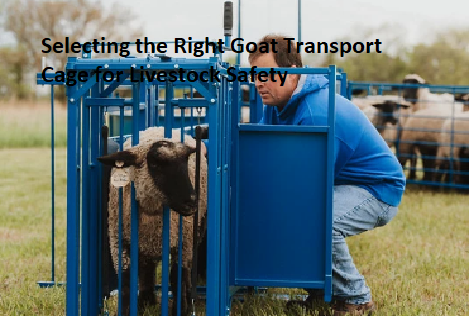
Choosing the right goat transport cage is a critical decision for small-scale farmers and commercial livestock producers alike. Providing a secure, stress-free environment during transit ensures the health of your animals and compliance with animal welfare standards. Understanding the specific requirements for ventilation, space, and structural integrity will help you avoid common transit injuries.
By selecting equipment designed for the unique physiology of goats, you can streamline your operations and maintain high animal welfare benchmarks. This guide explores the essential features, material choices, and safety protocols necessary for moving your livestock efficiently while prioritizing their long-term well-being and security.
Essential Features of a Secure Goat Transport Cage
The primary function of any goat transport cage is to provide a contained, stable environment that minimizes movement-related stress. A properly designed unit must feature solid flooring to prevent hoof injuries, as wire or mesh floors can lead to broken legs or significant discomfort during long hauls.
You should prioritize units that offer high-sided walls to prevent animals from attempting to jump out. These walls must be solid enough to block external visual stimuli, which helps keep the goats calm by reducing the distraction of passing scenery.
Ventilation is perhaps the most critical technical specification for any livestock enclosure. Goats are susceptible to heat stress, especially in poorly ventilated, enclosed trailers or truck beds. Your cage must feature integrated airflow slats or mesh windows positioned above the animal’s shoulder height to ensure fresh air circulation without creating a direct, chilling draft.
Always verify that the locking mechanisms are escape-proof. Goats are notorious for their intelligence and ability to manipulate latches; therefore, spring-loaded bolts or secondary safety pins are highly recommended.
Material Considerations for Durability and Hygiene
When choosing between materials for your goat transport cage, weight and cleanability are your two most significant factors. Aluminum remains the industry standard because it offers a high strength-to-weight ratio and is naturally resistant to rust.
If you frequently transport animals in wet or muddy conditions, aluminum’s non-corrosive properties will significantly extend the lifespan of your investment. Steel is a viable alternative for those looking for lower upfront costs, though it requires regular inspection for rust spots that could compromise structural integrity.
Hygiene is non-negotiable when moving livestock between locations. You must choose a material that can withstand high-pressure washing and chemical disinfection to prevent the spread of parasites like coccidia or internal worms. Plastic or high-density polyethylene (HDPE) inserts are becoming popular for their ease of cleaning and lightweight nature.
However, ensure that any plastic components are heavy-duty enough to withstand the impact of a shifting animal. A smooth, non-porous surface is always easier to sanitize than wood, which can trap pathogens and moisture in its grain.
Space Requirements and Animal Comfort
Overcrowding your goat transport cage is a leading cause of transit-related mortality and injury. Each goat requires enough space to stand comfortably and turn around, but not so much that it is thrown off balance by the motion of the vehicle.
As a general rule, a medium-sized goat requires approximately 4 to 6 square feet of floor space to remain stable during standard driving conditions. If you are transporting multiple goats, the use of internal partitions is essential to prevent animals from piling up on one another during sudden stops.
The height of the cage is equally important for the animal’s comfort. Goats prefer to hold their heads in a natural, slightly elevated position. Your cage should be tall enough to accommodate this stance without the animal having to crouch, which can lead to spinal fatigue or muscle cramping.
If you are transporting horned goats, you must increase the width allowance to prevent entanglement. Horned animals are prone to getting their heads stuck in standard-width openings, so ensure the spacing of any bars or slats is either very narrow or wide enough to allow for easy entry and exit.
Safety Protocols for Loading and Unloading
Loading livestock is often the most dangerous phase of the transport process for both the handler and the goat. A well-designed goat transport cage should feature a low-profile entry point or a ramp with non-slip surfacing.
Many owners find that adding rubber mats to the ramp provides the necessary traction to prevent slips. Always ensure that the path from the pen to the cage is clear of obstacles that might spook the animals or cause them to balk at the entrance.
Once the animals are inside, secure them immediately before starting the engine. Never leave a loading gate unsecured while you are adjusting other gear, as a single goat can easily push its way out once it senses the vehicle is ready to move. During unloading, reverse the process slowly.
Allow the goats to step out at their own pace rather than forcing them, which reduces the likelihood of a panic-driven stampede. If you are interested in official guidelines regarding the humane transport of small ruminants, you can review the standards provided by the United States Department of Agriculture for further technical insights on animal handling.
Comparing Transport Solutions
Choosing the right equipment often involves a trade-off between portability, cost, and long-term utility. The table below outlines the common options available for transporting goats, helping you identify which might suit your specific operational needs.
| Type of Enclosure | Best For | Key Advantage | Main Limitation |
|---|---|---|---|
| Aluminum Crate | Frequent hauling | Rust-free and light | High initial cost |
| Modified Dog Crate | Small/Young Goats | Cheap and accessible | Limited ventilation |
| Custom Steel Cage | Heavy-duty use | High durability | Very heavy to move |
| Polyethylene Box | Short trips | Easy to sanitize | Potential for cracking |
DIY Versus Professional Fabrication
Many goat owners consider building their own enclosure to save money or to fit a specific truck bed dimension. A DIY goat transport cage can be highly effective if you have access to welding equipment and proper structural materials.
You must be careful to avoid sharp edges or protruding bolts that could snag on wool or skin. Using square tubing is generally safer than using angle iron, as it presents fewer sharp corners to the animals.
Professional fabrication is the better route if you require specialized features like drop-down windows, climate control, or custom hydraulic ramps. Commercial manufacturers adhere to specific safety certifications that ensure the cage won’t fail under the weight of an animal during a highway-speed maneuver.
While the cost is higher, the resale value of a professionally built unit is much stronger. If you choose to build your own, always perform a “shake test” by loading the cage with a weight equivalent to your largest buck to check for rattling or structural flex.
Managing Transit Stress
Reducing stress is essential for the health of your herd. A goat that is stressed during transport is more likely to succumb to respiratory illnesses or digestive issues like scours upon arrival. One effective strategy is to place a familiar item, such as a small amount of hay from their home pen, inside the cage.
This scent helps ground the animal and encourages them to settle down quickly. You should also try to transport herd mates together, as goats are social animals that experience significant anxiety when separated from their group.
The environment inside the vehicle matters just as much as the cage itself. Ensure that the transport cage is positioned in a way that minimizes exposure to extreme direct sunlight or wind. If you are driving for more than two hours, plan for a break to check on the animals.
During these checks, look for signs of heavy panting or lethargy, which indicate that the cage environment may be too hot or poorly ventilated. Keep a small supply of water and electrolytes on hand in case a goat shows signs of dehydration.
Common Maintenance and Care
Your transport equipment requires a rigorous maintenance schedule to ensure it remains safe for repeated use. Before every trip, perform a visual inspection of all hinges, latches, and structural welds.
Vibration from the road can loosen nuts and bolts, so tighten all hardware regularly. If you notice any signs of wear on the floor surface, replace it immediately to maintain the non-slip properties required for safe footing.
Storage is another key aspect of maintenance that many owners overlook. If you leave your cage exposed to the elements, the seals and metal finishes will degrade much faster. Store your unit in a dry, covered area when not in use to prevent corrosion.
Periodically lubricate all moving parts, such as door hinges and sliding bolts, with a food-grade lubricant. This prevents the mechanisms from seizing up and ensures that you can open the cage quickly in an emergency situation.
Frequently Asked Questions
How much space does a single goat need in a transport cage?
A single goat needs enough room to stand and turn around, which generally translates to 4 to 6 square feet of floor space. Ensure the cage is tall enough that the goat does not have to crouch, as this leads to muscle fatigue.
Can I use a large dog crate for my goats?
You can use a large dog crate for very small goats or kids, provided it is reinforced. Most standard dog crates are not designed for the weight or the pushing force of an adult goat and may buckle under pressure.
What is the best way to clean a goat transport cage?
The best method is to use a mild detergent and a high-pressure washer to remove manure and bedding. Follow this with a livestock-safe disinfectant to kill pathogens, and always allow the unit to air dry completely before storing it.
How do I stop my goats from getting stressed during transport?
Keep herd mates together, provide familiar bedding from their home pen, and ensure the ride is as smooth as possible. Avoiding sudden braking and sharp turns is the most effective way to keep your animals calm.
Should I tether my goats inside the transport cage?
No, you should never tether a goat inside a transport cage. If the vehicle stops suddenly or crashes, a tethered animal cannot move to brace itself and is at a high risk of sustaining a broken neck or other severe injuries.
Final Thoughts on Livestock Logistics
Successfully managing a goat transport cage involves balancing structural security with the specific behavioral needs of your animals. Whether you choose to invest in a professional-grade aluminum enclosure or build a custom solution, the priority must always be the stability and safety of the goats. By focusing on adequate ventilation, non-slip flooring, and consistent maintenance, you ensure that your livestock arrives at their destination in the best possible condition.
Proper transport practices not only protect your animals but also safeguard your investment and reputation as a responsible breeder. Take the time to inspect your equipment before every departure, and don’t hesitate to upgrade components that no longer meet safety standards. Reliable transport is the backbone of a healthy, growing herd, so prioritize quality gear that stands the test of the road.
