

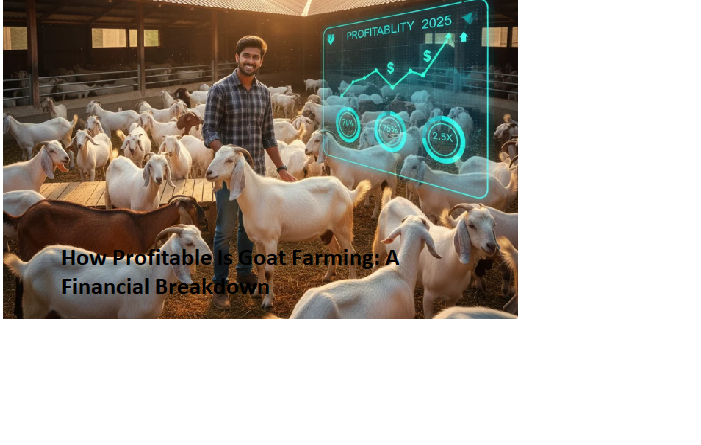
Determining how profitable is goat farming requires a clear-eyed look at the intersection of livestock management, market demand, and operational overhead. Small-scale producers often find that success hinges on choosing between meat, dairy, or fiber production, as each path carries distinct economic profiles and labor requirements.
While the industry is frequently romanticized as a simple rural lifestyle, it functions best as a data-driven business that relies on efficient feed conversion and low mortality rates. By examining the initial investment, recurring costs, and revenue streams, you can build a realistic expectation of whether this enterprise will generate a reliable income or remain a hobby.
The Direct Answer on Profitability
The short answer regarding how profitable is goat farming is that a well-managed commercial operation can achieve a net profit margin of 15% to 25% under optimal conditions. This estimate assumes the producer has direct access to markets and avoids the steep fees associated with middleman distributors.
However, many small-scale farmers operate closer to a break-even point in their first three years due to high startup costs. You should expect to spend between $200 and $500 per head for initial stock, fencing, and basic medical supplies before seeing any return on investment.
Startup Costs and Fixed Assets
Launching a goat enterprise demands significant upfront capital for infrastructure that ensures the safety and health of your herd. You will need to invest in woven-wire fencing, which is the gold standard for keeping goats contained and predators out.
A basic, high-quality perimeter fence can cost between $2.00 and $4.00 per linear foot, depending on the materials used. Beyond fencing, you must provide a dry, draft-free shelter that protects the animals from extreme weather, which is a critical factor for maintaining high growth rates.
Equipment expenses often surprise new farmers who underestimate the need for handling chutes, mineral feeders, and specialized water troughs. You should allocate at least $1,500 to $3,000 for basic infrastructure if you are starting with a small herd of 10 to 15 goats.
These fixed assets are depreciable over time, but they remain a primary barrier to entry for many. If you already own land with existing outbuildings, your initial capital requirement decreases significantly, though you must still account for the cost of retrofitting those structures.
Operational Expenses and Feeding Strategies
Feed is the single largest variable cost in goat farming, often accounting for 60% to 70% of total annual operating expenses. While goats are browsers that thrive on brush and weeds, you cannot rely solely on natural pasture if you intend to finish meat goats quickly.
Supplementing with hay during winter months or dry seasons is mandatory in most climates. High-quality alfalfa or grass hay can cost anywhere from $150 to $300 per ton, and a single lactating doe might consume several pounds daily.
Veterinary care and parasite management represent another major recurring cost that can quickly erode thin profit margins. Goats are notoriously susceptible to internal parasites, requiring consistent deworming programs and fecal egg counts to monitor herd health.
You must factor in the cost of vaccinations, hoof trimming tools, and emergency veterinary visits, which can run into the hundreds of dollars per incident. Implementing a preventative health strategy is far more cost-effective than attempting to treat a full-blown outbreak later.
Income Streams: Meat, Dairy, and Fiber
Diversifying your revenue streams is a common strategy to improve how profitable is goat farming for your specific land size. Meat goat production is the most common path, focusing on breeds like Boer or Kiko that reach market weight in approximately six to nine months.
Dairy goats offer a more consistent, daily cash flow, but they require a massive commitment to milking schedules and sanitary infrastructure. Fiber goats, such as Angora or Cashmere, provide a seasonal income that depends heavily on global market fluctuations for high-quality hair.
- Meat Goats: Sold at auctions or direct-to-consumer at market weights of 60-90 lbs.
- Dairy Goats: Revenue generated from raw milk sales, artisan cheese, or soap production.
- Fiber/Pelts: Selling raw mohair or cashmere to processors; seasonal, high-value product.
- Breeding Stock: Selling registered, high-genetics kids to other farmers for premium prices.
- Manure/Compost: Selling goat droppings as a high-nitrogen soil amendment to local gardeners.
Market Dynamics and Pricing
Understanding the market is just as important as understanding animal husbandry when analyzing the profitability of your operation. Meat goat prices often spike around ethnic holidays, such as Eid al-Fitr or Easter, when demand for goat meat is at its annual peak.
If you time your breeding cycles to ensure your kids reach market weight during these windows, you can secure a price premium of 20% to 40% above average. This requires careful planning and a deep understanding of your local buyer demographics.
Direct-to-consumer marketing is the most effective way to capture higher margins compared to selling at a livestock auction. By selling directly to families or local restaurants, you bypass the commission fees charged by auction barns, which typically range from 3% to 7% of the sale price.
However, this approach requires significantly more time spent on customer acquisition, logistics, and regulatory compliance. You must check your local state laws, as many jurisdictions have strict rules regarding the sale of raw milk or processed meat.
Comparison of Goat Farming Models
The following table illustrates the typical financial profile of the three primary goat farming business models. These figures are estimates based on standard industry practices and market averages for small-to-mid-sized operations.
| Model Type | Initial Capital | Labor Intensity | Primary Revenue Source |
|---|---|---|---|
| Meat Goat | Moderate | Low to Medium | Sale of weaned kids |
| Dairy Goat | High | Very High | Milk and cheese products |
| Fiber Goat | Moderate | Medium | Raw fiber or yarn |
Land Requirements and Carrying Capacity
Determining how many goats your land can support is essential for long-term sustainability and profitability. A general rule of thumb is that you can support six to eight goats per acre of well-managed, high-quality pasture.
Overstocking leads to overgrazing, which depletes the soil and forces you to purchase more supplemental feed, effectively destroying your profit margins. Rotational grazing is the most effective method to maximize your land’s output and keep your herd healthy.
By moving your goats through different paddocks, you allow the grass to recover while breaking the life cycle of many internal parasites. This practice reduces the amount of chemical dewormer you need to purchase, directly lowering your operational costs.
You can find detailed resources on sustainable grazing techniques through the USDA Natural Resources Conservation Service, which provides guidance on land management. Implementing these strategies requires more labor, but the trade-off is healthier animals and lower feed bills.
Risk Management and Profitability
Risk management is a critical component of maintaining a profitable goat farming operation over the long term. Predation by coyotes, stray dogs, or bobcats can wipe out an entire year’s worth of profit in a single night if you lack proper security.
Livestock guardian dogs or donkeys are common, effective deterrents, but they also come with their own feeding and medical costs. You should factor these animals into your budget as a necessary business expense rather than a luxury.
Disease outbreaks, such as Caseous Lymphadenitis or Caprine Arthritis Encephalitis, can devastate a herd and decrease the value of your breeding stock. Maintaining a closed herd—meaning you do not bring in new animals from outside sources—is the best way to prevent the introduction of these pathogens.
If you must buy new stock, always quarantine them for at least 30 days before introducing them to your main group. Protecting your herd’s health is the most reliable way to ensure you aren’t losing money on unexpected losses.
Frequently Asked Questions
How many goats do I need to make a full-time living?
To generate a full-time income, most experts suggest you need a herd of at least 100 to 150 breeding does. This assumes you are vertically integrated, meaning you are handling the processing or direct marketing yourself to keep margins high.
Is it cheaper to raise goats than cattle?
Generally, goats have a lower barrier to entry and a faster return on investment because they reach market maturity much quicker than cattle. However, goats are more labor-intensive and require more specialized fencing, which can offset some of the savings on feed.
What is the biggest hidden cost in goat farming?
The biggest hidden cost is usually parasite control and the associated veterinary expenses. Because goats are so sensitive to worms, the cost of dewormers and the labor time required for monitoring can easily exceed your initial budget projections.
Can I make money with just two goats?
You can generate a small amount of extra cash by selling kids or milk, but two goats are primarily a hobby. A herd of that size will not cover the cost of infrastructure, feed, and medical care in a way that provides a meaningful profit.
How much land do I need for 100 goats?
For 100 goats, you should aim for at least 15 to 20 acres of land if you intend to rely on pasture. This allows for effective rotational grazing, which keeps the soil healthy and reduces your dependence on expensive supplemental hay.
The Path Forward
Understanding how profitable is goat farming requires looking past the surface-level appeal of the lifestyle. It is a business defined by thin margins, high labor demands, and the constant need for disease management. Success is achievable for those who treat it like an enterprise, focusing on efficiency, market timing, and careful cost control.
If you have the land, the capacity to manage the daily labor, and a clear plan for how you will sell your product, you can build a sustainable operation. Start small, track every penny of your expenses, and scale your herd only when your systems are proven. For those willing to put in the work, the industry offers a rewarding, if challenging, path to agricultural self-sufficiency.
