

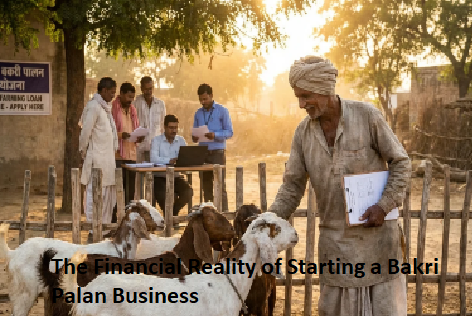
Starting a bakri palan business serves as a viable income stream for rural and semi-urban entrepreneurs who want to leverage livestock for consistent cash flow. Goat farming is often referred to as the “ATM of the poor” because goats can be sold in small numbers to meet immediate financial needs, unlike larger cattle.
By understanding the specific requirements for housing, nutrition, and market access, you can build a scalable operation that grows alongside your experience. This article breaks down the financial and operational realities of managing a goat farm to help you decide if this path is right for your resources.
The initial investment for a small-scale, 20-goat farm typically ranges from $2,000 to $5,000 (roughly 1.5 to 4 lakh INR) depending on your region and existing infrastructure. This capital covers the cost of purchasing high-quality breeds, constructing a basic shed, securing initial fodder, and setting aside a buffer for veterinary care.
If you are starting with a larger setup of 100 goats, your costs will scale significantly, often requiring $15,000 to $25,000 for professional housing and automated feeding systems. You should expect a break-even point between the second and third year of operations as your herd matures and reproduction cycles stabilize.
Understanding Breed Selection for Profitability
Choosing the right breed is the most critical decision for a successful bakri palan business. Native breeds are often more resilient to local climates and diseases, which saves you money on veterinary bills in the long run. High-yield breeds like the Jamnapari or Barbari are popular in India because they gain weight quickly and have high meat-to-bone ratios.
You must research the local market demand before selecting your herd. If your region prefers dairy-heavy products, look into dual-purpose breeds that offer both milk and meat potential. Avoid purchasing exotic breeds that require air-conditioned environments unless you have a massive budget and a specialized market for high-end dairy.
Infrastructure and Housing Design
Goats are sensitive to extreme weather, so your shed must provide protection from heavy rain, direct sunlight, and biting winds. A raised-platform design is the gold standard for hygiene because it allows waste to fall through the floor, keeping the animal’s living area dry and parasite-free. You can build these platforms using bamboo or wood, but ensure the floor is sturdy enough to hold the weight of the herd.
Ventilation is just as important as protection. Stagnant air leads to respiratory infections, which can wipe out a herd in weeks.
Keep your shed walls open or use wire mesh to ensure a constant flow of fresh air. You can find detailed technical specifications for housing through resources like the Food and Agriculture Organization, which provides global standards for livestock welfare.
Essential Nutrition and Fodder Management
Feeding accounts for approximately 60% to 70% of your recurring operational costs. To stay profitable, you must minimize the reliance on expensive store-bought concentrates. Invest in growing your own high-protein fodder like alfalfa or berseem on fallow land if you have access to it.
A balanced diet requires a mix of green grass, dry straw, and mineral-rich supplements. Goats are browsers, not just grazers, so they prefer eating leaves from bushes and trees over flat grass. Ensure they have constant access to clean, fresh water, as dehydration is the leading cause of poor growth rates in commercial setups.
Health Protocols and Disease Prevention
A single disease outbreak can destroy a profitable season, so your health protocol must be proactive rather than reactive. Establish a vaccination schedule for common ailments like PPR (Peste des Petites Ruminants) and Enterotoxaemia. Keep a dedicated isolation pen for any animal that appears lethargic or shows signs of illness to prevent the spread to the rest of the flock.
Regular deworming is mandatory, especially during the monsoon season when parasites thrive in damp grass. Consult with a local veterinarian to create a seasonal health calendar. Keep a logbook of every injection or medicine administered to each goat to track health history and ensure you follow withdrawal periods before sending animals to market.
Financial Breakdown of Typical Costs
Managing your cash flow effectively is the difference between a failing project and a thriving farm. You need to account for both fixed assets and variable monthly expenses. Below is a simplified breakdown of the costs you should anticipate when launching your operation.
| Expense Category | Estimated Percentage of Budget | Frequency |
|---|---|---|
| Livestock Purchase | 45% | One-time |
| Shed Construction | 25% | One-time |
| Fodder and Feed | 20% | Monthly |
| Medical and Vaccines | 5% | Quarterly |
| Miscellaneous/Labor | 5% | Monthly |
Marketing and Sales Strategies
You don’t need a massive marketing budget to sell your goats, but you do need to understand your target buyer. Most small farmers sell directly to local butchers or at weekly village markets. If you want higher margins, aim to sell during festive seasons like Eid or Diwali, when the demand for high-quality meat spikes significantly.
Consider forming a cooperative with other local farmers to aggregate your supply. Buyers are more likely to visit a location that can offer 50 goats at once rather than traveling to five different farms to buy ten. This collective approach also gives you more leverage to negotiate prices and avoid being squeezed by middlemen.
Common Operational Challenges
The most frequent hurdle for new farmers is the high mortality rate of kids (baby goats). You must ensure that newborns receive colostrum within the first hour of birth to build their immune systems. If a mother rejects a kid, you will need to be prepared to hand-feed them with milk replacers, which is labor-intensive.
Another challenge is the theft of livestock, which is a major risk in many rural areas. Invest in basic security measures like perimeter fencing and potentially a guard dog. Always keep a detailed inventory count to spot any discrepancies in your herd size early, as losing even one or two animals significantly impacts your bottom line.
Frequently Asked Questions
How much land is needed for 100 goats?
For a stall-fed system, you need roughly 1,500 to 2,000 square feet of covered shed space for 100 goats. If you plan to provide grazing land, you would need an additional 2 to 3 acres of pasture to ensure the herd has enough fresh forage throughout the year.
How does a goat farmer make money?
Most farmers generate revenue by selling goats for meat, which is the primary income driver. Secondary income streams include selling milk, manure for organic fertilizer, and occasionally selling high-quality breeding stock to other farmers looking to expand their herds.
Which country is the largest producer of goats?
India is consistently ranked as the world’s largest producer of goats, followed by countries like China and Nigeria. The massive domestic demand for goat meat in these regions makes them central hubs for both small-scale and commercial farming activities.
Is a government license required to start a farm?
Requirements vary by region, but most small-scale farms do not require a specific license. However, if you plan to sell processed meat products or operate a large-scale commercial unit, you will likely need to register with local agricultural authorities and meet specific food safety standards.
Can I get a loan for my farm?
Yes, many agricultural banks offer specialized loans for livestock farming under various government schemes. You will typically need a detailed project report, land ownership documents, and a clear business plan to qualify for these low-interest financing options.
Conclusion
Building a successful bakri palan business requires a blend of animal husbandry skills and sound financial planning. By focusing on low-cost, high-quality fodder and maintaining a strict health schedule, you can mitigate many of the risks associated with livestock farming. Start small to learn the nuances of your specific breed and local market before attempting to scale up your operations.
Consistent record-keeping will allow you to identify which animals are the most profitable, helping you refine your breeding program over time. As you gain confidence, look for ways to optimize your supply chain and reach direct consumers to capture more value.
The path to profitability is steady rather than sudden, so prioritize the health and growth of your herd above all else. Your dedication to the daily details will yield the best results for your farm.
