

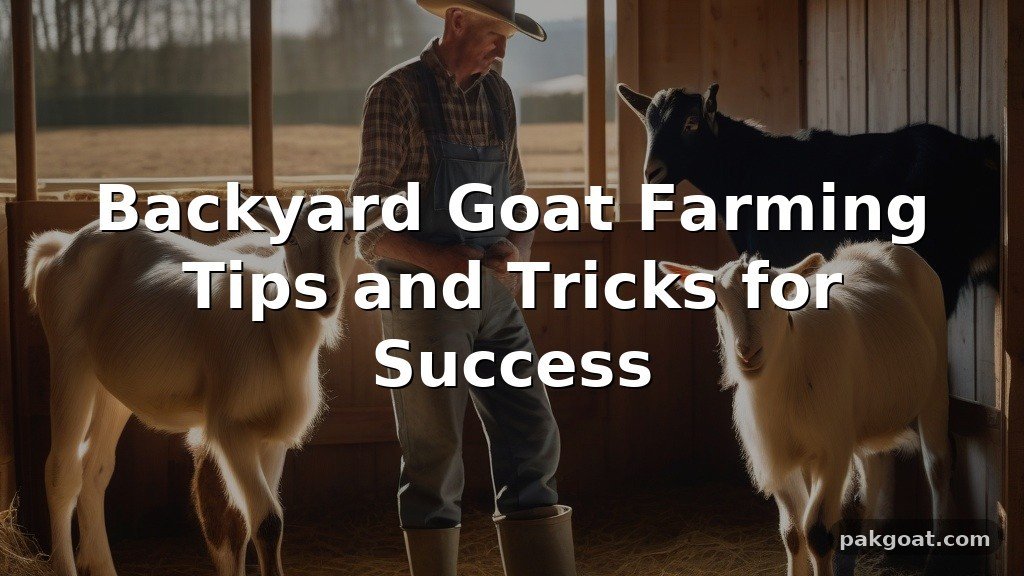
Starting your journey into backyard goat farming tips and tricks requires a focus on infrastructure, animal health, and local regulations. Successfully raising goats on a small scale is entirely achievable if you prioritize proper containment and nutrition from day one. Many beginners discover that goats are highly social, intelligent animals that thrive when provided with consistent care and a clean environment.
This article outlines the essential practices you need to master to ensure your herd remains healthy, productive, and well-adjusted to a backyard setting. By understanding these fundamentals, you can avoid common pitfalls and enjoy the rewarding experience of managing your own small-scale livestock operation.
Essential Requirements for Beginners
If you want to know the most critical factor in successful goat keeping, it is secure fencing. Goats are notorious escape artists that view standard garden fences as mere suggestions. You need at least 4 to 5 feet of woven wire fencing to keep them safely contained.
Beyond security, they require a dry, draft-free shelter that provides protection from wind and rain. Goats have thin coats and are surprisingly sensitive to extreme moisture. A simple three-sided shed oriented away from prevailing winds is often sufficient for small breeds.
Space and Herd Dynamics
Goats are herd animals and suffer from profound stress if kept in isolation. You should always plan to get at least two goats to ensure they have the companionship they need to remain calm. While you do not need hundreds of acres, you should provide at least 200 to 250 square feet of exercise space per goat. This prevents overcrowding, which is the primary driver of parasite outbreaks and behavioral issues.
Nutritional Needs and Feeding Strategies
Goats are browsers, not grazers like sheep or cattle. While they will eat grass, they much prefer shrubs, weeds, and tree leaves. You must provide high-quality hay when natural forage is unavailable, specifically during winter months or drought.
A goat’s diet should consist of approximately 70% to 80% forage or hay. Relying solely on commercial grain can lead to severe health issues like urinary calculi, especially in wethers (neutered males).
The Role of Supplements
Providing a loose mineral mix designed specifically for goats is non-negotiable for long-term health. Do not use generic sheep minerals, as they often lack the copper that goats require. Many owners also provide free-choice baking soda, which helps regulate the goat’s rumen pH and prevents bloat.
| Dietary Component | Daily Purpose |
|---|---|
| High-Quality Hay | Primary fiber and energy source |
| Goat-Specific Minerals | Prevents deficiencies and supports growth |
| Fresh Water | Essential for milk production and digestion |
| Baking Soda | Assists with rumen health and bloat prevention |
Managing Daily Health and Maintenance
Proactive care is the backbone of effective backyard goat farming tips and tricks. You must check your animals daily for signs of illness, such as lethargy, loss of appetite, or abnormal droppings.
Establishing a relationship with a local large-animal veterinarian before you bring your goats home is vital. Most health issues in small herds can be mitigated through strict sanitation and parasite management.
- Schedule annual vaccinations for common diseases like enterotoxemia and tetanus.
- Trim hooves every 6 to 8 weeks to prevent rot and structural deformities.
- Monitor FAMACHA scores to check for signs of anemia caused by internal parasites.
- Maintain a clean, dry barn floor to minimize respiratory infections.
Common Questions About Goat Keeping
How much space do I need for 100 goats?
Raising 100 goats is generally not feasible in a standard backyard setting. You would typically need at least 10 to 20 acres of high-quality pasture to support a herd of that size sustainably.
Why give baking soda to goats?
Baking soda acts as a natural buffer for the goat’s rumen. It helps neutralize excess acidity when goats consume too much grain or lush spring forage, which prevents dangerous cases of bloat.
What is the most difficult thing about raising goats?
The most challenging aspect is usually parasite management. Goats are highly susceptible to worms, and their tendency to browse near the ground makes them easy targets for larvae in the soil.
What should a first-time owner know?
You must check your local zoning laws before purchasing any animals. Many suburban areas have strict ordinances regarding livestock, and ignoring these can lead to forced removal of your herd.
Final Thoughts on Herd Management
Mastering backyard goat farming tips and tricks is a continuous learning process that rewards patience and observation. By focusing on high-quality forage, secure infrastructure, and preventative health measures, you create a stable environment where your goats can thrive. Start small with a pair of hardy, well-tempered animals to gain confidence in your daily routine before considering expansion.
Remember that your success depends on the attention you pay to the small details, like mineral intake and parasite monitoring. As you become more comfortable, you will find that these animals provide immense value through milk, clearing brush, or simply their unique personalities. Reach out to local 4-H clubs or agricultural extensions to find mentors who can provide specific guidance for your region.
