

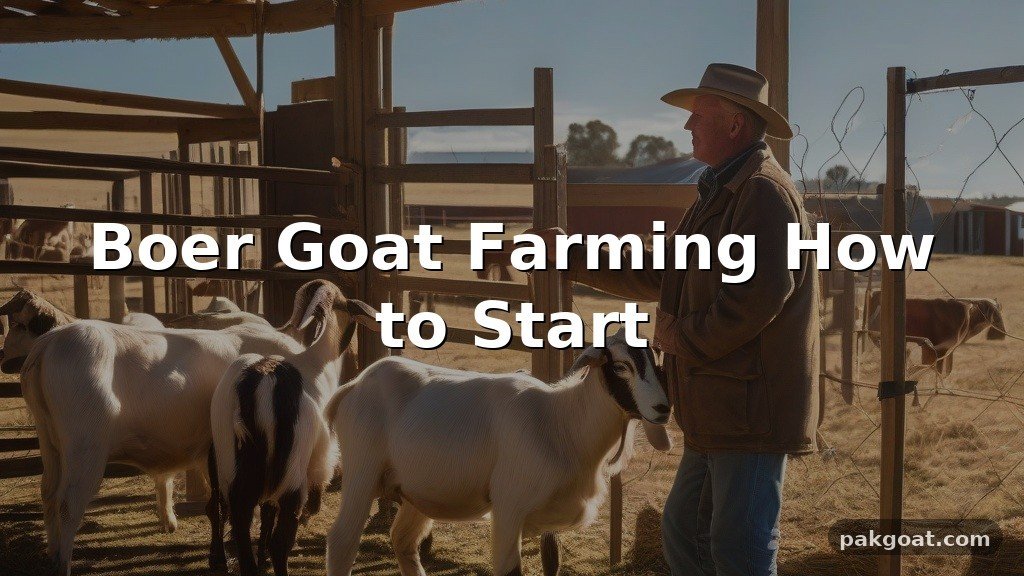
Understanding the logistics of boer goat farming how to start requires balancing initial capital investment with long-term herd management goals. These goats are prized for their rapid growth rates and superior carcass quality, making them a cornerstone of the global meat industry. Whether you are aiming for a small homestead operation or a large-scale agricultural venture, success depends on understanding breed-specific nutritional needs and parasite control.
By focusing on selective breeding and proper land utilization, you can build a sustainable enterprise that generates consistent value. This overview provides the essential steps to help you establish a productive herd while avoiding common pitfalls that many new producers encounter.
Initial Financial and Land Requirements
When considering boer goat farming how to start, the most pressing question is the cost of entry. On average, a quality registered doe can cost between $400 and $1,200, while a high-quality buck may range from $800 to $2,500. You should expect to spend roughly $2,000 to $5,000 on infrastructure, including fencing, simple shelters, and initial veterinary supplies, before purchasing your first animals.
Land requirements depend heavily on your local climate and the quality of your forage. A general rule of thumb is to stock 6 to 8 adult goats per acre of well-managed pasture, though this varies based on soil fertility. You must also account for winter feed, as goats cannot graze through snow or heavy frost.
| Expense Category | Estimated Start-up Cost |
|---|---|
| Breeding Stock (3 Does + 1 Buck) | $2,000 – $6,000 |
| Fencing (Woven Wire) | $1,500 – $3,000 |
| Shelter Construction | $500 – $2,000 |
| Initial Feed/Veterinary Supplies | $500 – $1,000 |
Managing Your Boer Herd
Boer goats are specifically bred for meat production, which means their management differs from dairy or fiber breeds. They require a high-protein diet to reach market weight efficiently, typically by 6 to 9 months of age. You must provide access to clean water and mineral blocks at all times to prevent common nutritional deficiencies.
Parasite control is the most significant challenge for any goat producer. Because these animals browse a wide variety of plants, they are prone to picking up internal parasites if moved too frequently on the same pasture. Implementing a rotational grazing system is essential to break the parasite life cycle.
- Use high-tensile woven wire fencing at least 48 inches high to prevent escapes.
- Perform regular FAMACHA scoring to monitor anemia caused by stomach worms.
- Schedule routine hoof trimming every 8 to 12 weeks to prevent foot rot.
- Ensure your shelter provides at least 15 square feet of dry space per goat.
Frequently Asked Questions
Is raising Boer goats profitable?
Profitability depends on your ability to control overhead costs and market your stock. Many producers find success by selling breeding stock to other farmers or by targeting niche ethnic markets that value fresh, high-quality goat meat.
How much land do I need for 100 goats?
To support 100 goats sustainably, you generally need between 12 and 16 acres of high-quality, well-managed pasture. If the land is poor, you will need to supplement heavily with hay, which significantly increases your operating costs.
Are Boer goats difficult to keep healthy?
They are hardy animals, but they are highly susceptible to internal parasites and respiratory issues in damp conditions. Experienced farmers emphasize that keeping the herd in dry, well-ventilated areas is the best way to maintain health.
What is the best way to sell my goats?
Most farmers use a combination of direct-to-consumer sales, local livestock auctions, and private treaty sales to other breeders. Building a reputation for genetic health and superior growth rates is the most effective way to improve your profit margins over time.
Building a Sustainable Future
Successful production relies on your commitment to continuous learning and careful observation of your animals. As you progress through the stages of growth, remember that your primary assets are the genetics of your herd and the health of your soil. By focusing on breeding for parasite resistance and structural soundness, you ensure the longevity of your operation.
Starting your journey into this industry requires patience and a focus on incremental gains rather than immediate, massive returns. If you approach boer goat farming how to start with a clear plan and a willingness to adapt to your specific environment, you will be well-positioned to succeed. Reach out to local agricultural extension offices or established breeders in your area to find mentorship and local resources that can help you refine your management practices.
