

A dairy goat farming complete feed chart serves as the backbone of a productive herd, ensuring your animals receive the precise nutrients required for consistent milk production. By balancing forage, concentrates, and minerals, you provide the energy necessary for lactation while maintaining long-term health.
Understanding these requirements helps you avoid common metabolic issues and keeps your operation running efficiently throughout the year. Whether you are managing a small homestead or a commercial operation, relying on concrete data rather than guesswork is the most reliable way to optimize your yield.
Standard Daily Nutritional Requirements
For a standard dairy goat weighing approximately 150 pounds, the daily intake is relatively consistent during peak lactation. You should aim for a total dry matter intake of roughly 3% to 4% of the animal’s body weight each day.
This translates to about 4.5 to 6 pounds of dry matter per goat. The following table provides a breakdown of how that total intake is typically distributed among different feed categories.
| Feed Category | Percentage of Daily Intake | Role in Diet |
|---|---|---|
| High-Quality Forage | 60% – 70% | Fiber for rumen function |
| Concentrates/Grains | 25% – 35% | Energy for milk production |
| Minerals & Supplements | 5% | Bone health and immunity |
Essential Components of a Balanced Diet
Your primary focus should always be high-quality forage, such as alfalfa or orchard grass hay. Forage provides the fiber necessary to stimulate the rumen, which is the engine of the goat’s digestive system. Without enough fiber, the beneficial bacteria in the gut cannot function, leading to acidosis or other digestive failures.
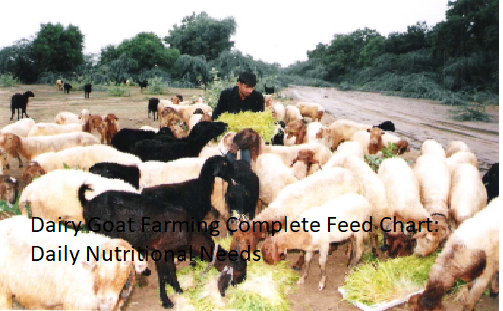
Concentrates are introduced to meet the high energy demands of lactation. Dairy goats burning through calories to produce milk cannot meet their needs on hay alone. You must supplement with grains like oats, barley, or corn, ensuring they are properly balanced with protein sources like soybean meal.
Managing Water and Mineral Intake
Water is the most overlooked nutrient in a dairy goat farming complete feed chart. A lactating doe can consume up to 3 to 5 gallons of water per day, depending on the temperature and her level of milk production. If water intake drops, milk yield will plummet almost immediately.
* Free-choice minerals: Always provide a loose mineral mix specifically formulated for goats, not sheep or cattle.
* Cleanliness: Scrub water troughs weekly to prevent the buildup of algae and bacteria.
* Sodium: Ensure plain white salt blocks or loose salt are available at all times.
* Monitoring: Watch for goats that avoid the mineral feeder, as this may indicate a need for a different brand or placement.
Feeding Kids and Growing Replacements
Kids require a different approach than mature does, focusing on growth rather than milk output. Colostrum is the most critical food they receive in the first 24 hours of life, providing essential antibodies. After the colostrum phase, transition them gradually to a high-protein starter ration.
Monitor their body condition scores weekly to ensure they are gaining weight steadily. Rapid growth is vital for early maturity, but avoid over-conditioning them, which can lead to future reproductive issues. Always keep forage in front of them to encourage early rumen development.
Frequently Asked Questions
How much grain should I feed a dairy goat?
A general rule is to feed roughly 0.5 to 1 pound of grain per quart of milk produced. You should adjust this based on the quality of your hay and the goat’s body condition. Never exceed 50% of the total diet as grain to prevent digestive upset.
What is the best feeding schedule for goats?
Consistency is more important than the specific time of day. Aim to feed twice daily, roughly 12 hours apart, to keep the rumen environment stable. Always provide hay before grain to encourage better digestion and reduce the risk of bloat.
Why do my goats need special minerals?
Goats have a high requirement for copper, which is often missing from standard livestock mixes. Using a mineral mix designed for cattle can lead to deficiencies, while sheep minerals are often toxic to goats due to low copper levels.
How do I know if my feed is high quality?
High-quality hay should be leafy, green, and free of mold or dust. If you are unsure about the nutritional content, perform a forage test through a local agricultural extension office. A lab report will give you the exact protein and energy percentages needed to adjust your grain mix.
Implementing a dairy goat farming complete feed chart is the most effective way to ensure your herd remains healthy and productive. By tracking your input costs against your milk output, you can fine-tune your ration for maximum efficiency. Start by weighing your hay and grain to get an accurate baseline of what your goats are actually eating.
Observe their body condition and milk production levels over a four-week period, then make incremental adjustments as needed. If you maintain this level of precision, you will see the results in both the health of your goats and the quality of your dairy products. Feel free to reach out with specific questions about your local forage options or herd size.
