

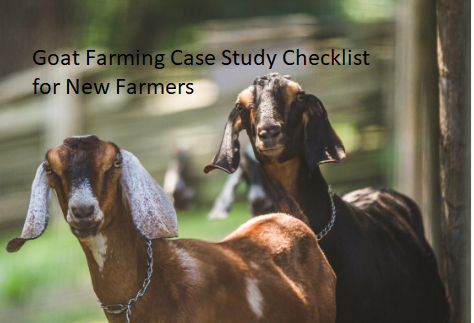
Starting a successful livestock operation requires more than just land and animals; it demands a structured approach to planning and management. Utilizing a goat farming case study checklist for new farmers helps bridge the gap between theoretical knowledge and the daily realities of animal husbandry.
By breaking down the essential components—from infrastructure to financial projections—you can avoid common pitfalls that often lead to early business failures. This guide provides the specific metrics and operational standards necessary to evaluate your readiness for a commercial or hobbyist goat enterprise.
The core of any successful operation is a clear understanding of your stocking density and land capability. A beginner should start with a small herd, typically 3 to 5 does, to learn the nuances of behavior, health monitoring, and kidding without becoming overwhelmed.
For land requirements, a general rule of thumb is that you can support 6 to 10 goats per acre depending on the quality of your forage and your willingness to provide supplemental hay. If your land is rocky or sparse, this number drops significantly, sometimes requiring as much as 1 acre per goat to avoid overgrazing and parasite buildup.
Infrastructure and Shelter Requirements
Proper housing is the first item on your operational checklist because it dictates the long-term health of your herd. Goats are highly susceptible to respiratory issues caused by damp, drafty, or poorly ventilated environments. Your shelter should provide at least 12 to 15 square feet per goat of indoor space to ensure they aren’t crowded during inclement weather. Ensure the structure faces away from prevailing winds and includes a raised sleeping area, as goats prefer to stay off the cold ground.
Fencing and Predator Control
Fencing is often the largest initial capital expenditure for a new farm. You need a barrier that is at least 48 inches high to prevent jumpers from escaping and to discourage predators. Woven wire fencing, often called “no-climb” fencing, is the industry standard because it prevents goats from getting their heads stuck in the mesh. Avoid using simple electric strands for perimeter fencing, as goats are notorious for testing boundaries and can easily slip through or under them.
Health Management and Biosecurity
A rigorous health calendar is non-negotiable for a professional operation. You must establish a relationship with a large-animal veterinarian before you bring your first animal home. Your routine care should include regular hoof trimming every 6 to 8 weeks and a parasite management program. Parasites, specifically the Haemonchus contortus (barber pole worm), are the leading cause of death in many goat herds, making FAMACHA eye-score testing a critical skill to master.
Financial Planning and Cash Flow
Budgeting for a goat farm involves accounting for both fixed and variable costs. Fixed costs include your initial land clearing, fencing materials, and shelter construction, while variable costs cover feed, minerals, veterinary visits, and bedding. A common mistake is failing to account for the “feed gap”—the winter months when pasture is dormant and you must purchase hay. You should maintain a contingency fund equivalent to 20% of your annual operating budget to cover unexpected medical emergencies or infrastructure repairs.
Marketing and Revenue Streams
Diversifying your income sources is the best way to ensure long-term sustainability. Many farmers find that selling raw milk, soap, or fiber provides a more consistent cash flow than relying solely on meat production. If you are focusing on meat, understand that the market fluctuates based on ethnic holiday calendars, such as Ramadan and Easter, which drive demand for specific sizes and weights of kids. You can find detailed resources on livestock management through the USDA Natural Resources Conservation Service to help guide your grazing strategy.
Understanding Genetics and Breeding
Selecting the right breed defines your farm’s output potential. Dairy breeds like Saanens or Nubians require twice-daily milking and intensive nutritional management to maintain production. Meat breeds like Kiko or Boer goats are generally hardier and require less hands-on intervention regarding daily milking. When purchasing, always ask for health records and look for signs of CAE (Caprine Arthritis Encephalitis) and CL (Caseous Lymphadenitis), as these diseases can devastate a herd’s long-term productivity.
Operational Data Comparison
The following table illustrates the typical differences between various production models to help you align your goals with your available resources.
| Production Model | Labor Intensity | Primary Revenue Source | Start-up Cost Level |
|---|---|---|---|
| Small-Scale Dairy | Very High | Milk/Cheese | High |
| Meat Production | Moderate | Kidding/Weanlings | Moderate |
| Fiber (Angora) | High | Mohair/Wool | Moderate |
| Brush Clearing | Low | Service Fees | Low |
Essential Equipment Checklist
To maintain a professional operation, you need a specific set of tools on hand at all times. This list covers the basics required to handle day-to-day tasks efficiently.
- Hoof trimmers: High-quality, sharp shears are vital for preventing foot rot.
- Medical kit: Include digital thermometers, antiseptic spray, and electrolytes for scours.
- Mineral feeders: Goats require specialized loose minerals, not just salt blocks.
- Weighing scale: Monitoring weight gain is essential for meat production or selling at market.
- Transport crate: A sturdy, well-ventilated crate for vet trips or sales.
- Identification tags: Essential for tracking lineage and health history.
Managing Pasture Rotation
Rotational grazing is the secret to reducing feed costs and controlling parasite loads. By moving your goats to fresh paddocks every 3 to 5 days, you interrupt the lifecycle of internal parasites before they can re-infect the herd. This practice also prevents the goats from eating grass down to the soil, which helps maintain root health and long-term soil fertility. You should aim to leave at least 3 to 4 inches of stubble in each paddock to encourage rapid regrowth.
The Role of F1, F2, and F3 Breeding
Understanding crossbreeding terminology is crucial if you are aiming to improve your herd’s genetics over time. An F1 animal is the first-generation cross between two purebred parents, often resulting in “hybrid vigor” where the offspring are healthier or more productive than either parent. F2 and F3 generations involve breeding these crosses back to purebreds or other crosses to stabilize specific traits. New farmers should stick to established crosses until they have a firm grasp on the desired breed characteristics for their local market.
Common Pitfalls in Early Operations
Most new farmers fail because they underestimate the time commitment required for daily observation. Goats are stoic animals that often hide illness until they are in a critical state. You must be able to recognize subtle signs of trouble, such as a goat standing apart from the herd, a lack of appetite, or a change in manure consistency. Never assume an animal is “just tired” when it stops eating, as this is almost always a sign of a significant underlying health issue.
Financial Sustainability Metrics
Profitability in goat farming is often achieved through high-volume management or niche product pricing. If you are selling meat, you need to calculate your “breakeven weight” for each kid based on the cost of feed and labor. For value-added products like soap or cheese, your profit margin is significantly higher, but your time investment increases exponentially. Always track your expenses in a spreadsheet to ensure you aren’t subsidizing your hobby with outside income unless that is your explicit goal.
Infrastructure Maintenance Cycles
Fencing and shelters require seasonal maintenance to remain functional. Before winter, check all fence posts for frost-heave damage and ensure your shelter roof is leak-free. In the spring, clear out old bedding and disinfect housing areas to kill bacteria that may have survived the cold. Consistent maintenance prevents small, cheap repairs from turning into expensive, large-scale replacements later in the season.
Managing Herd Dynamics
Goats are herd animals with a strict social hierarchy, and introducing new members can cause stress and fighting. Always use a quarantine period of at least 30 days for any new animal before integrating them into your existing herd. This practice protects your current stock from diseases that might not be immediately visible upon purchase. Monitor the herd during the first week of integration to ensure that no single goat is being bullied to the point of injury or malnutrition.
Frequently Asked Questions
How many goats should a beginner start with?
A beginner should start with three to five does. This number is small enough to manage easily but large enough to provide the social interaction these animals require to stay healthy and stress-free.
What is the most common cause of death in goats?
Internal parasites, particularly the barber pole worm, are the leading cause of mortality in many climates. Implementing a strict rotational grazing schedule and regular FAMACHA scoring is the best defense against these pests.
How much space do I need for 100 goats?
While you can keep 100 goats on as little as 10 to 15 acres with intensive management, a more sustainable approach for long-term pasture health is often 1 to 2 acres per goat. This density depends heavily on your local rainfall and the quality of your soil.
What is the difference between F1, F2, and F3 goats?
These terms refer to the generation of crossbreeding. An F1 is a direct cross between two purebreds, while F2 and F3 represent subsequent generations that are bred to further stabilize or enhance specific traits like milk production or meat yield.
Do I need a barn for my goats?
While you don’t necessarily need a massive barn, you do need a dry, draft-free shelter. Goats are highly sensitive to moisture and wind, so a simple three-sided shed can suffice if it is oriented correctly to protect them from the elements.
Conclusion
Successful goat farming requires a blend of animal husbandry skills and sound financial planning. By using a goat farming case study checklist for new farmers, you can systematically address the infrastructure, health, and management needs that define a profitable operation. Start small, prioritize the health of your soil and your animals, and always keep accurate records of your expenses and production outputs. As you gain experience, you will find that the initial effort put into planning pays off in the form of a resilient and sustainable herd. Whether you are aiming for a niche market or a larger commercial scale, the fundamentals of observation and consistency remain your greatest assets in this rewarding agricultural pursuit.
