

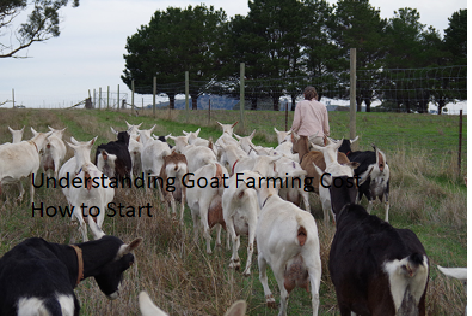
When you look into goat farming cost how to start, you are entering a niche that balances livestock management with small-scale agricultural economics. Understanding the financial barrier to entry is essential before buying your first kid or clearing your first acre of pasture. Most beginners find that the initial investment ranges from $2,000 to $5,000 for a small starter herd, depending largely on your infrastructure needs and local land availability.
This article provides the hard data and practical steps you need to build a sustainable operation. By breaking down expenses into capital, maintenance, and operational categories, you will gain a clear picture of what it takes to succeed in this industry.
Initial Capital Requirements for Goat Farming
The most immediate goat farming cost how to start involves securing the livestock and the basic infrastructure. You should expect to pay between $150 and $400 for a single high-quality, registered breeding doe. If you are starting with wethers or non-registered stock, prices may drop to the $100 to $200 range per head.
Beyond the animals themselves, your budget must account for secure fencing, which is often the single largest expense for new farmers. Woven wire fencing, which is necessary to keep goats contained and predators out, typically costs between $2.00 and $4.00 per linear foot including posts and hardware.
Housing is another pillar of your startup budget. While you do not need an elaborate barn, you must provide a dry, draft-free structure that protects your herd from extreme weather. A simple three-sided run-in shed built from lumber and corrugated metal can cost between $800 and $2,500 depending on your local material prices.
You will also need to invest in basic equipment such as feeders, water troughs, mineral stations, and hay racks. These small-scale assets typically add another $500 to $1,000 to your initial setup costs.
Land and Pasture Management Expenses
Land is a major factor in the goat farming cost how to start, yet many beginners underestimate the carry capacity of their property. Experts generally recommend a stocking rate of 6 to 8 goats per acre, though this depends entirely on the quality of your forage and your willingness to supplement with hay.
If you are leasing land, expect to pay anywhere from $50 to $200 per acre per year depending on your region. If you are buying land, the cost is tied to local real estate markets, but you must factor in the cost of pasture improvement.
Pasture improvement involves soil testing, liming, and seeding, which can cost around $100 to $300 per acre annually. Goats are browsers rather than grazers, meaning they prefer brush and weeds over thick grass. You may need to invest in clearing overgrown brush or managing invasive species to get your pasture ready for a herd.
Fencing off sections for rotational grazing is also highly recommended to prevent overgrazing and parasite buildup. This requires additional gates and portable electric fencing, which can cost an extra $300 to $600 for a small operation.
Veterinary and Health Maintenance Costs
Health management is a recurring, non-negotiable expense that impacts your long-term profitability. You should budget for an annual veterinary visit, which can range from $150 to $300 for basic wellness checks and vaccinations.
Goats are susceptible to parasites like barber pole worms, requiring regular deworming medications that cost approximately $20 to $50 per goat each year. You must also maintain a basic medical kit containing syringes, needles, antiseptic, and common antibiotics.
| Item Type | Estimated Annual Cost |
| :— | :— |
| Vaccinations and Dewormers | $30 – $60 per goat |
| Routine Veterinary Visits | $150 – $300 per herd |
| Mineral Supplements | $10 – $20 per goat |
| Emergency Medical Supplies | $100 – $200 per herd |
In addition to these costs, you need to factor in the price of hoof trimmers and regular grooming tools. Hoof maintenance is required every 6 to 8 weeks to prevent foot rot, a condition that can quickly degrade your herd’s health.
If you do not perform these tasks yourself, hiring a farrier will add a significant labor cost to your monthly budget. Investing in your own tools costs roughly $100 up front and saves hundreds in professional service fees over time.
Feed and Nutritional Requirements
Feed is the largest ongoing operating expense in goat farming. While goats can derive much of their energy from browsing, you must provide high-quality hay during the winter months or periods of drought. Depending on your location, a square bale of grass hay can cost between $6 and $15.
A single goat may consume 2 to 3 pounds of hay per day if they do not have access to sufficient pasture. For a small herd of ten goats, this adds up to several thousand dollars in annual feed costs if you are not careful.
You also need to provide loose minerals specifically formulated for goats to prevent deficiencies. Copper, selenium, and zinc are critical for goat health, and a 50-pound bag of high-quality mineral mix usually costs between $25 and $40.
Grain is generally reserved for lactating does or growing kids, and the cost varies based on local corn or soybean prices. Always maintain a consistent water supply, as goats are notoriously picky drinkers and will avoid water that has been contaminated by debris or mud.
Legal, Insurance, and Licensing Fees
Understanding the legal side of goat farming cost how to start is vital to avoid fines or business disruptions. Depending on your municipality, you may need a livestock permit or a zoning variance to keep goats on your property. Permit fees are usually nominal, ranging from $50 to $200, but the process can be time-consuming.
You should also consider liability insurance to protect your assets if a goat escapes or causes property damage. Agricultural liability policies can start at $500 per year and go up depending on the size of your operation.
* Business registration fees
* Zoning permit applications
* Liability insurance premiums
* Scrapie identification tag costs
* Water usage and waste management permits
Many states require you to participate in the National Scrapie Eradication Program, which involves getting official identification tags for your animals. You can find more information about these regulatory requirements through the USDA Animal and Plant Health Inspection Service portal.
These tags are generally inexpensive, often provided at little to no cost, but the time spent tracking animal movements and maintaining records is a real investment. Failing to comply with these regulations can lead to significant legal headaches and potential loss of your herd.
Marketing and Sales Infrastructure
If you are planning to sell milk, meat, or fiber, you must invest in marketing and distribution. Building a simple website or social media presence is the most cost-effective way to reach local customers.
However, if you plan to sell raw milk or meat products, you will face stringent state health department regulations. These often require a commercial-grade kitchen or a licensed processing facility, which can cost thousands of dollars to build or lease.
Consider the cost of transport as well, as you will likely need a livestock trailer or a sturdy truck bed insert to move your animals. A used livestock trailer can cost anywhere from $2,000 to $6,000, while a basic truck topper might be cheaper but less versatile.
You should also factor in the time and fuel costs associated with taking animals to auctions or delivering products to customers. Many farmers find that direct-to-consumer sales provide the best margins, but they require a significant investment in packaging and branding.
Profitability and Revenue Potential
Many people ask if the goat farming cost how to start is actually worth the investment. Profitability depends on your niche; dairy goats generally provide a steady, year-round income, whereas meat goats are typically sold in annual cycles.
A well-managed dairy doe can produce 1 to 3 gallons of milk per day, which can be sold raw or processed into high-value cheese. Conversely, meat goats are often sold at weaning, typically at 3 to 6 months of age, when they reach a market weight of 50 to 80 pounds.
You must track your “cost per kid” to understand your actual profit margin. This calculation includes the doe’s annual feed, health, and housing costs divided by the number of kids she produces. If your doe costs $400 to maintain annually and she produces two kids that sell for $250 each, your gross margin is $100 per kid.
This does not account for your own labor, which is usually the hidden cost that most beginners overlook. Successful farmers often supplement their income by selling breeding stock or manure, which is a highly sought-after fertilizer.
FAQ: Common Questions for Beginners
How much does it cost to buy a pair of baby goats?
You can typically purchase weaned goat kids for $150 to $300 each, depending on the breed and lineage. Registered, high-quality stock will always command a premium compared to commercial meat-cross goats.
Is it possible to start a goat farm with no money?
It is extremely difficult to start without any capital, as you need funds for fencing and basic animal health. You might consider starting by leasing an existing farm or working as an apprentice to gain experience before investing your own money.
How many goats do I need to clear an acre?
A common rule of thumb is that 6 to 8 goats can effectively clear an acre of brush over a growing season. However, this depends on the density of the vegetation and the specific breed you choose for clearing work.
Are goats really that expensive to maintain?
While the daily cost per goat is relatively low, the cumulative cost of fencing, medical care, and quality feed adds up quickly. You should expect to spend at least $300 to $500 per year on basic maintenance for each productive animal.
Can I make a full-time living from goat farming?
Making a full-time living is possible, but it usually requires a large herd and high-value products like artisanal cheese or specialized breeding stock. Most small-scale farmers treat goat farming as a secondary income source or a lifestyle business for several years before scaling up.
Conclusion for Prospective Farmers
Navigating the financial realities of this industry requires patience and careful planning. When you examine the goat farming cost how to start, remember that your initial investment is only the beginning of a long-term commitment to animal husbandry. By maintaining a detailed budget, prioritizing herd health, and understanding your local market demand, you can build a sustainable operation.
Start small, focus on high-quality genetics, and always keep an eye on your operational margins to ensure you are building a business that lasts. If you approach this with a disciplined mindset, you will find that the rewards of working with livestock are well worth the effort and initial costs involved.
