

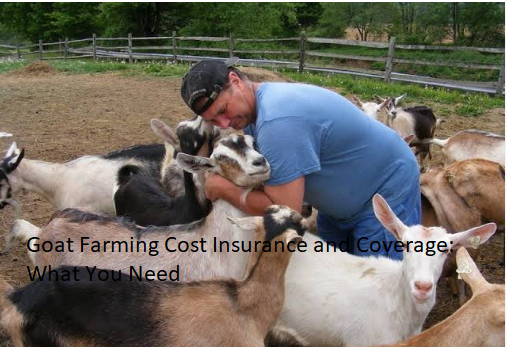
Understanding goat farming cost insurance and coverage is essential for any producer looking to protect their investment from unpredictable risks. While goat farming can be a profitable venture, the potential for disease outbreaks, predator attacks, and equipment failure requires a solid financial safety net. By securing the right policies, farmers shift the burden of catastrophic loss away from their personal savings.
This article breaks down the specific expenses involved in insuring your herd and infrastructure, providing the clarity needed to make informed decisions for your operation. You will learn how to balance premiums against potential risks to ensure your business remains sustainable for the long term.
Determining Your Insurance Costs
Most small-scale goat farmers can expect to pay between $500 and $2,000 annually for a basic farm liability and property policy. These costs depend heavily on the size of your operation and the value of your assets.
If you are running a commercial dairy or meat operation with high-value breeding stock, your premiums will naturally climb higher. You should prepare for an initial assessment where an agent evaluates your farm layout, fencing quality, and existing safety measures.
Liability insurance is often the most critical component for any farm business. A standard policy covering $1,000,000 in general liability typically costs between $400 and $800 per year depending on your location.
This coverage protects you if a visitor is injured on your property or if your animals escape and cause damage to a neighbor’s vehicle or crops. Without this protection, a single accident could result in a lawsuit that wipes out your entire annual profit.
Types of Coverage for Goat Farmers
You need to distinguish between property insurance, liability insurance, and livestock mortality insurance. Property insurance covers your barns, milking parlors, and equipment like tractors or fencing against fire, theft, and wind damage.
Livestock mortality insurance is a more specialized product that covers the sudden death of your goats due to specific named perils. This is usually restricted to high-value animals, such as registered breeding bucks or champion show goats.
It is rare to find a single policy that covers everything, so you will likely build a bundle. You should ask your broker about “Inland Marine” coverage for portable equipment like portable shelters or mobile milking units.
This type of insurance follows your equipment even when it is moved between different pastures or off-site for veterinary care. Below is a breakdown of common coverage categories for a typical goat farm:
| Coverage Type | What It Protects | Estimated Annual Cost Range |
|---|---|---|
| General Liability | Third-party bodily injury/property damage | $400 – $900 |
| Farm Property | Barns, silos, and fixed structures | $300 – $1,200 |
| Livestock Mortality | High-value individual animals | 3% – 8% of animal value |
| Equipment/Inland Marine | Tractors, trailers, and mobile tools | $200 – $600 |
Assessing Livestock Mortality Insurance
Insuring your entire herd against death is often prohibitively expensive for commercial meat goat producers. Most insurers only offer mortality policies for animals with documented pedigrees or significant market value.
If you have a herd of 100 commercial goats, you would be better off setting aside a self-insurance fund rather than paying premiums for each animal. You should reserve a portion of your annual revenue to cover the inevitable loss of a few animals each year.
If you decide to pursue mortality insurance for high-value breeding stock, be prepared for strict requirements. The insurance company will likely demand current health certificates from a licensed veterinarian.
They may also require proof of purchase price or recent sales data to verify the animal’s worth. You must keep meticulous records, as any discrepancy in the animal’s identity or medical history can lead to a denied claim.
The Role of Risk Management
Insurance should be the final layer of your safety strategy, not your only one. You can lower your goat farming cost insurance and coverage premiums by demonstrating a commitment to risk mitigation.
Installing high-quality perimeter fencing, for example, is a primary way to reduce liability risks. Many insurers offer a discount if you can prove that your pastures are secured with woven wire or electric strands that meet industry standards.
Good herd management practices also play a vital role in reducing your insurance burden. Implementing a strict vaccination schedule and keeping detailed logs of health treatments makes you a more attractive client to underwriters.
When you can show that you are actively preventing disease, you are less likely to be viewed as a high-risk operation. You can learn more about herd health standards through the United States Department of Agriculture Animal and Plant Health Inspection Service to ensure your practices align with national requirements.
Common Exclusions to Watch
You must read your policy documents to understand what is not covered. Many standard farm policies explicitly exclude losses caused by specific diseases, such as scrapie or foot-and-mouth disease.
These are often considered “acts of nature” or state-managed issues that fall outside the scope of private commercial insurance. If you are worried about an epidemic, you should research state-level compensation programs that might exist for producers.
Another common exclusion involves damage caused by certain types of predators. While some policies cover livestock killed by dogs or coyotes, others require you to have specific predator control measures in place.
If your farm is located in an area with a high population of wolves or mountain lions, you may need a specialized rider for “predatory loss.” Always clarify these details before signing your contract to avoid unpleasant surprises during a claim.
Calculating Your Total Insurance Overhead
To calculate your total insurance burden, add up your premiums, deductibles, and the cost of any self-insurance reserves. A healthy farm business usually budgets between 3% and 7% of its gross revenue for risk management expenses.
If your costs exceed this range, you may be over-insured or paying for coverage that does not align with your actual risk profile. You should review your policy annually to ensure that the coverage limits reflect the current size of your herd and the value of your equipment.
Consider the trade-off between higher premiums and higher deductibles. If you have enough cash flow to handle a $2,500 repair bill, choosing a higher deductible will significantly lower your monthly or annual premium payments.
This strategy allows you to keep your core insurance in place for major catastrophes while saving money on smaller, manageable incidents. It turns your insurance into a tool for survival rather than a way to cover routine maintenance.
Key Considerations for Small Farm Operations
If you are just starting out, you might be tempted to skip insurance entirely to save on startup costs. This is a dangerous gamble that could lead to personal bankruptcy if someone gets hurt on your land.
Even if you don’t have a large commercial operation, a simple “farm owner’s policy” can provide essential peace of mind. Start by calling a few local agents who specialize in agricultural business, as they will understand the nuances of your specific region.
When comparing quotes, do not just look at the total price. Pay attention to the reputation of the insurance carrier and their history of handling agricultural claims.
A cheap policy is useless if the company denies every claim or takes months to process a payout. Ask for references from other local farmers who have had to file claims for their livestock or equipment.
Essential Steps for New Goat Farmers
If you are planning to scale your operation, your insurance needs will change rapidly. You should build a checklist to manage your assets and risks as you grow.
A proactive approach to documentation ensures that you can prove your losses if you ever need to file a claim. Here are the primary steps to follow for effective risk management:
- Maintain an up-to-date inventory of all equipment with serial numbers and purchase dates.
- Keep a digital log of all veterinary visits, including vaccination records and health certificates.
- Install and test perimeter fencing regularly to prevent livestock escape incidents.
- Create a written emergency plan for barn fires or severe weather events.
- Review your liability limits annually to match your growing customer traffic or farm size.
Frequently Asked Questions
How many acres do I need to raise 100 goats?
The amount of land you need depends on your climate and forage quality. Generally, you should plan for 1 to 2 acres per 10 to 15 goats if you are relying on rotational grazing. If you are using supplemental feed and confinement, you can manage 100 goats on as little as 5 acres, provided you have a robust waste management system.
Can I insure my goats against theft?
Yes, many farm policies include coverage for theft as a named peril. However, you must be able to prove ownership of the animals through ear tags, registration papers, or clear photographs. It is crucial to check if your policy covers “disappearance” or specifically “theft,” as these terms have different legal meanings in insurance contracts.
Is it profitable to have a goat farm?
Goat farming can be profitable, but margins are often tight. Success depends on your ability to control overhead, optimize your feed costs, and access a local market for meat, milk, or fiber. Many successful farmers diversify their income streams by selling breeding stock, manure, or hosting farm tours in addition to their primary product.
What is the most common cause of insurance claims for goats?
The most common claims for goat farmers are related to liability incidents where the animals escape and cause property damage. Another frequent source of claims involves equipment damage due to accidents or fire. Mortality claims are less common because they are often excluded or carry very high premiums that many farmers choose not to pay.
Should I use an agent or buy online?
For agricultural insurance, working with a specialized agent is almost always superior to buying a generic policy online. An agent understands the specific risks associated with livestock and can help you navigate complex exclusions. They also act as your advocate if you ever need to file a claim, which is worth the potential difference in premium costs.
Managing Your Farm for the Future
Effective goat farming cost insurance and coverage planning is a dynamic process that evolves alongside your operation. As you expand your herd or add new equipment, your risk profile will shift, requiring periodic updates to your policies. By focusing on preventative maintenance and high-quality fencing, you reduce your reliance on insurance for day-to-day issues.
This allows you to reserve your coverage for the catastrophic events that truly threaten the viability of your business. Take the time to build a relationship with an insurance professional who understands the agricultural sector.
Consistent record-keeping and a clear understanding of your policy terms will serve you better than any single insurance product. Whether you are a hobbyist or a commercial producer, protecting your assets ensures that your hard work remains safe from unforeseen disasters.
If you are ready to secure your farm, contact a local agricultural insurer to compare quotes and assess your specific needs today. Investing in the right protection today will provide the stability your farm needs to grow and thrive in the years to come.
