

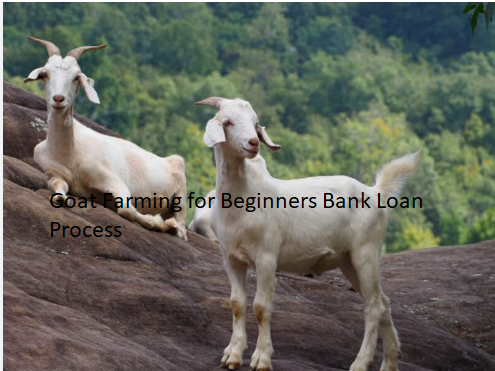
Navigating the goat farming for beginners bank loan process requires a blend of agricultural planning and financial discipline. Securing institutional funding isn’t just about having a business idea; it’s about proving to a lender that your operation will be self-sustaining and profitable.
By preparing a solid project report and understanding the specific requirements of rural development banks, you can significantly increase your chances of approval. This guide provides the foundational steps needed to transition from a conceptual farm plan to an approved credit application.
Understanding the Core Loan Requirements
The goat farming for beginners bank loan process begins with establishing your legal identity and project viability. Most financial institutions require you to be a registered entity, such as a sole proprietorship or a partnership firm, to qualify for agricultural credit. You must provide a formal project report that details the scale of your operation, including the number of goats you intend to raise and your target market.
Lenders look for a clear return on investment. They want to see that you have accounted for recurring costs like feed, veterinary care, and labor.
You should be prepared to contribute a margin money deposit, which typically ranges from 10% to 25% of the total project cost. This down payment demonstrates your personal commitment to the farm’s success.
Developing a Detailed Project Report
Your project report is the engine of your loan application. It should serve as a comprehensive blueprint for your farm, covering everything from infrastructure to marketing.
A well-structured report includes a technical section describing the breed selection, housing specifications, and grazing management. Bankers are not goat farmers; they need the technical data to be presented in a way that highlights financial risk mitigation.
Include a year-by-year cash flow projection for the first five years of operation. This projection must account for the gestation period of goats and the time it takes for kids to reach market weight.
Be conservative with your pricing estimates; showing inflated profit margins often raises red flags with loan officers. If your numbers appear overly optimistic, the bank may view your application as a high-risk venture.
Essential Documentation for Approval
Gathering the correct paperwork is the most tedious part of the goat farming for beginners bank loan process. You need to prove that you have the physical space to house the animals and the legal right to operate there.
Land documents, such as a title deed or a long-term lease agreement, are non-negotiable requirements for most rural banks. You will also need to provide personal identification, tax returns, and proof of residence.
If you are applying under a government-subsidized scheme, you must include the specific forms required by those agencies. These schemes often have unique eligibility criteria, such as mandatory training certifications from an agricultural university or a recognized training center. Keeping your documents organized in a physical folder and a digital backup will save you significant time during the verification phase.
Financial Projections and Asset Valuation
Lenders assess the collateral value of your assets before approving a loan. While the livestock itself is an asset, banks often consider it volatile due to disease risks and market fluctuations.
They prefer fixed assets, such as land or existing structures, as primary collateral for the loan. You should clearly list your existing assets and their current market values in your financial summary.
Key Financial Metrics for Your Application
| Financial Indicator | Typical Target Value |
|---|---|
| Debt-to-Equity Ratio | Below 3:1 |
| Interest Coverage Ratio | Above 1.5x |
| Margin Money Contribution | 15% – 25% |
| Break-even Period | 24 – 36 Months |
Your break-even analysis is arguably the most important section of your financial plan. It demonstrates how long it will take for your revenue to cover your initial capital expenditure and ongoing operating costs. Most small-scale operations reach their break-even point within three years, and showing this timeline helps build confidence with your lender.
Selecting the Right Banking Institution
Not all banks are created equal when it comes to agricultural lending. Commercial banks often have stricter requirements, whereas regional rural banks and cooperative banks are specifically mandated to support local farming initiatives.
You should research the Food and Agriculture Organization resources to understand global standards for smallholder livestock development. This context can help you frame your business model in line with sustainable agricultural practices.
Before submitting your application, schedule a meeting with the branch manager of a local rural bank. Ask them about their specific experience with goat farming loans in your district.
They might provide insights into local government incentives or specific documentation quirks that aren’t mentioned in official brochures. Building a relationship with the bank staff early on can make the formal application process much smoother.
Managing Risks and Insurance
Banks are inherently risk-averse, and they will want to know how you intend to protect their investment. Livestock insurance is a mandatory component of most bank-financed goat projects.
You must factor the cost of annual premiums into your project budget. Explain in your report that you have a veterinary contingency plan to handle potential outbreaks of common diseases like PPR or foot-and-mouth disease.
Demonstrate that you have identified a reliable market for your products, whether it be meat, milk, or manure. A contract with a local wholesaler or a clear plan to sell at local markets provides the lender with assurance of steady cash flow.
If you can show a signed letter of intent from a buyer, it significantly strengthens your case. This level of preparation shows you are a business-minded farmer rather than a hobbyist.
Common Reasons for Loan Rejection
Understanding why applications get turned down can help you avoid common pitfalls. The most frequent cause for rejection is an incomplete or poorly researched project report.
If your projections don’t align with local market prices for feed and livestock, the bank will assume you haven’t done your homework. Another major hurdle is a poor credit history, which suggests a lack of financial responsibility.
* Inadequate collateral or poor valuation of assets.
* Lack of technical knowledge or formal training in livestock management.
* Overestimated production yields or unrealistic market prices.
* Failure to meet the specific requirements of government-backed subsidy schemes.
* Insufficient margin money or lack of personal capital.
Ensure your application is free of these errors by having a professional or a mentor in the agricultural field review it before submission. A fresh pair of eyes can often spot inaccuracies in your math or gaps in your logic that you might have overlooked. Taking the time to refine your submission is always better than rushing and facing a formal rejection.
Milestones and Monitoring
Once your loan is approved, the work is far from finished. Banks often release funds in phases, tied to specific milestones in your farm’s development.
You might receive the initial capital to build the shed and purchase equipment, but the funds for livestock procurement may be released only after the housing is inspected. Stay organized and keep all receipts for every purchase made with loan funds.
Regular monitoring visits from bank officials are standard practice in agricultural lending. Keep your farm records updated, including birth rates, mortality rates, and feed consumption logs.
When a bank inspector visits, you want to be able to present clear, accurate data that proves your operation is thriving. Consistent, transparent reporting maintains your credibility and ensures the continued support of your lender.
Frequently Asked Questions
What is the typical interest rate for a goat farming loan?
Interest rates vary based on the country, the type of bank, and whether the loan is part of a government-subsidized scheme. Generally, agricultural loans have lower interest rates than standard commercial loans, often ranging from 7% to 12% depending on your credit score and local banking regulations.
Do I need specialized training to get a loan?
While not always legally required, many banks prioritize applicants who have completed a certificate course in goat farming. Having a training certificate proves that you have the technical knowledge to keep the animals healthy, which significantly lowers the lender’s perceived risk regarding livestock loss.
How much land do I need to start a farm?
The land requirement depends on your management system. For an intensive stall-fed system, you need less land, roughly 1,000 square feet for 50 goats. If you plan to graze your herd, you will need significantly more acreage to ensure adequate forage, typically around one acre per 10 to 15 goats depending on the quality of the pasture.
Can I apply for a loan if I am a first-time farmer?
Yes, banks frequently lend to new farmers, but they will scrutinize your business plan more closely than they would for an experienced operator. You must focus heavily on your project report and show that you have sought professional advice or training to bridge the gap in your experience.
What happens if my herd gets sick?
Your loan agreement will likely require you to have comprehensive livestock insurance. In the event of a major disease outbreak, the insurance payout covers the loss of the animals, protecting both your investment and the bank’s capital. You must keep your insurance policy active and current at all times to remain in compliance with your loan terms.
Final Thoughts
Securing funding is a milestone that transforms your farm from a dream into a functional business. By focusing on the details of the goat farming for beginners bank loan process, you demonstrate the professionalism that lenders look for in successful entrepreneurs. Remember that your project report is a living document; it should evolve as your herd grows and you gain more insight into your local market.
Stay patient during the application phase, as the process can take time to navigate. Once you receive your approval, focus on disciplined financial management and high-quality animal care to ensure long-term sustainability. If you approach this with clarity and preparation, you are setting a strong foundation for your agricultural career.
