

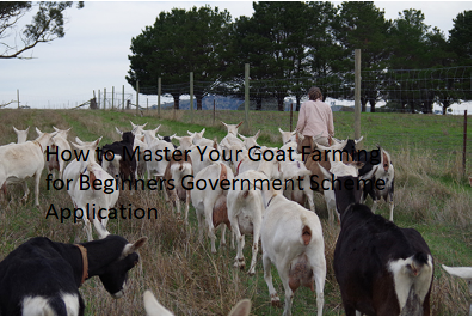
Navigating a goat farming for beginners government scheme application requires attention to detail, clear documentation, and a thorough understanding of local agricultural policies. Many aspiring livestock owners find that accessing these financial incentives can significantly lower their initial capital expenditure, making it easier to purchase high-quality breeds and build necessary infrastructure.
By following the correct administrative steps, you can secure the funding needed to turn a small-scale operation into a profitable agricultural enterprise. This article outlines the precise steps, eligibility criteria, and common pitfalls you should avoid to ensure your submission is successful and maximizes your chances of receiving approval from the relevant authorities.
The primary requirement for your goat farming for beginners government scheme application is a detailed project report that justifies the requested funding. This document must contain your farm layout, projected expenses for the first three years, and a clear plan for marketing your meat or dairy products.
Most government agencies expect you to show that you have secured at least 25% of the project’s total cost as your own contribution. You should also ensure you have a valid land deed or a long-term lease agreement, as officials will not approve funding for operations on disputed or temporary land.
Understanding the core eligibility criteria
To qualify for most state-sponsored livestock grants, you must first register as a legitimate agricultural business. This usually involves obtaining a business license or registering with your local department of animal husbandry.
You will likely need to provide proof of training or certification in goat husbandry, which demonstrates to the committee that you are serious about animal welfare. Many programs prioritize applicants who propose using sustainable farming methods, such as rotational grazing or organic feed production.
Essential documents for your submission
Your application packet will be scrutinized for accuracy and completeness, so organization is your best ally. You must provide a copy of your national identification, recent bank statements, and a verified land ownership document.
If you are applying as part of a cooperative or a group, include the registration certificate of that entity. Having a professional, typed business plan is non-negotiable, as handwritten or poorly structured plans are often rejected immediately.
Financial planning and budget projections
Government officials look for feasibility in your budget, so avoid inflating your numbers to secure a larger loan. Break down your costs into fixed assets like shed construction, fencing, and water systems, and variable costs like feed, medicine, and labor.
You should demonstrate that you have accounted for seasonal fluctuations in market prices for goat meat or milk. If your projections appear too optimistic, the review board may flag your application for further questioning or outright denial.
The role of the project report
A high-quality project report acts as the face of your business, outlining your vision and operational strategy. Include a section on your chosen breed and why it is suitable for your specific climate and terrain.
You must also detail your biosecurity measures, such as vaccination schedules and quarantine protocols for new livestock. A well-researched project report often includes a SWOT analysis, which shows you have considered the strengths, weaknesses, opportunities, and threats to your farm.
Common reasons for application rejection
Many applicants fail because they do not match the specific focus of the current government initiative. For instance, some schemes only support dairy goat production, while others focus exclusively on meat-producing breeds like Boer or Black Bengal.
Another frequent cause for rejection is an incomplete application form or missing signatures from local agricultural officers. Ensure that every page is signed and stamped by the required authorities before you submit your final folder to the regional office.
Strategic steps for approval
You should visit your local agricultural office to speak with a field officer before you even begin writing your proposal. These officials can provide you with the latest version of the application form and inform you of any region-specific requirements.
Engaging with them early allows you to clarify doubts and ensures that your project aligns with the current goals of the district agriculture department. You can find detailed resources on best practices for livestock management through the Food and Agriculture Organization of the United Nations.
Comparing funding sources
While government schemes offer low-interest rates and subsidies, they are not the only way to finance your farm. You might compare these grants against private bank loans or self-funding to see which model best fits your long-term goals. The following table highlights the typical differences between these funding sources for a standard startup operation.
| Funding Type | Interest Rate | Collateral Requirement | Approval Time |
|---|---|---|---|
| Government Scheme | Very Low (2-5%) | Usually minimal or none | Long (3-6 months) |
| Commercial Loan | High (10-15%) | High (Land/Assets) | Fast (2-4 weeks) |
| Personal Savings | Zero | None | Immediate |
Building a sustainable farm ecosystem
Your long-term success depends on more than just the initial capital; it relies on your ability to manage resources efficiently. Consider the following key assets and operational milestones you must reach to ensure your farm survives and grows beyond the startup phase.
- Secure a reliable water source that can handle the needs of your herd during the peak of the dry season.
- Establish a partnership with a local veterinarian who can perform routine health checks and emergency interventions.
- Develop a feed management strategy that utilizes local forage to minimize the high cost of commercial concentrated feed.
- Create a record-keeping system to track the birth rates, mortality, and weight gain of every animal in your care.
- Identify at least three potential buyers or local markets for your products before you purchase your first goat.
Managing your herd for long-term profit
Once your funding is secured, your focus must shift toward operational excellence. Proper nutrition is the foundation of any profitable farm, so invest time in learning about balanced diets for different life stages of your goats.
Keep your pens dry and well-ventilated to prevent respiratory diseases, which are a major cause of financial loss in the industry. Regularly monitor the growth rate of your kids and cull underperforming animals to ensure your feed costs are always optimized for maximum return.
Frequently Asked Questions
What is the typical time frame for receiving funds?
Most government agricultural departments take between three to six months to process a full application. This time includes field inspections, document verification, and the final approval from the district committee.
Can I apply for a scheme if I do not own the land?
Most schemes require you to hold a legal interest in the land, meaning a long-term lease agreement is often acceptable. You must ensure the lease period covers at least the duration of the loan or grant term.
Do I need specialized training to qualify?
While not always mandatory, having a certificate from a recognized agricultural university or training center significantly boosts your application’s credibility. It serves as proof that you possess the technical knowledge required to manage livestock successfully.
What happens if my project fails?
If your farm fails, you are still liable for any loans taken through the scheme. Government grants often come with strict monitoring, and you may be required to repay the funds if it is discovered that the money was used for non-agricultural purposes.
Are there specific breeds I must raise?
Some schemes are breed-specific to encourage the improvement of local livestock quality. Always check the specific guidelines of your local department to see if they offer higher subsidies for high-yield or disease-resistant breeds.
Conclusion
Securing support through a goat farming for beginners government scheme application is a strategic way to mitigate the risks associated with starting a new agricultural venture. By focusing on a professional project report, maintaining clear records, and engaging with your local agricultural authorities early, you significantly increase your likelihood of success. While the application process requires patience and rigorous documentation, the financial benefits often provide the stability needed to build a long-term, profitable enterprise.
Take the time to align your business plan with local requirements, and ensure your operational strategy emphasizes animal health and market demand. Your commitment to these foundational steps will prepare you for a sustainable future in the livestock sector.
