

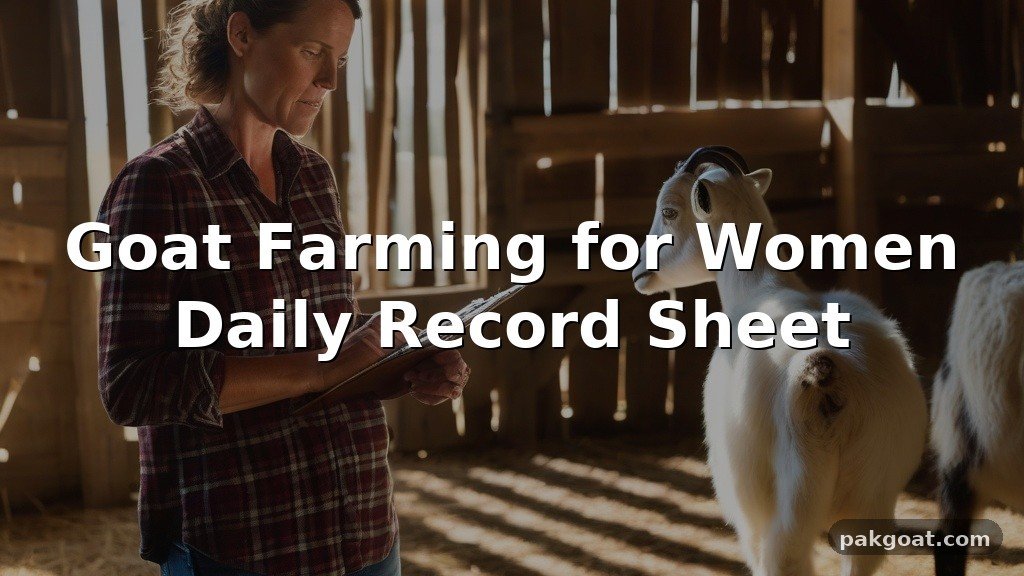
Maintaining a goat farming for women daily record sheet is the most effective way to track the health, productivity, and financial viability of your herd. By logging daily activities, you transform scattered observations into actionable data that helps you catch health issues early and optimize your breeding cycles.
This practice is essential for any woman managing a goat operation, whether you are running a small backyard hobby or a commercial dairy. You will learn how to structure your logs to ensure you never miss a vital health check or production milestone.
Effective record-keeping relies on capturing specific metrics every single day. The most important figures to track include the daily milk yield per doe, feed consumption rates, and any changes in animal behavior.
By consistently filling out your goat farming for women daily record sheet, you establish a baseline for what a healthy, productive day looks like for your animals. When those numbers drop, your logs will serve as an immediate alert to investigate potential illnesses or nutritional gaps.
Essential Data Points for Your Herd
Every successful producer prioritizes specific categories of information to ensure herd longevity. Your daily log should act as a snapshot of your operation’s status, capturing both routine maintenance and unexpected events. If you are focused on dairy production, your primary metrics will differ from those focused on meat or fiber.
Key Tracking Metrics
- Milk Yield: Record the volume produced by each doe during morning and evening milking.
- Feed Intake: Monitor the amount of grain and hay consumed to manage costs and prevent waste.
- Health Observations: Note any signs of lethargy, changes in manure, or coughing to catch respiratory issues early.
- Breeding Status: Track the date of exposure, heat cycles, and expected kidding dates.
- Medical Treatments: Log any deworming, vaccinations, or antibiotics administered, including the withdrawal period.
Comparison of Record-Keeping Methods
Choosing the right format for your data depends on your technical comfort level and the size of your herd. While paper logs are accessible, digital tools offer better long-term analysis. The following table compares common approaches to help you decide which system fits your daily workflow.
| Feature | Paper Journal | Excel Spreadsheet | Farm Management App |
|---|---|---|---|
| Accessibility | High (in the barn) | Medium (needs computer) | High (mobile sync) |
| Data Analysis | Manual/Slow | Automated/Fast | Automated/Real-time |
| Cost | Low | Free/Low | Monthly Subscription |
Managing Breeding and Kidding Cycles
The success of your farm often hinges on your ability to manage the breeding season accurately. Every doe in your herd should have a dedicated file or section in your sheet that tracks her breeding history.
By noting the exact date of exposure, you can predict the arrival of kids with high precision. This allows you to prepare birthing areas and medical supplies well before the actual event.
Frequently Asked Questions
How much does a goat typically gain per day?
A healthy meat goat kid typically gains between 0.3 to 0.5 pounds per day, depending on the breed and the quality of forage or supplemental feed provided.
How many goats are needed for a profitable operation?
Profitability varies widely based on your market, but most small-scale producers find that a herd of 10 to 20 does is the minimum required to cover operational costs while generating surplus revenue.
What is the best way to track individual milk production?
Use a simple hanging scale to weigh the milk bucket after each milking session. Record this weight in your spreadsheet immediately to prevent data loss.
How do I manage health records for medical compliance?
Always include the date, the specific medication name, the dosage, and the required withdrawal period in your logs. This ensures you comply with food safety regulations and maintain high-quality standards.
Optimising Your Farm Management
Consistency remains the greatest challenge when maintaining a goat farming for women daily record sheet. If you miss entries, the value of your historical data diminishes significantly.
Try to link your recording process to a routine task, such as the evening milking or the final barn check of the day. This habit ensures your information remains current and reliable for future planning.
As you collect data over several months, use your records to identify trends in your herd’s performance. You might discover that certain does have better milk production during specific seasons or that feed costs spike during particular months.
Use these insights to adjust your management strategies, lower your expenses, and improve the overall health of your goats. Your commitment to detail today builds the foundation for a more resilient and profitable farm tomorrow.
