

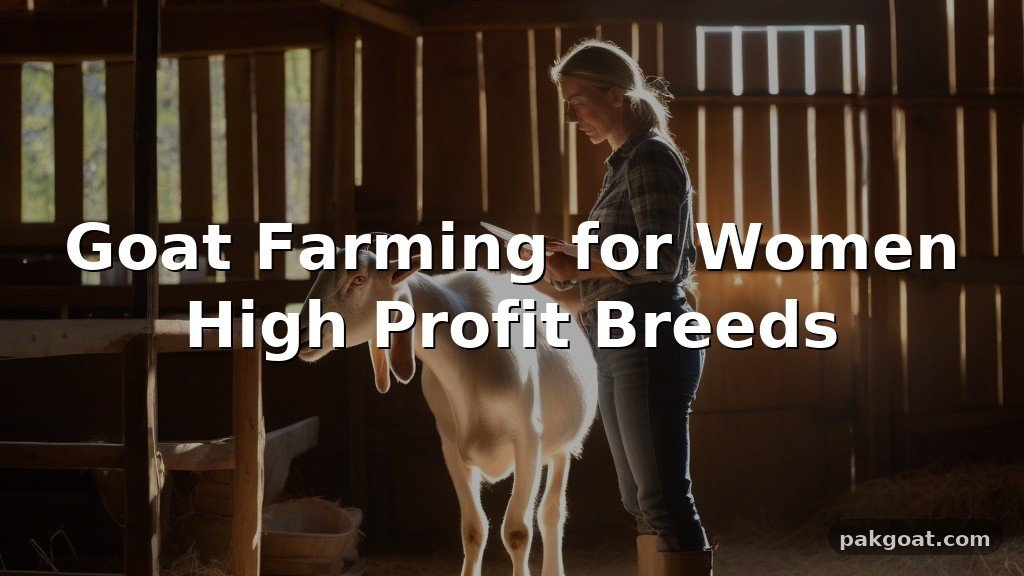
Selecting the right animals is the most critical decision for those exploring goat farming for women high profit breeds as a professional venture. Focusing on specific genetics allows small-scale operators to maximize their return on investment by targeting high-demand markets like gourmet meat, artisan dairy, or specialty fiber.
This article breaks down the financial potential and operational requirements for successful goat farming for women high profit breeds, providing the hard data needed to launch a sustainable farm business. You will learn how to align your breed selection with your local market to secure consistent revenue streams.
Profitability and Breed Selection
The most profitable goat breeds are those that have been selectively bred for either rapid weight gain or consistent, high-quality milk production. If you are targeting the meat market, the Boer goat remains the industry standard due to its impressive feed-to-meat conversion ratio. For dairy-focused operations, the Nubian and Alpine breeds are preferred for their high butterfat content and volume, which fetch premium prices from artisan cheesemakers.
Top breeds for revenue generation
- Boer Goats: Ideal for meat production due to rapid growth rates and heavy muscling.
- Nubian Goats: Known for high-butterfat milk, perfect for high-end cheese and yogurt.
- Kiko Goats: Highly resilient and parasite-resistant, which lowers veterinary expenses.
- Angora Goats: Valued for mohair production, offering a secondary income stream through fiber sales.
Financial Performance by Breed
Understanding the expected output per animal is essential for projecting your annual income. While costs vary significantly by region, the following table illustrates the typical revenue-generating potential of different specialized breeds based on market averages for livestock and raw products.
| Breed Type | Primary Output | Market Advantage |
|---|---|---|
| Boer | Meat | High demand for heavy, fast-growing kids |
| Nubian | Dairy | High butterfat content for premium cheese |
| Angora | Fiber | High-value mohair harvest twice per year |
| Kiko | Meat | Lower maintenance and medical costs |
Managing Daily Operations
Successful goat farming relies on strict feed management and health protocols. Goats are browsers, not grazers, meaning they require access to diverse vegetation to maintain optimal health and weight. You should budget for high-quality forage and mineral supplements, which account for roughly 60% to 70% of your total operating costs.
Essential infrastructure requirements
You must provide secure fencing to protect your herd from predators, which is a major risk in many rural areas. A simple, dry shelter with adequate ventilation is sufficient for most climates, provided it shields the animals from extreme wind and rain. Maintaining clean water sources is also non-negotiable, as goats are sensitive to water quality and will reduce intake if the supply is contaminated.
Frequently Asked Questions
What is the most profitable goat breed for a beginner?
For beginners, the Kiko breed is often the most profitable choice because of its natural hardiness and lower medical requirements. They require less intensive management than dairy breeds while still providing a strong return on investment in the meat market.
How much profit can a small goat farm generate?
Profit margins vary, but a well-managed herd of 50 meat goats can generate a gross annual income ranging from $15,000 to $25,000 depending on local market prices. Your net profit will depend heavily on your ability to minimize feed costs by utilizing rotational grazing techniques.
Is dairy or meat more profitable?
Dairy production generally offers higher profit margins per liter of product, but it requires daily labor and strict sanitation infrastructure. Meat production is less time-intensive, making it a better entry point for those balancing farm work with other professional commitments.
How long does it take to see a return on investment?
Most farmers see a break-even point within 24 to 36 months. This timeline covers the initial purchase of breeding stock, infrastructure setup, and the time required for the herd to reach a self-sustaining size.
Getting Started
Entering the world of goat farming for women high profit breeds requires a clear plan and a focus on high-quality genetics. Whether you choose to focus on meat, milk, or fiber, your success depends on choosing a breed that suits your climate and your local supply chain. Start by researching local auctions and nearby dairies to identify which products are currently underserved in your area.
By keeping your overhead low and your herd health high, you can build a resilient business that grows over time. We encourage you to start small, track your expenses diligently, and reach out to local agricultural extensions to ensure your farm is set up for long-term growth.
