

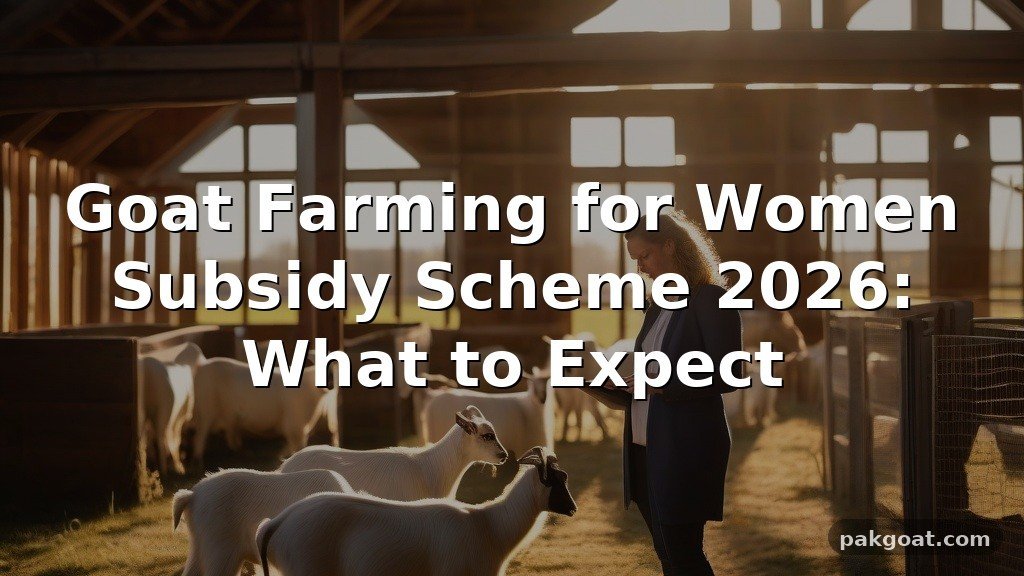
The goat farming for women subsidy scheme 2026 represents a targeted government initiative designed to empower female entrepreneurs in the livestock sector. By providing financial assistance and technical training, these programs aim to improve rural livelihoods and increase local meat and milk production.
If you are looking to enter this industry, understanding the specific eligibility requirements and funding caps is essential for success. This article provides the current facts on available support, how to access these funds, and the operational milestones needed to qualify for government grants in the coming year.
Understanding Subsidy Eligibility and Funding
For the goat farming for women subsidy scheme 2026, applicants must generally be residents of the state offering the incentive and hold a valid identity document. Most regional departments require the applicant to be at least 18 years old and demonstrate basic knowledge of animal husbandry. While exact figures vary by state, many programs cover between 30% and 50% of the total project cost for eligible female beneficiaries.
Key Financial Parameters
The following table illustrates the typical distribution of project costs for a small-scale goat farm unit under government-backed support frameworks.
| Category | Estimated Contribution |
|---|---|
| Government Subsidy | 30% – 50% |
| Bank Loan Component | 40% – 60% |
| Beneficiary Margin | 10% – 20% |
Steps to Secure Funding
To apply for the goat farming for women subsidy scheme 2026, you must first register your business entity with the local animal husbandry department. You will need a detailed project report that outlines your housing plan, breed selection, and projected feed costs. Many states have moved these processes online, requiring digital submission of land documents and bank account details.
Essential Requirements for Applicants
- Proof of land ownership or a long-term lease agreement.
- A certificate of training in goat rearing issued by a recognized institute.
- A detailed project report approved by a local bank manager.
- Valid Aadhaar card and active bank account linked to a PAN.
- An affidavit confirming no previous receipt of similar government grants.
Operational Best Practices
Success in this field requires more than just capital; it demands strict adherence to veterinary health protocols. Most professionals recommend starting with a small flock of 10 to 20 goats to monitor health and growth rates effectively. You should also prioritize vaccination schedules, as disease outbreaks remain the primary cause of financial loss in small-scale operations.
Managing Your Flock
Working with local veterinary officers ensures your flock remains compliant with state health standards. Maintaining clean housing and a consistent water supply will directly impact your mortality rates and overall profit margins. As you gain more years experience, you can scale your operations to reach the thresholds required for larger infrastructure subsidies.
Frequently Asked Questions
How do I apply for the subsidy in my state?
You should visit the official portal of your state’s Department of Animal Husbandry. Most states now feature a dedicated dashboard for the goat farming for women subsidy scheme 2026, where you can upload documents directly.
Is there a minimum land requirement for the subsidy?
While there is no fixed national rule, most state schemes require at least 0.5 to 1 acre of land to ensure proper grazing and shelter space for a medium-sized flock.
Can I apply if I have no prior experience?
Most departments mandate a short-term training course before you can apply for funds. You can find these courses at local Krishi Vigyan Kendras or government agricultural universities.
What happens if the project is not completed?
If the project is abandoned or funds are misused, the government reserves the right to recover the subsidy amount with interest. Periodic inspections by field officers are common during the first three years of operation.
Moving Forward with Your Farm
The goat farming for women subsidy scheme 2026 offers a significant financial head start for those willing to commit to professional livestock management. By preparing your documentation early and securing the necessary training, you place yourself in a strong position to receive approval. Focus on building a sustainable operation that prioritizes animal health and efficient feed management.
As you move through the application process, stay in contact with local extension officers who can provide guidance on regional requirements. With consistent effort and proper planning, your investment in goat farming can become a reliable source of income and a vital contribution to the rural economy.
