

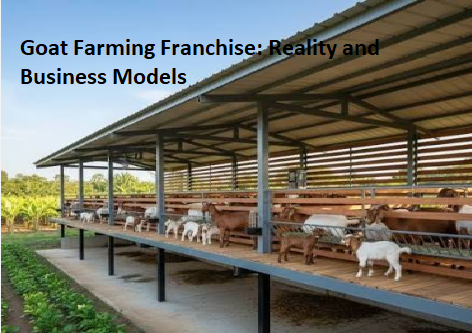
Operating a goat farming franchise offers a structured entry point into the livestock sector, providing potential owners with established operational protocols and supply chains. While traditional agriculture usually relies on independent ownership, the rise of branded agricultural partnerships allows entrepreneurs to leverage proven systems for meat, dairy, or fiber production.
Understanding the mechanics of a goat farming franchise requires looking beyond the pastoral image and examining the unit economics, infrastructure requirements, and regulatory hurdles inherent in modern animal husbandry. This analysis provides a clear look at what these business models actually entail for the aspiring producer.
The primary answer to whether a formal goat farming franchise exists is that it is a rare business structure in the agricultural world. Unlike fast-food chains or retail businesses, livestock production is highly localized and dependent on regional land laws, veterinary access, and feed costs.
Most “franchise” opportunities in this space are actually contract farming arrangements where a parent company provides the breeding stock, specialized feed, and a guaranteed buyout agreement. You are typically buying into a technical support system and a supply chain contract rather than a traditional business brand.
The Reality of Contract Farming Models
Most entities marketing themselves as a goat farming franchise operate under a vertical integration model. They supply the goats, the management software, and the veterinary protocols, while you supply the land and the labor.
This setup reduces the market risk for the farmer because the parent company is often the sole purchaser of the final product. However, it also limits your ability to sell into local markets or set your own pricing strategies.
You should expect to sign a long-term agreement that dictates the specific breeds you must raise and the feed you are required to purchase from the franchisor. These contracts often include strict performance benchmarks regarding weight gain, mortality rates, and herd health.
If your herd does not meet these metrics, the parent company may have the right to terminate the agreement. You are essentially acting as a specialized production site within a larger corporate entity.
Financial Requirements for Market Entry
Starting a goat-focused agricultural operation requires significant upfront capital regardless of whether you are independent or part of a managed program. You must invest in perimeter fencing, shelter construction, and water systems before the first animal arrives. Costs vary wildly based on your region, but land preparation and infrastructure often consume the majority of your initial budget.
| Expense Category | Estimated Cost (Initial) |
|---|---|
| Perimeter Fencing (5 acres) | $5,000 – $8,000 |
| Shelter/Barn Construction | $10,000 – $20,000 |
| Breeding Stock (per 20 goats) | $4,000 – $7,000 |
| Veterinary & Startup Supplies | $1,500 – $3,000 |
The table above illustrates typical entry costs for a small-scale operation. These figures assume you already own the land, which is the largest variable in the equation.
If you must lease land, your operational costs will increase by 15% to 25% annually, significantly impacting your break-even timeline. Always factor in a contingency fund of at least 20% for unexpected veterinary emergencies or feed price spikes.
Land and Infrastructure Considerations
Goats are browsers, not grazers, meaning they require a different type of pasture management than cattle. A high-density operation requires a rotational grazing system to prevent the depletion of forage and to break the life cycle of intestinal parasites. You will need to divide your land into smaller paddocks, which necessitates portable electric fencing systems.
An established program will often provide a site layout plan that optimizes animal movement and waste management. Proper drainage is non-negotiable, as wet conditions lead to hoof rot and other respiratory issues that can devastate a herd. Before committing to any site, review the local zoning laws to ensure you are permitted to house livestock at the density required for a commercial operation.
Managing Herd Health and Mortality
Disease management is the most significant operational challenge in any goat farming franchise. Goats are highly susceptible to internal parasites like barber pole worm, which can develop resistance to standard dewormers. A professional operation requires a strict schedule for FAMACHA scoring, which involves checking the color of the goat’s lower eyelid to determine anemia levels.
You must also establish a relationship with a local large-animal veterinarian before you acquire your first goat. While a franchisor might provide remote consultation or protocols, they cannot replace a physical vet who can perform necropsies or assist with difficult kidding. The USDA Animal and Plant Health Inspection Service provides extensive resources on biosecurity standards that every serious producer should follow to prevent disease transmission.
Revenue Streams and Profitability
Profits in this industry are driven by volume and efficiency rather than high per-unit margins. You will likely rely on a combination of meat sales and potentially dairy or fiber depending on the breed.
Meat goats are typically sold at specific weight targets, often between 60 and 90 pounds. A contract arrangement usually pays a set price per pound, which protects you from market volatility but prevents you from capturing the higher retail prices during holiday seasons.
- Meat production (Kiko or Boer crossbreeds)
- Dairy products (milk, cheese, or soap production)
- Fiber harvesting (if raising Angora or Cashmere goats)
- Manure sales (as a secondary agricultural fertilizer)
- Agritourism or educational workshops
Diversifying your revenue streams is essential for long-term viability. While a contract may cover your primary meat sales, finding secondary markets for manure or hosting farm tours can provide a necessary cash buffer. Focus on maximizing your kidding rate, as a doe that produces twins or triplets consistently is significantly more valuable than one producing singles.
Regulatory Hurdles and Legal Compliance
Operating a commercial goat facility involves navigating a complex web of environmental and agricultural regulations. You must comply with waste management plans to ensure that manure runoff does not contaminate local water sources. Many states require specific permits for selling raw milk or processed dairy products if you decide to enter that segment of the market.
Tax implications also vary, as agricultural operations often qualify for specific exemptions or credits. Keep meticulous records of all expenses, including feed, veterinary bills, and infrastructure improvements.
Consult with a tax professional who specializes in agricultural business to ensure you are capturing all available deductions. Failing to maintain accurate records can lead to significant issues during audits or when applying for agricultural loans.
Labor and Time Commitment
There is no such thing as a passive income stream in the goat industry. Even with a franchise-style support system, you are responsible for daily chores that cannot be automated. This includes twice-daily checks for illness, moving portable fencing, managing water supplies, and handling the intensive kidding season.
During the peak kidding window, you may find yourself working 16-hour days to ensure the health of the does and kids. If you are not prepared for this physical labor, the business will fail regardless of the support provided by the franchisor. Ensure you have a plan for coverage if you need to leave the farm for any length of time, as goats require constant supervision.
Frequently Asked Questions
Is owning a goat farm profitable?
Profitability depends entirely on your cost of production and your ability to manage herd health. While margins can be thin, producers who focus on low-input grazing and high-density management often see better returns than those relying on expensive grain feeds.
How many acres do you need to raise 100 goats?
A general rule of thumb is 5 to 10 goats per acre, depending on the quality of your forage and your use of rotational grazing. For 100 goats, you should aim for at least 10 to 15 acres of well-managed pasture to ensure long-term sustainability.
How much does it cost to start a goat farm?
Initial costs range from $15,000 to $40,000 for a small-scale operation, assuming you already own the land. This includes fencing, shelter, initial breeding stock, and basic equipment for health monitoring and feed storage.
How many goats does it take to clear one acre?
Goats are excellent at clearing brush, and you might need 10 to 20 goats to clear an acre of heavy overgrowth in a few weeks. This is a temporary task, however, and you must move them once the brush is cleared to prevent overgrazing the desirable grasses underneath.
What is the most common cause of death in commercial goat herds?
Parasitic infections, particularly barber pole worm, are the leading cause of mortality in many regions. Poor management of grazing rotation allows these parasites to thrive, making strict adherence to deworming and pasture rest cycles the most important factor in herd survival.
Navigating the Future of Your Operation
Entering this field requires a realistic assessment of your capacity for physical labor and your willingness to follow strict operational protocols. While the idea of a goat farming franchise suggests a “plug-and-play” business, the reality is a demanding, hands-on enterprise that requires constant attention to detail. Success is found by those who prioritize animal health and pasture management above all else.
If you are serious about moving forward, start by visiting local producers and asking about their specific challenges with climate and local market access. Do not sign a contract until you have had a lawyer review the terms, especially the clauses related to feed purchasing and buyout obligations.
Agriculture is a long-term commitment, and the most successful producers are those who treat their farm as a data-driven business rather than a hobby. Reach out to local agricultural extension offices for resources on best practices in your specific climate zone to build a foundation for sustainable growth.
