

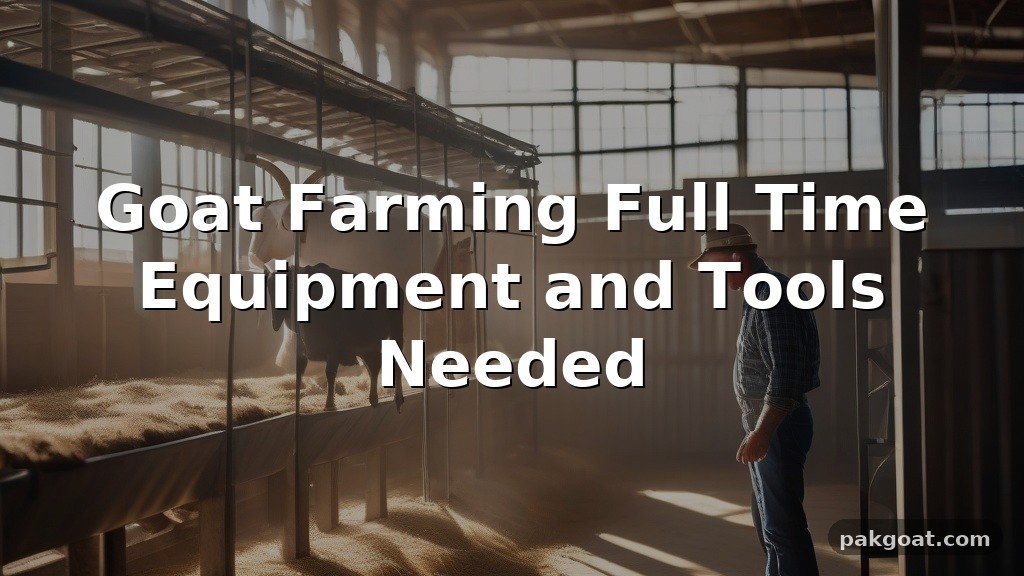
Transitioning to a professional operation requires careful planning regarding the goat farming full time equipment and tools needed to maintain a healthy herd. Whether you focus on meat production, fiber, or dairy, your infrastructure dictates daily efficiency and long-term animal welfare. This overview provides the essential baseline for scaling your agricultural venture effectively.
Core Infrastructure Requirements
The most critical investment for your operation is secure fencing. Goats are notorious escape artists that require high-tensile woven wire to stay contained and safe from predators. You should plan for at least one acre per 10 to 15 goats, depending on the quality of your forage and your rotational grazing strategy.
Housing and Shelter Essentials
Your goats need a dry, draft-free structure to retreat from wind and rain. A simple three-sided shed is often sufficient, provided it offers enough square footage for every animal to lie down comfortably.
- Heavy-duty gates: Steel panels that resist pressure from larger bucks.
- Raised milking stands: Essential for dairy operations to keep your back healthy during twice-daily sessions.
- Water troughs: Heated tanks are a necessity if you live in a region that experiences freezing winters.
- Hay feeders: Elevated racks prevent waste and reduce the spread of parasites from contaminated ground feed.
- Hoof trimmers: Specialized shears for regular maintenance of goat hooves.
Operational Cost and Efficiency Comparison
Understanding the financial layout of your equipment helps in balancing your budget. The following table estimates the typical investment for a small-to-medium startup herd.
| Equipment Category | Estimated Investment Range | Primary Function |
|---|---|---|
| Fencing (Per Acre) | $1,500 – $3,000 | Security and grazing control |
| Shelter Construction | $2,000 – $5,000 | Weather protection |
| Milking Equipment | $500 – $1,200 | Milk extraction and storage |
| Health/Medical Supplies | $300 – $600 | Routine care and emergencies |
Health and Maintenance Supplies
Maintaining a healthy herd requires a dedicated space for storing medical supplies and grooming gear. You will frequently use antiseptic sprays, dewormers, and basic surgical tools for minor wound care. Always keep a digital thermometer on hand, as a goat’s temperature is a primary indicator of its internal health.
Grooming and Handling
Daily handling becomes significantly easier with the right tools. A sturdy halter and lead rope are standard, but you might also need a headgate for more intensive procedures like vaccinations or ear tagging. Keeping these items organized in a clean, dry tack room ensures they are ready when you need them.
Frequently Asked Questions
How many acres do I need for 100 goats?
For 100 goats, you generally need between 7 and 10 acres of high-quality pasture. If your land is less fertile, you may need more space or a reliance on supplemental hay to prevent overgrazing.
Is it expensive to start a goat farm?
Initial costs vary wildly based on your existing infrastructure. If you already have land and a barn, you can often start with a few thousand dollars in fencing and livestock, but full-scale commercial operations require significantly higher capital.
What is the most important tool for a new farmer?
A high-quality pair of hoof trimmers is arguably the most vital tool you will own. Proper hoof care prevents lameness and keeps your animals productive throughout the year.
How do I choose the right milk stand?
Look for a stand with a secure headpiece and a non-slip surface. It should be at a height that allows you to milk without bending over, which saves your back during long shifts.
Scaling Your Operation
Building a successful farm is a marathon, not a sprint. By focusing on the goat farming full time equipment and tools needed early on, you avoid costly retrofits later. Prioritize high-quality fencing and reliable water systems to ensure your daily workflow remains manageable as your herd grows.
Consistency in your maintenance routine defines the difference between a struggling hobby and a thriving enterprise. Take the time to source durable materials that withstand the elements and the active nature of your animals.
As you refine your setup, you will find that the right gear makes every aspect of animal husbandry more rewarding. We invite you to share your experiences as you build your own sustainable farm.
